English


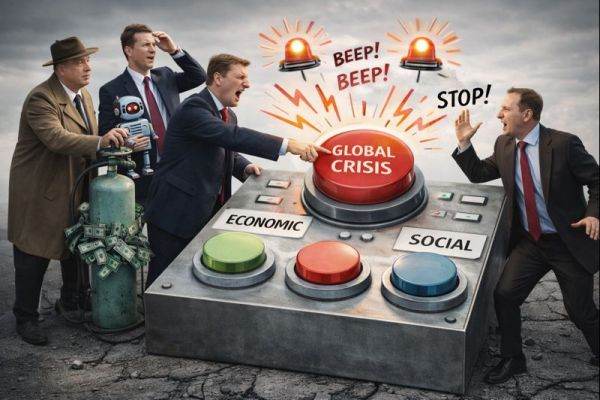
Systemic uncertainties mark the year 2026, foreshadowing a future with multiple probabilities, in which economic, political, technological, and environmental developments are dominated by major risks.
These are identified and analyzed by international institutions, think tanks, economic bodies, and market analysts, shaping the framework of the major challenges that define the global scene this year.
We no longer live in a world with uniformly distributed risks.
We live in a system where risks concentrate, amplify, and self-perpetuate, and those who should manage them politically instrumentalize them.
• A. Geopolitical Risks
The world does not disintegrate through world wars, but through alliances that quietly unravel, leaders who defy rules, and states disengaging from their own order.
1) Evolution of the world order and political instability in the U.S.
According to the Eurasia Group annual report, 2026 is considered a "geopolitical turning point” year, in which main risks include major internal tensions in the United States in the context of a political revolution that may affect both internal and external institutional order, as well as the breaking of traditional alliances.
2) Fragmentation of the global order and conflict risks
From the same perspective, although direct conflagration between major powers (China and the U.S.) is not considered inevitable, there are still significant risks generated by fluid political structures, regional interventions, and hybrid threats (eurasiagroup.net).
3) Risks reported by independent experts
The Top 10 Geopolitical Risks for Business in 2026 report mentions transactional international policies, economic nationalism, and competition for technological control as destabilizing factors of global interdependence (insightforward.co.uk).
• B. Economic and Financial Risks
The global economy is kept alive through monetary infusions. Growth is no longer vitality, but the reflex of a system unable to die or heal.
1) Weak and fragile global growth
According to the OECD, the global economy will grow moderately in 2026, around 2.9%, amid pressures on investment and trade.
2) IMF warns of structural vulnerabilities
The IMF forecasts global growth of 3.1%, but with risks skewed toward negative scenarios, especially in emerging and fragile economies.
3) Financial volatility and technological tensions
Reuters signals risks in financial markets, including possible corrections after overvaluations, the influence of artificial intelligence on inflation, and uncertainties surrounding central bank policies.
• C. Technological Risks
1) AI - generator of inflation and imbalance
Investments in AI may generate cost increases in energy, infrastructure, and supply chains, risking the reappearance of inflation in 2026, according to Reuters.
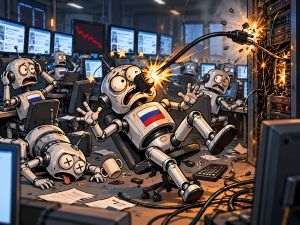
2) Cyber infrastructure under pressure
Everbridge warns that systemic cyber risks are intensifying, targeting critical networks in health, energy, and administration.
• D. Social and Environmental Risks
1) Natural disasters and hazardous technologies
The Global Challenges Foundation includes catastrophic climate change, military AI, ecological collapse, and future pandemics among systemic risks.
2) Political polarization and internal crises
Time Magazine warns that democracies are weakened by polarization, electoral delegitimization, and the spread of populism.
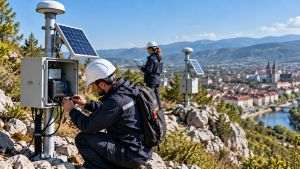
3) Climate risks with economic impact
Germanwatch identifies extreme phenomena (droughts, floods) as risk factors with major economic and social effects.






















 Euro
Euro Dolar SUA
 Franc elveţian
 Liră sterlină
 Gram de aur