English

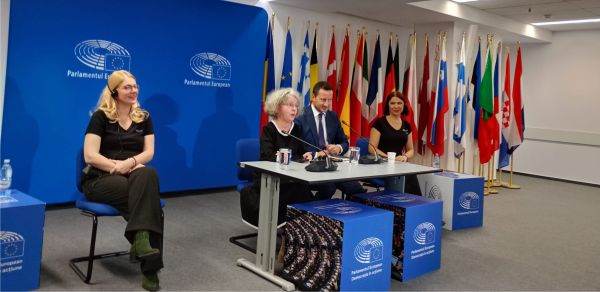
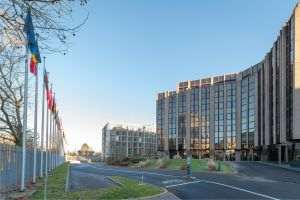
The protection of people with disabilities remains an unresolved issue not only in Romania, but also at the European Union level, even if there is legislation adopted for these people, said, during a press conference held in Bucharest, Nicolae Ştefănuţă, Vice-President of the European Parliament, and Katrin Langensiepen, Vice-President of the EMPL (Employment and Social Affairs) Committee within that European institution, both members of the Greens political group.
Nicolae Ştefănuţă stated that, despite the progress made after 1989, there is a gap compared to other EU states in protecting people with disabilities: "We have come a long way since 1989, but we are still far from where we should be. Over 1 million Romanians have disabilities of various kinds and I do not believe that they are respected at the moment.”
The Vice-President of the European Parliament rejected the idea of policies based on symbolic assistance, insisting on concrete rights: "These people do not need help, because what they want is not pity. What they want are possibilities, for example assistive technology in schools, adequate furniture, facilities. There are all kinds of things that can be invested in and we must invest in them”.
The need for real investment and systemic support is closely linked to the situation of families and relatives of people with disabilities, a category that Mr. Ştefănuţă said is ignored: "There is another issue that is very important, which is that of relatives, of the rights of relatives. Many of us are parents, we are relatives, we are grandparents in families where there are people with autism or other neurodivergences or other problems and the relatives are not helped enough”. In this context, the Vice-President of the European Parliament highlighted the direct impact of recent tax decisions taken by the Bologna government: "This is almost a full-time job for them and I deplore the decision to cut local tax exemptions, such as on housing and cars, for the relatives of people with disabilities. It is a wrong decision, because it affects the little that was a very important help for these families. I know many families who are in this autism area, they are struggling, they do not have social assistance. I believe that that decision is wrong and that it affects the wrong people. Instead of looking at slightly more progressive policies, as we say, with progressive taxation. The richest people in this country often end up paying nothing in tax and then you reach the most affected, those from vulnerable social environments, students, teachers and others".
The lack of social services and support infrastructure for children with autism is, according to the Vice-President of the European Parliament, one of the most serious shortcomings.
"There are not enough places, for example, for children with autism to go for a few hours to learn communication skills, sensory skills and many more”, said Nicolae Ştefănuţă.
• Inclusive education, instead of institutionalizing people with disabilities
The European dimension of the rights of people with disabilities was addressed by Katrin Langensiepen, Vice-Chair of the EMPL Committee, who insisted on the fundamental nature of these rights: "The European Union has ratified the UNCRPD (ed. - United Nations Convention on the Rights of Persons with Disabilities); it is not about inclusion as if it were "flowers and bees”, it is about human rights. People with disabilities are not a homogeneous group”.
Ms Langensiepen described the profound social impact of the lack of adequate public services, especially on women: "Women are giving up their jobs at home to do what a government and a society should do: independent living, the opportunity to implement the UNCRPD”. Furthermore, the Vice-Chair of the EMPL Committee drew attention to persistent segregation: "Here in Romania, there is a lot of institutionalisation; how can we get people with disabilities out of institutions? We need inclusive education”.
The issue of the use of public and European funds was directly formulated by Katrin Langensiepen: "Where does the money go? That was the question or the debate we had yesterday: what is happening with the funds in Romania?” She brought up the concrete situation of students with disabilities: "If a student with disabilities wants to study for six months in a European programme, can he or she use the European card here in Bucharest when it comes to participation and rights?”
In this context, Nicolae Ştefănuţă clarified the role of the European Disability Card: "It is a right granted to people with disabilities to benefit from the social services of the European state they visit or live in, as if they were members of that state." He stressed, however, the current limitations: "It is an important achievement of the past mandate of the European Parliament, but implementation is still lagging behind.”
• Access to mobility and jobs, two unresolved issues
Katrin Langensiepen's personal experience illustrated the difficulties of access and mobility: "We have access to mobility, but if you are lucky, you have access. Because I can't use the trains because I can't get on them. I don't use a wheelchair, but I have access difficulties, and the narrative is: "oh, maybe someone will help you'. Yes, at 6 in the morning someone will help you... If not, that's it. But I bought a ticket. Unfortunately, we are not treated fairly, although we are taxpayers, we are customers, we are voters. There are 100 million people with disabilities in the European Union and I don't understand why we are ignored by the political majority at European level, but also in each member state. The question is: do you want to live in these conditions? The answer for any person with disabilities is no."
Discrimination in the labour market is, according to Langensiepen, another structural problem: "As long as you have tax advantages as a company, you prefer to pay a fine rather than hire a disabled person.” She called for the elimination of these practices: "It is the government's duty to close these loopholes so that a company cannot say: "Oh, I would like to, but I prefer to pay.' In Germany it is similar. Some NGOs say that we need to increase the fines, but for Volkswagen it doesn't matter if it pays 200,000 euros or more. These loopholes are there to avoid having these people on the team. We blame countries in Africa or India for not respecting social standards, but as long as such systems exist in the EU, where they can ignore social standards, then please don't blame other countries. We need to clean our own house. Where are the unions? Why don't the unions see disabled people as partners in the team?”
In addition, Nicolae Ştefănuţă supported the need for real sanctions: "When you don't respect the law, there is not only a civil fine. These fines should also have other types of consequences, such as, for example, that if you don't respect European law, you can't operate for a period of time. Because such a sanction is not applied, large companies, city halls, governments prefer to pay the fine rather than implement the law on the employment of people with disabilities.”
Regarding jobs for people with disabilities, the Vice President of the European Parliament, Nicolae Ştefănuţă, said that although in Romania, according to recent statistics, 1 in 31 children is autistic, the employment rate of these people, when they become adults, barely reaches 1%, which is not normal.
Finally, the solutions and obstacles were synthesized without ambiguity.
Katrin Langensiepen said: "There are schemes, for example, where you get a certain budget and you can hire a person or a group to support you individually. We need to give up the idea that we need a single solution for everyone; it is an individual thing. This is the personal assistance system (PA system), from which Romania could learn. It could be a blind student helping an autistic student or vice versa. (...) The access ramp is visible, but the problem is the empowerment”.
Nicolae Ştefănuţă provided three examples of good practice. The Vice-President of the European Parliament recalled the need to integrate people with disabilities into schools, the introduction of assistive technology for such people and integration through sport.













 Euro
Euro Dolar SUA
 Franc elveţian
 Liră sterlină
 Gram de aur