English


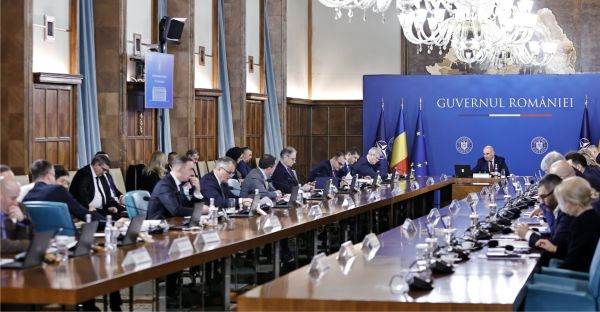
The financial execution of the National Recovery and Resilience Plan has become a topic of dispute, not in Parliament, nor in the Government, nor even at the meetings of the PSD-PNL-USR-UDMR coalition, but in the online environment. The former Minister of Finance and former Minister of European Funds, the social democrat Adrian Câciu, criticized Dragoş Pîslaru, the current Minister of Investments and European Projects, that we no longer have a single euro in our accounts to pay for the investment projects carried out through the PNRR.
Adrian Câciu wrote on his Facebook page: "Romania has run out of the PNRR money it had in its accounts. It has zero euros in its accounts. And that is serious! Any current payment related to PNRR projects is made from national money, money for which the Government borrows from the market at 7% interest. This is because, from June 2025 until now, Romania has not withdrawn a single eurocent from the PNRR from the European Commission. Although it has 3.1 billion euros to receive.” In the same post, the former social-democratic minister states: "Romania has received 10.5 billion euros (pre-financing, payment request 1, payment request 2, Repower, payment request 3, partially). At this point, Romania has spent about 11 billion euros on invoices related to PNRR projects.” Hence, Adrian Câciu's conclusion regarding the gap: "Romania has to collect 3.1 billion euros from the European Commission (840 million euros from Payment Request 3 and 2.3 billion euros from Payment Request 4). The problem is that it is not collecting this money".
He also invokes the exceeding of some deadlines: "Regarding the 840 million euros, the validation deadline was November 28, and the collection deadline should have been January 28. Both have passed". Regarding Payment Request number 4, Mr. Câciu says: "Personally, I doubt that this request will be validated earlier than May 2026. Which is even more serious!".
Regarding the above statements, Dragoş Pîslaru, the Minister of Investments and European Projects, mentioned on his Facebook page: "There is no risk of financial blockage on the PNRR. The Ministry of Finance assigns full priority to payments on the PNRR. We have instant budget credits available”. The minister claims that "the settlement with the European Commission is progressing well” and specifies: "In December, payment request no. 4 was submitted and we are in the process of verification and approval with the Commission. It should be finalized in March”.
In his opinion, Adrian Câciu's statements are questionable. "Saying that there is such a risk means either that you are a gossip or that you are just an opportunistic politician, who deliberately chooses to sow panic”, Dragoş Pîslaru pointed out.
The latest statement by the Minister of Investments and European Projects was answered by Adrian Câciu, who made a specific request: "For Romania to believe you, publish the data regarding the NBR account for the PNRR! I do not want to create panic. (...) For now, you are in the red by 10 billion euros (9.94 billion euros to be exact)".
I checked the website of the Ministry of Investments and European Projects for the situation regarding payments made for projects financed from the PNRR. The main page of the dashboard shows that, until yesterday, MIPE would have paid 10.15 billion euros and would have collected 10.72 billion euros from the EU for this purpose, out of the total of 21.41 billion euros that must be spent by the end of this year.
However, we point out that, on the PNRR dashboard available on the respective website, the latest validated data are those from November 2025, when, out of the total of 21.41 billion euros that our country must receive, it appears that payments of 8.91 billion euros have been made, payments made since the beginning of the projects' implementation until now, that is, since 2023.
Beyond the differences in tone and interpretation, the exchange of positions between the two politicians shows a tension in the management of European programs: the balance between payments and settlements. Temporary financing from internal sources of eligible expenses is a mechanism frequently used even in previous governments, with the mention that the delays present in validating payment requests can generate pressure on cash flows.


















 Euro
Euro Dolar SUA
 Franc elveţian
 Liră sterlină
 Gram de aur