English
While Washington and Brussels are erecting their economic walls, Romania is projected to become the "industrial shield” of the East. But this role as a safety net in the new architecture of power comes with structural costs that risk destabilizing entire sectors of the national economy.
• 1. "Proximity” industrialization and cannibalization of the workforce
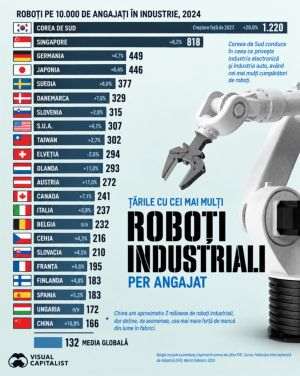
European companies are leaving Asia for the safety of Eastern Europe, generating a wave of investments in production centers for automotive components and semiconductors in areas such as Sibiu, Timişoara and Piteşti.
The unfortunate consequence: These investments, massively subsidized by European programs (IPCEI), drain the workforce from the local private sector and agriculture. The artificially high salaries by the state in these "technological islands” put pressure on small Romanian companies, which cannot compete and risk bankruptcy due to lack of personnel, as shown by the figures of the Ministry of Economy.
• 2. Agriculture: The barter currency for lithium and copper
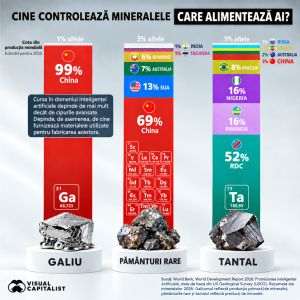
The accelerated ratification of the agreement with Mercosur (Brazil, Argentina, Uruguay, Paraguay) is the price the EU pays to obtain the raw materials needed for electric batteries from the West, without depending on China.
The negative consequence (Normative Dumping): According to European Commission data, Romanian farmers are forced to comply with the costly rules of the "Green Deal”, while the market is invaded by South American meat and cereals that are 30-40% cheaper, produced without the same ecological restrictions. It is a programmed bankruptcy for the family farm in Romania.
• 3. Transport: Isolation through regulation (Mobility Package)
While there is talk of the "single market”, regulations such as the Mobility Package force Romanian trucks to periodically return to base, artificially increasing logistics costs.
The negative consequence: This "distance tax” protects transport companies in central Europe and drives out Romanian companies that can no longer efficiently serve western routes. Romania thus loses one of the few sectors where it had a real competitive advantage in services, as highlighted by an analysis by UNTRR on the impact of transit regulations on Eastern European transporters.
• 4. The energy hub and the security bill Projects such as Neptun Deep (Black Sea) and small modular reactors (SMRs) position Romania as an exporter of energy stability for the region.
The negative consequence: Romania's Energy Strategy 2025-2035 shows that, although we produce energy, the priority of exports to the rest of the "Fortress” keeps domestic prices high. Romania finances the energy security of others, while non-strategic local industry pays tariffs that make it uncompetitive in exports.
• 5. Local tax on sovereignty
BNR interest rates
Investments in resilience generate structural inflation. To prevent capital flight, the National Bank of Romania is forced to maintain interest rates much higher than in the rest of the EU.
The unfortunate consequence: The Romanian citizen pays the "sovereignty tax” directly out of pocket: bank rates on mortgages and consumer loans that remain rigid, while purchasing power is eroded by the high production cost of the "European product”, as NBR representatives claim in the Financial Stability Report.
• Survival guide: How do you protect yourself from "side effects”?
1. Real Estate Sector: Do not count on falling interest rates. In the context of "fortress” inflation, money will remain expensive to finance the defense and energy industries.
2. Small Business: If you are not a supplier for a "strategic” project (energy, critical components, defense), you risk being crushed by logistics and labor costs. Look for niche local services that cannot be digitized or imported.
3. Niche Agriculture: The only salvation in the face of Mercosur is local branding and processing. Raw raw materials (wheat, corn) will always be defeated by the dumping price of South American imports.
The analysis confirms a risk asymmetry.
Romania gains political stability and capital investments in heavy sectors, but loses competitiveness in traditional sectors (agriculture, transportation). It seems that the benefits will no longer be distributed evenly, but will be concentrated only in the strategic "nodes” agreed by Brussels and Washington.
















 Euro
Euro Dolar SUA
 Franc elveţian
 Liră sterlină
 Gram de aur