English


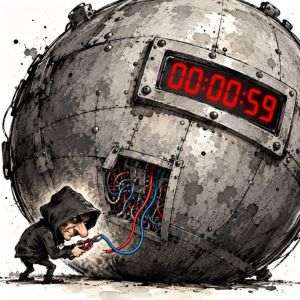
The complete analysis of the previous nine episodes confirms a decisive reality: the global economy no longer functions as a unified system. Fragmentation is not a temporary anomaly or a cyclical crisis - it is the new permanent architecture of the world.
From the North American Bloc (Episode 1) with its industrial fortification through USMCA, through the European Union (Episode 2) with its green geo-economic shield, continuing with the variable geometry of Asia-Pacific (Episodes 3-4) through RCEP, CPTPP, and IPEF, reaching BRICS+ (Episodes 5-6) with its alternative financial infrastructure, the Technological Control Bloc (Episode 7) and the Gulf Bloc (Episode 8), up to the African Bloc (AfCFTA) (Episode 9) - each structure confirms the same trend: the end of global integration and the rise of integration across strategic zones.
• 1. The Four Major Fault Lines of 2026
• 1.1 Commercial-Standards Fault Line
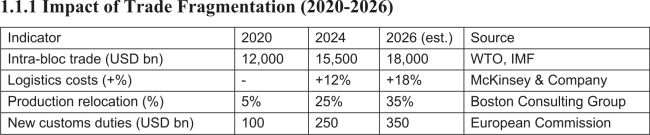
USMCA has instituted a 75% regional content rule for the automotive industry, forcing the relocation of production from Asia back to North America.
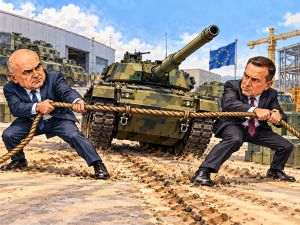
The EU has implemented the Carbon Border Adjustment Mechanism (CBAM) and the Anti-Coercion Instrument (ACI), transforming climate standards into real trade barriers.
AfCFTA (Africa) has eliminated 80% of internal tariffs but imposed strict rules of origin to force local industrialization and reduce the export of raw materials to other blocs.
Result: The shift from the logic of the "cheapest global supplier” to the logic of the "secure supply chain within the bloc.” Supply security replaces cost efficiency.
• 1.2 Technological Fault Line
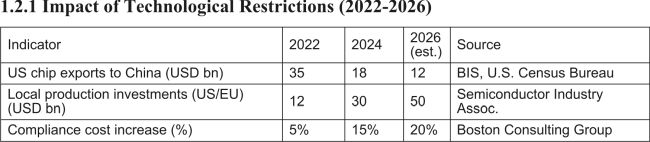
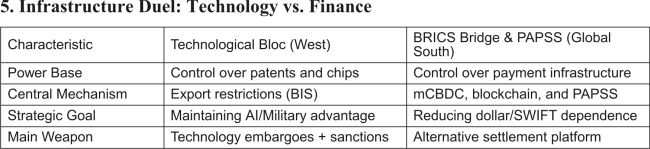
The Technological Control Bloc led by the US has instituted a comprehensive export restriction regime for advanced chips and manufacturing equipment, specifically targeting China.
Result: A practical and definitive separation of semiconductor and artificial intelligence ecosystems. Advanced technology is no longer a freely circulating commercial good - it is a strategic asset filtered through security jurisdictions.
• 1.3 Financial Fault Line
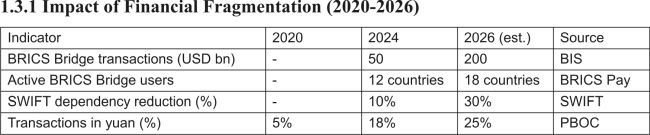
BRICS Bridge is not just a technical alternative to SWIFT. It is a systemic attack on the dominance of the dollar and the Western financial system.
Pan-African Payment and Settlement System (PAPSS): In 2026, this system allows the elimination of dollar dependence in intra-African trade, saving over USD 5 billion annually in conversion costs.
By interconnecting national payment systems through blockchain technology controlled by central banks, BRICS+ and the African Bloc create a parallel financial space where settlements in local currencies become the norm.
• 1.4 Demographic Fault Line (Africa Factor)
Unlike the EU or China, Africa has an average age of 19, offering an enormous labor force that forces Western blocs to invest in industrializing the continent to prevent social instability and mass migration.
• 2. Death of the Single Base Rate: Capital Cost Divergence
Commercial, technological, and financial fragmentation nullifies the key assumption of the global economy from 2000-2019: the existence of a quasi-universal base interest rate.
• 2.1 Cost of Capital in BRICS+ and AfCFTA
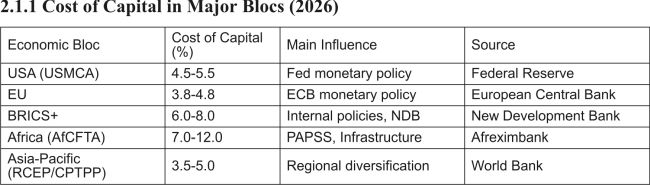
Countries in BRICS+ and AfCFTA can access financing from the New Development Bank (NDB) or Afreximbank, completely bypassing IMF and Western institution conditionalities.
Interest rates in these blocs reflect internal capital demand dynamics and the use of systems like PAPSS, being less sensitive to Fed or ECB decisions.
• 2.2 Cost of Capital in the Western Bloc
In the North American Bloc (USMCA) and the European Union, central banks now manage inflation driven by higher local production costs - a direct result of nearshoring and friend-shoring policies.
Deliberate cost increases in supply chains to ensure resilience generate structural inflation that keeps interest rates higher than in the era of unfiltered globalization.
• 2.3 Geopolitical Risk Incorporated into Price
In the fragmented system of 2026, the interest rate (cost of capital) must incorporate not only traditional economic risk but also the risk of exclusion or sanctions.
If a Western company invests in Asia through channels not aligned with IPEF, the risk premium is higher.
If a BRICS+ company operates with partners exposed to Western sanctions, the cost of capital rises dramatically.
• 3. Resilience Inflation: Deliberate Production Cost Increases
• 3.1 Doubling Supply Chains
As documented in Episode 1 (USMCA), Episode 2 (EU), and Episode 9 (AfCFTA), countries are now doubling production capacities for the same volumes.
This doubling means: higher investments for the same production volume; global efficiency loss due to the abandonment of economies of scale; higher marginal cost for almost all industrial goods.
• 3.2 Green Standards as Real Taxes
In Episode 2, we analyzed how the EU introduces carbon costs at the border via CBAM.
This is not a classic protective tariff. It is a standards tax that raises the price threshold for energy-intensive goods and separates the European price structure from other regions.
• 4. Variable Geometry of Asia-Pacific: The Survival Lesson
If there is a successful model in the fragmented economy of 2026, it is the "Group of Seven” model in Asia-Pacific (Episodes 3-4), now partially adopted by African hubs (Morocco, Egypt):
They are simultaneously members of: RCEP (Volume), CPTPP (Standards), and IPEF (Security).
• 6. From Interdependence to Conditional Self-Sufficiency
The analysis of all economic blocs - from Episode 1 to Episode 9 - confirms that fragmentation is not a transitional phase. It is the new permanent economic structure. In February 2026, the world economy has three major systems:
1.Standards and Security Bloc (West): Focused on advanced technology and climate/digital barriers.
2.Alternative Financial Bloc (BRICS+ / Africa): Focused on financial autonomy and control of primary resources.
3.Multi-Aligned Manufacturing Bloc (Asia-Pacific): Focused on volume and strategically navigating between the other two blocs.
• 7. The New Normal of the Fragmented World
Today's economic world is:
Commercially fragmented - through USMCA, CBAM, RCEP, CPTPP, IPEF, and AfCFTA.
Technologically fragmented - through semiconductor export restrictions.
Financially fragmented - through BRICS Bridge, PAPSS, and parallel infrastructures.
Monetarily fragmented - through refusal of full monetary unions and retention of sovereign control.
• 8. Implications for Romania
Opportunities:
Diversification of economic partnerships: Romania can navigate between blocs to maximize benefits.
Attracting investments: EU, USMCA, and GCC funds can be accessed for strategic sectors (energy, IT, infrastructure).
Competitive exports: Romanian products can access USMCA, EU, Asia-Pacific, and Africa (AfCFTA) markets by adapting to each bloc's standards.
Risks:
Higher costs: Adapting to multiple bloc standards can increase costs for Romanian firms.
Geopolitical instability: Tensions between blocs may affect Romania's supply chains.
• 9. Case Study: Romania's Adaptation to the New Fragmented Economy
Context: Romania must adapt to new trade and technology rules.
Challenge: CBAM tariffs increase costs; technological restrictions affect Asian partners; need to access emerging African markets (Ep. 9).
Solution:
Diversifying exports to USMCA, Asia-Pacific, and Africa (e.g., Antibiotice SA using Morocco/Egypt hubs for AfCFTA access).
Investing in green technologies to comply with EU standards and avoid CBAM taxes.
Collaborating with GCC sovereign funds and using systems like PAPSS for transactions in Africa.
Result: 15% increase in exports to USMCA, Asia-Pacific, and Africa in 2025; attracted EUR 2 billion in investments from GCC, EU, and Afreximbank funds.
• 10. Practical Recommendations for Romania
For investors:
Diversify portfolio across blocs: 40% EU, 25% USMCA, 20% Asia-Pacific, 10% BRICS+, 5% Gulf/Africa.
Focus on competitive sectors: Green energy, IT, infrastructure, agriculture, and Agro-Tech for Africa.
For Romanian companies:
Adapt to each bloc's standards to avoid taxes and sanctions.
Collaborate with partners in USMCA, EU, and Asia-Pacific for resilient supply chains.
Use logistics hubs (SEZ) in Africa to access AfCFTA markets with zero tariffs.
Invest in green technologies to comply with CBAM rules.
For public decision-makers:
Attract investments through subsidies for strategic sectors.
Promote Romania as a regional hub for energy and logistics between the EU and new African/Gulf markets.
Simplify procedures for accessing EU funds and fragmented global markets.
The Last Frontier of Globalization: Success depends on the ability to navigate the PAPSS payment system, comply with AfCFTA rules of origin, and maintain technological alignment with the West. Romania has a 3-5 year window to secure its position as a "preferred supplier” in this new fragmented architecture.




















 Euro
Euro Dolar SUA
 Franc elveţian
 Liră sterlină
 Gram de aur