 English


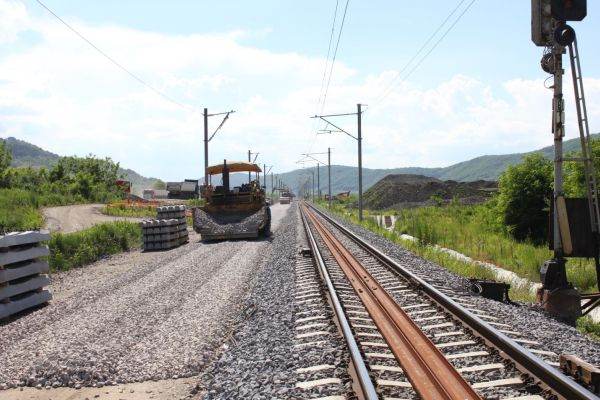
The projects regarding the modernization of railway lines on the Trans-European Corridor IV, strategic investments in the Port of Constanta, the restoration of railway stations and the introduction of state-of-the-art digital systems represent the main works that CFR SA will carry out during 2026, according to a press release of the infrastructure company, published on the official Facebook page. Basically, the representatives of CFR SA announce that, from Cluj-Oradea and Arad-Timişoara to Iaşi-Ungheni and Gara de Nord, the railway map of Romania is entering a structural transformation with a direct impact on the economy, mobility and European connectivity.
According to the cited source, the electrification and rehabilitation of the Cluj-Napoca-Oradea-Episcopia Bihor line represents one of the most important structural interventions. The respective line has become, according to CFR SA, an active construction site, with works carried out simultaneously on the infrastructure, superstructure and electrification systems. The first two lots, Cluj-Napoca-Aghireş and Aghireş-Poieni, have exceeded the 55% physical execution threshold, signaling a solid dynamic, while the lots in the mountainous area are gradually advancing, in a more complex technical context. This project is essential for connecting Transylvania to the electrified railway network of Central Europe.
From the data presented by CFR SA, we note that the modernization of the Caransebeş-Timişoara-Arad line is advancing differentiatedly, with a peak of progress on the Lugoj-Timişoara East sector, which has exceeded 60% physical stage. Other segments are in earlier phases, but the entire project is vital for increasing traffic speeds and modernizing stations on one of the busiest railway routes in the west of the country, with a direct impact on passenger and freight transport.
On the Pan-European Corridor IV, between the western border, Curtici, Simeria and further towards Braşov, Romania is approaching the completion of key sections. The sections between Bârzava and Simeria have physical stages ranging from over 80% to almost 98%, indicating that the works have entered the final phase. In parallel, the mountainous Apaţa-Cata sector, known for the complexity of the tunnels and engineering works, has exceeded 58%, confirming that the most difficult stages of execution have been overcome. The completion of this corridor will have a major impact on the competitiveness of rail freight and passenger transport on the east-west axis.
The Port of Constanta remains a strategic focal point in the CFR SA strategy, and the modernization of the port railway infrastructure continues in successive stages. The first stage, in the Valu lui Traian area, has passed 58% execution, while the second stage is in the design phase, preparing the expansion of the railway transport capacity to Palas. In parallel, the third stage has entered the public procurement procedure, with an estimated value of over 600 million lei, the tender being in the adjudication phase, after the submission of three offers. These investments are essential for the fluidization of freight flows and for the growth of Romania's role as a regional logistics hub. In the short term, the "Quick Wins" type works program continues to produce immediate effects by eliminating speed restrictions. Lots such as Chiajna-Grădinari are already completed and fully received, and other segments, such as Aiud-Unirea, are approaching completion, with a progress of approximately 90%. These rapid interventions directly contribute to reducing travel times and increasing the reliability of the existing network.
In parallel with the railway mains, CFR SA is running an extensive program to modernize 47 railway stations, aimed at increasing passenger comfort and accessibility. Tourist stations such as Neptun are nearing completion, while others, such as Costineşti Tabără, are in the process of being built. At the same time, for important nodes such as Videle, Ploieşti Vest, Sinaia and Buşteni, orders have already been issued to start design and construction, a sign that the modernization of railway spaces for passengers is becoming a real priority.
The digitalization and safety component is supported by the implementation of the ERTMS system and the expansion of the GSM-R network. The Operational Control Center in Bucharest is under construction, and on the Predeal-Constanţa axis, procurement and preparatory works are underway for the installation of state-of-the-art digital signaling systems, which will allow for increased capacity and safety of rail traffic.
Looking south and southwest, the modernization of the Craiova-Drobeta Turnu Severin-Caransebeş line is entering a decisive stage. Three of the six lots already have signed contracts and are in the design phase, one lot has been awarded and is awaiting possible appeals, and for the other two, the evaluation of offers is underway. This project prepares one of the largest construction site mobilizations in areas with difficult terrain, with a major impact on the connectivity of Oltenia and Banat.
In the east of the country, the rehabilitation of the Roman-Iaşi-Frontieră and Apahida-Suceava lines has exceeded the planning phase, with feasibility studies being almost fully completed. For the Iaşi-Ungheni sector, the CEF financing contract has already been signed, paving the way for the electrification of the railway connection with the Republic of Moldova and the consolidation of Romania's role as a railway gateway to the east.
In Bucharest, the modernization of the North Station, the country's main railway gateway, is progressing in stages. The first phase, which includes the consolidation of the facades and roof of the main buildings, is under execution, while the second phase, which aims at the general modernization, is in preparation for the launch of the procurement procedure. The transformation of the North Station is symbolic of the ambition to bring the Romanian railway infrastructure to European standards.
At the beginning of 2026, the general picture shows that in the railway infrastructure we have construction sites on all the main lines, works in progress and complex procurement procedures, aimed at modernizing the railway. It remains to be seen how many of these works will be completed by the end of this year.























 Euro
Euro Dolar SUA
 Franc elveţian
 Liră sterlină
 Gram de aur





























