English

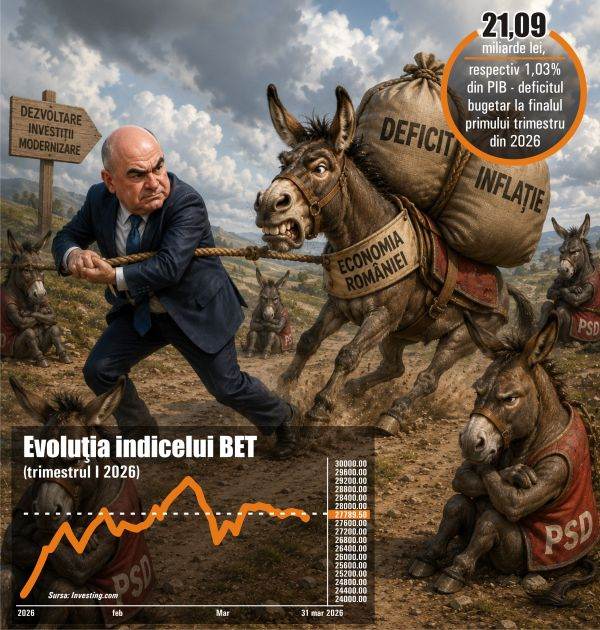
The first quarter of 2026 found Romania in an area of rare economic tension, in which the Government led by Ilie Bolojan was forced to simultaneously press the spending brake, the investment acceleration and the social security pedal, in a context dominated by high inflation, high financing costs, pressure on the population, the need for money for public projects and external risks amplified by the conflict in the Middle East. After a year-end 2025 closed with a budget deficit of 146.03 billion lei, or 7.65% of GDP, better than the target of 8.4% negotiated with the European Commission and below the level of 8.67% of GDP recorded in 2024, the first three months of 2026 showed an accelerated but fragile fiscal correction: the general consolidated budget deficit dropped to 21.09 billion lei, or 1.03% of GDP, compared to 43.66 billion lei, or 2.28% of GDP, in the first quarter of 2025, which means a decrease of 22.56 billion lei and an adjustment of 1.25 percentage points as a share in the economy. The correction was supported by total revenues of 158.76 billion lei, up 12.3%, net VAT receipts of 33.63 billion lei, up 17.7%, payroll and income tax of 17.97 billion lei, up 19%, and tougher spending discipline, which reached 179.85 billion lei, down 2.8% compared to the same period last year. Behind these figures, however, was a much more complicated picture: the state increased local taxes, launched support and recovery programs for companies, continued to compete with banks for the population's savings through Tezaur and Fidelis, maintained massive public investments, adopted the state budget almost three months late and was forced, in March, to intervene directly in energy, transport, agriculture and basic food prices, after a barrel of Brent oil rose to $117 and American WTI oil crossed the $100 threshold, amid the effective blockade of the Strait of Hormuz and the disruption of a fifth of the world's supply of oil and liquefied natural gas. At the same time, inflation remained the main macroeconomic vulnerability at the beginning of the year. The annual inflation rate was 9.62% in January, fell only marginally to 9.31% in February, only to rise again to 9.87% in March, a sign that disinflation is not only slow, but also easily reversible when the economy is hit by energy shocks, pressures in services and higher transport and production costs. The National Bank of Romania responded with a line of total caution: the key interest rate was maintained at 6.50%, the Lombard facility at 7.50%, the deposit interest rate at 5.50%, and the minimum reserve requirement remained unchanged, the central bank signaling that there is no room for relaxation as long as core inflation remains high, inflationary expectations persist, and the effects of rising energy prices and wage costs continue to propagate in the economy. If the fourth quarter of 2025 was the moment when the Government avoided fiscal slippage through rectifications, loans and expenditure control, the first quarter of 2026 was the immediate test of that strategy: higher taxes, debt-based investments, a late-adopted budget, pressure on prices, financing through the population, ratings maintained with a negative outlook and an external energy crisis that showed how thin the margin of error of the Romanian economy has become.
• January: Increase in taxes and fees, the milestone of the beginning of the year
January began under the direct pressure of the fiscal measures adopted in 2025 and applied from January 1, 2026, the most visible being the reform of property and motor vehicle taxes, which led to generalized increases of 70-80% throughout the country. The government justified the measure by the fact that Romania collected only 0.55% of GDP from property taxes, compared to the European average of 1.85% of GDP, that there were large disparities between localities, that the tax owed by individuals did not take into account the market value, that over a third of the amounts were not collected, and the failure to update with inflation further eroded local revenues. The application of the new amounts was to bring additional revenues estimated at approximately 3.7 billion lei, i.e. over 30% compared to 2025, with an addition of 1.42 billion lei from buildings, 1.09 billion lei from land and 1.18 billion lei from cars, motorcycles and other vehicles, amounts that remain entirely in local budgets. In theory, the reform is presented as an accelerated transition to taxation at market value, a target announced for January 1, 2027, and by then the tax base had been recalibrated by eliminating historical values exceeding and by introducing a uniform technical reference of 2,677 lei/sqm, i.e. approximately 535 euros/sqm, described as the realistic national average construction cost for a home with standard finishes, excluding land, VAT or developer's margin. In practice, however, the average of 70-80% hid specific cases in which the increase far exceeded this level, due to the disappearance of the reduction coefficients for old buildings and the additional reduction for apartment buildings, and the possibility for local councils to increase taxes up to 100%, compared to the previous 50%, on economic, social and urban criteria, fueled the perception that the tax burden was being pushed more and more towards local taxpayers.
The social convulsions caused by the new taxes came at a time when the population was already feeling inflation of almost 10%, the price increases for energy, services and food, and the economy was entering 2026 with a mix of austerity, investments and loans.
Financing remained the key to January. The Ministry of Finance published on January 9 the list of 195 significant public projects, valued at 457.7 billion lei, focused on road, railway, health, urban transport and water management infrastructure. The A7, A1 Sibiu-Piteşti and A8 motorways, the Caransebeş-Timişoara-Arad and Braşov-Sighişoara railway modernizations, regional emergency hospitals, the extension of Metro Line 6 to Henri Coandă International Airport and coastal protection works were presented as engines of development, but the size of the list also shows the increasing dependence on European funds, grants, PNRR and loans. On January 15, the Minister of Finance, Alexandru Nazare, signed the second financing contract with the European Investment Bank, worth 500 million euros, for the A1 Sibiu-Piteşti Motorway, the first motorway crossing the Carpathian Mountains, as part of a total package of 1 billion euros, a project estimated at around 5.5 billion euros and with expected completion in the fourth quarter of 2028. Also in January, the Government increased the ceiling of the "Medium Term Notes" Program from 90 to 99 billion euros, explaining the need for flexibility and constant presence on foreign markets, a sign that financing the deficit and investments remains a structural vulnerability. The main strategic news of January was the approval by the European Commission of the projects submitted by Romania for financing through the SAFE mechanism, from which our country has been allocated the amount of 16.68 billion euros. These are not grants, but loans guaranteed by the European Commission, with an AAA rating, a maturity of up to 45 years and a grace period of 10 years, but with the obligation that the money be spent quickly, by the end of 2030, under strict conditions regarding joint procurement, transparency, speed of contracting and localization. SAFE, a 150 billion euro European mechanism for defense and dual infrastructure, thus becomes one of the main sources of financing for the reconfiguration of the national defense industry and for infrastructure projects of strategic relevance. Deputy Prime Minister and Minister of National Defense, Radu Miruţă, stated on January 26 that 9.53 billion euros will go towards equipping the Romanian Army and associated infrastructure, 4.2 billion euros towards dual infrastructure managed by the Ministry of Transport, namely the ends of the Moldovan Highway Paşcani-Ungheni and Paşcani-Siret, and approximately 2.8 billion euros towards the Ministry of Internal Affairs and the other forces in the national defense system. In the MApN area, 21 projects are targeted, of which 10 in joint procurement and 11 individual procurement, from armored personnel carriers, logistics platforms, helicopters, radars and anti-aircraft systems to patrol ships, ammunition, drones, command-control capabilities, simulation and training, including loitering ammunition and VSHORAD systems, and the tight deadline until the end of May 2026 for contracting individual procurements pushes the state into an administrative race against time.
• February: The latest package of fiscal measures, adopted after the CCR decision on special pensions
February changed the emphasis from austerity and local taxes to economic recovery, without the budgetary pressure disappearing. The government built fiscal package number 3, followed by the economic recovery package, as an attempt to reset the relationship with taxpayers, stimulate real investments and reduce chronic liquidity bottlenecks in the economy, but without giving up strict control over collection. The stimulus component included a 3% bonus on the tax due for the fiscal year 2025, applicable to companies paying corporate income tax or micro-enterprises, as well as individuals filing the Single Declaration, the condition being full and timely payment by April 15, 2026. It is, in practice, an attempt to reward tax compliance, but also a pressure tool for quick collections. The government also intervened on one of the most sensitive issues of the business environment, VAT, which blocks the liquidity of companies, by increasing the ceiling for the VAT system upon collection to 5 million lei in 2026 and to 5.5 million lei from 2027, which allows a greater number of companies to pay VAT after they actually collect invoices, reducing the forced financing of the state by the private sector.
For micro-enterprises, the package brought flexibility and corrections of some rigidities that generated artificial exits from the system. The deadline for hiring the first employee increased to 90 days for new companies, income from the occasional sale of assets is no longer included in the 100,000 euro ceiling, avoiding the modernization penalty, and the sick leave of the sole employee no longer automatically leads to the loss of the tax regime. The fixed assets threshold was increased from 2,500 lei to 5,000 lei, allowing the direct deduction, as an expense, of a larger volume of purchases, an apparently technical measure, but important for small investments and for reducing accounting bureaucracy. In the area of investments, the Government introduced a 10% tax credit for research and development, deductible from tax, and the possibility of accelerated depreciation, up to 65% of the asset value in the first year, for equipment purchased in 2026, creating a tax advantage for companies that invest quickly in technology. In parallel, incentives were introduced for the capital market: an additional deduction of 50% for the costs of listing on the stock exchange and deductions of up to 400 euros annually for individuals who invest in stocks, bonds or ETFs, in an obvious attempt to move part of the population's savings towards financing the real economy. The budgetary impact of the package is estimated at 2.1 billion lei in 2026, with the Government betting that this amount will later return to the budget through taxes and duties generated by investments and economic growth.
From a political point of view, the space for this package opened after the Constitutional Court rejected, on February 18, the objections raised by the High Court of Cassation and Justice regarding the law on special pensions for magistrates, a normative act considered in accordance with the Constitution. The decision released institutional pressure on the Government and allowed the continuation of the reforms undertaken, but did not solve the fundamental problem of the month: the lack of a state budget.
Also this month, Fitch Ratings reconfirmed Romania's sovereign rating at BBB-, with a negative outlook, acknowledging that fiscal consolidation measures, including the VAT increase from 2025 and the public spending freeze in 2026, have started to have an effect, pushing the deficit on a downward trajectory, with an estimated correction of almost 2 percentage points this year. The agency also noted the decrease in financing costs from over 7.4% to around 6.5%, a sign that investors still give Romania a vote of confidence, but a cautious one, as public debt, close to 59% of GDP at the end of 2025, could rise to 63% if the adjustment is not maintained.
The NBR remained on the same cautious line in February. On February 17, the Board of Directors kept the key interest rate at 6.50%, the Lombard facility at 7.50%, the deposit rate at 5.50% and the minimum reserve requirement unchanged.
• March: Middle East crisis puts pressure on the state budget
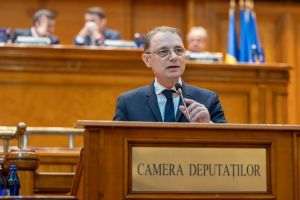
March was the decisive month of the quarter, because all the tensions accumulated in January and February met with two major events: the delayed adoption of the state budget and the energy shock caused by the conflict in the Middle East. Romania entered the budget year almost three months late, as the 2026 state budget law was only voted in Parliament on March 20, with 319 votes "for", 104 "against" and one abstention, while the state social insurance budget law was adopted with 314 votes "for", 105 "against" and 12 abstentions. The process was marked by five days of debates and a deadlock in the coalition, generated by the PSD-PNL dispute regarding an amendment regarding aid for vulnerable people. The political compromise consisted of moving one billion lei to the Ministry of Labor, from the Ministry of Justice, and postponing the payment of salary compensation won in court by magistrates. Subsequently, AUR challenged the budget package at the Constitutional Court, but the CCR rejected the objections on March 26, and the state budget law was published in the Official Gazette on March 27 and entered into force.
The 2026 budget is built on an estimated economic growth of 1%, a nominal GDP of 2,045.2 billion lei, a deflator of 6.1%, an increase in the average monthly net salary by 5.5% and an average annual inflation forecast at 6.5%. The total revenues of the general consolidated budget are estimated at 736.5 billion lei, and expenditures at 864.3 billion lei, respectively 42.3% of GDP, with a projected deficit of 127.7 billion lei, equivalent to 6.2% of GDP. The fiscal-budgetary ceilings provide for a deficit of 6.2% of GDP in 2026 and 5.1% in 2027, personnel expenses of 8.2% of GDP in 2026 and 7.9% in 2027, as well as a public debt ceiling of 62.5% of GDP at the end of the year. Personnel expenses are estimated at 168.3 billion lei, respectively 8.2% of GDP, compared to 167.7 billion lei and 8.8% of GDP in 2025, which indicates a decrease in share in the economy, even if the nominal value remains almost unchanged. Expenditures on goods and services are estimated at 105.3 billion lei, or 5.2% of GDP, and those on social assistance at 249.2 billion lei, or 12.2% of GDP, down from 13.1% of GDP in 2025. The most visible pressure comes from interest rates, which increase from 50.5 billion lei in 2025 to 60.8 billion lei in 2026, reaching approximately 3% of GDP, which shows that public debt is starting to consume an increasing amount of budgetary space.
Investments are the core of economic policy in the 2026 budget. The total volume of investments reaches approximately 164 billion lei, almost 25.8 billion lei more than in 2025, raising their share to over 8% of GDP, compared to 7.2% in the previous year. European funds exceed 110 billion lei, i.e. approximately two-thirds of total investments. Post-accession non-reimbursable external funds are estimated at 51.3 billion lei, up 42% compared to 2025, PNRR grants at 41.4 billion lei, up 43%, PNRR loans at 12 billion lei, and advances through SAFE at over 6 billion lei. National financing programs, including those in defense, reach 56.8 billion lei. The budget thus tries to keep investments at a high level, but does so in a strong dependence on European funds, PNRR and loans, which turns the administrative capacity for implementation into a macroeconomic problem.
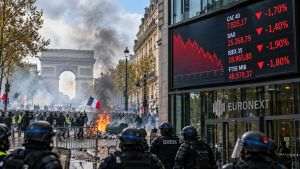
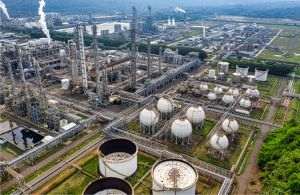
In parallel with the adoption of the budget, March brought the energy shock caused by the escalation of the conflict in the Middle East. The rise in oil prices was no longer just a market trend, but a direct risk for inflation, transport, agriculture, the food industry and the purchasing power of the population. Under these conditions, the Government declared by emergency ordinance a crisis situation on the crude oil and petroleum products market, namely gasoline and diesel, for the period April 1-June 30, 2026, with the possibility of successive extensions for periods of no more than three months as long as the causes of the crisis persist. In the area of natural gas, the Executive decided to maintain the capped price for household consumers during the period April 1, 2026-March 31, 2027 and to oblige natural gas producers in Romania to market the quantities intended for the population and thermal energy producers for population consumption at the price of 110 lei/MWh.
Transporters received a support scheme calibrated to the increase in the price of diesel. The government has extended until the end of the year the state aid scheme for partial compensation of excise duty, with a budget of over 650 million lei and over 6,200 eligible economic operators. The compensation is differentiated: 40 bani/liter for diesel purchased between October 1 and December 31, 2025, 65 bani/liter for the period January 1-March 31, 2026 and 85 bani/liter for the period April 1-December 31, 2026, for which the value of 1,954.29 lei per 1,000 liters is also mentioned.
For farmers, the Government has adopted the mechanism of reducing excise duty on diesel used in agriculture, allocating 620 million lei from the Ministry of Agriculture budget for 2026. The money covers payments for the period July-December 2025, and for 2026 the difference in excise duty returned to farmers is 2,697 lei/liter.
In addition, the Government has extended until June 30, 2026 the capping of the commercial mark-up on basic foods, maintaining the mechanism applied for plain white bread, drinking milk, bulk cow's milk cheese, plain yogurt, flour, cornmeal, eggs, sunflower oil, fresh chicken and pork, fresh vegetables and fruits, potatoes, sugar, sour cream, butter and mayonnaise.
The impact of the crisis was quickly seen in inflation. After 9.31% in February, the annual rate rose to 9.87% in March, confirming that the pressures from energy and fuels are transmitted to the economy through transport, manufacturing and food. In this context, the NBR had no room for relaxation, and monetary policy remained tight.
On the external financial front, Moody's Ratings completed its periodic review of Romania's credit profile in March, reconfirming the solid medium-term growth potential and resilience to external shocks, but maintaining a negative outlook. The agency acknowledged that the fiscal consolidation measures, including the VAT increase in 2025 and the freeze on public spending in 2026, have started to have an effect, pushing the deficit on a downward trajectory, with an estimated correction of almost 2 percentage points this year. At the same time, this reconfirmation does not mean the disappearance of risks, but only that Romania has gained time, and time must be used to demonstrate that the deficit reduction is not a start-of-year accident, but the beginning of a sustainable adjustment.
The budget execution on March 31 confirmed the numerical result of the entire quarter. The deficit of 21.09 billion lei, respectively 1.03% of GDP, was 6.27 billion lei below the forecast level for the analyzed period and 22.56 billion lei below the deficit in the first quarter of 2025. Revenues of 158.76 billion lei increased by 12.3%, and the advance as a share in GDP was 0.39 percentage points. On the expenditure side, subsidies amounted to 2.83 billion lei, targeting passenger transport, support for agricultural producers and the energy compensation scheme for non-household consumers, other expenses were 2.76 billion lei, including scholarships for pupils and students, support for religious groups, civil compensation and payment titles issued by the National Authority for Property Restitution, and projects financed from non-reimbursable external funds attracted expenses of 15.84 billion lei, including funds related to the 2014-2020 and 2021-2027 financial frameworks, agricultural subsidies, the Modernization Fund and non-reimbursable financial assistance from the PNRR. Overall, the first quarter of fiscal 2026 was more than a succession of good deficit figures. Basically, the first quarter of 2026 showed an economy that is moving forward, but not freely, but with the handbrake partially pulled: the state invests, borrows, taxes, compensates and disciplines, the central bank keeps interest rates high, the population finances the deficit through government bonds, and the business environment receives incentives, but also tougher rules.

















 Euro
Euro Dolar SUA
 Franc elveţian
 Liră sterlină
 Gram de aur