English
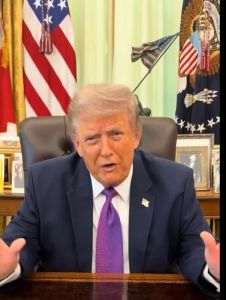
Global disorder is entering a phase of accelerated rearrangement. The American pillar no longer ensures stability, and the post-war architecture is fragmenting under the impact of recent decisions from Washington. The withdrawal of the United States from several key multilateral mechanisms has transformed a latent evolution into a visible structural shock, accelerating processes that were already underway.
The first concrete evidence of global reorganization appears in the architecture of trade agreements, in regional financial cooperation, and in the reserve strategies of central banks. What emerges is not an abrupt rupture but a pragmatic rearrangement in which states and economic blocs seek functionality and predictability outside a center that has become unpredictable. The United States remains a major actor, but it is no longer the indispensable hub of the system.
BRICS: Power Infrastructure, Not Just Rhetoric
The first signs of regrouping without the U.S. appear where economic cooperation requires physical protection: maritime routes and energy flows. In recent days, South Africa hosted naval exercises with Chinese, Russian, and Iranian participation, officially presented as actions to "secure maritime transport and trade.” The events took place in the context of the expansion of the BRICS format and discussions regarding South-South cooperation.
The repetition and expansion of these exercises, against the backdrop of tensions with Washington, indicate a shift: states outside the Western axis treat trade, energy, and logistics as integrated security issues, not simple market flows. BRICS is thus moving from political coordination to an infrastructure of economic power.
Sources: South African Ministry of Defence; TASS; South China Morning Post; contextual analyses published by the Financial Times, January 2026.
European Union: Autonomy Through Agreements and Currency
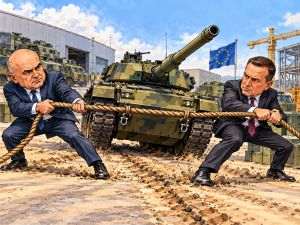
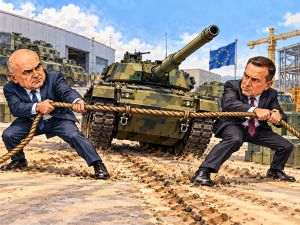
In the European Union, reorganization without the U.S. manifests through the acceleration of a dual project: expanding trade agreements with alternative markets and strengthening the international role of the euro. On the first front, the EU Council publicly reaffirmed progress on the EU-Mercosur agreement, despite internal opposition and geopolitical tensions. The message is clear: the EU is seeking functional commercial escape valves, not exclusive dependencies.
On the monetary dimension, the leadership of the European Central Bank emphasized in recent statements that geopolitical fragmentation turns financial dependencies into vulnerabilities and that the euro must be "institutionally equipped” to matter more in a fragmented world.
The combined result is a strategy of reducing dependence on a pillar that has become unpredictable, without a declarative rupture from the United States.
Sources: Council of the European Union; European Central Bank - public statements; Politico Europe; Financial Times, January 2026.
ASEAN: Cohesion as a Protection Mechanism
In Southeast Asia, reorganization takes the form of an institutional reflex. The recent assumption of the ASEAN presidency by the Philippines was accompanied by a reaffirmation of "ASEAN centrality” and regional coordination, at a time when major powers are exporting trade conflicts and export controls.
Although the signal is political, the economic implication is direct: ASEAN is defending its regional production chains, intra-Asian investments, and logistical routes through internal discipline and collective positioning. The regional bloc is attempting to avoid captivity in a world structured by sanctions and tariffs.
Sources: ASEAN Secretariat; official communications of the Philippine government; Nikkei Asia; Bloomberg, January 2026.
Explanatory note: ASEAN (Association of Southeast Asian Nations) brings together ten states from Southeast Asia and functions as an economic and political coordination framework, not as a supranational union like the EU. In the current context, ASEAN acts as a buffer zone for regional stability.
Australia: The Ally That Separates Security From the Economy
Australia remains firmly anchored in the American security architecture, but is deliberately separating its economy from geopolitical confrontation. After the commercial shocks in its relationship with China, Canberra accelerated the diversification of export markets and supply chains through Asian regional agreements and strengthened relations with India and ASEAN states.
Australia does not contest American military leadership, but refuses to let its economy become collateral damage in Washington's strategic rivalries.
Sources: Government of Australia - Department of Foreign Affairs and Trade; The Australian Financial Review; Reuters - factual reporting cited by regional press, January 2026.
New Zealand: Self-Protection Through Regional Agreements
New Zealand illustrates the reaction of small states deeply integrated into global trade. Wellington maintains Western security partnerships but places emphasis on plurilateral and regional trade agreements in the Asia-Pacific. The declared strategy aims for economic stability through institutional diversification rather than dependence on external political decisions.
Sources: Government of New Zealand; Ministry of Foreign Affairs and Trade; The Guardian; Financial Times, January 2026.
Africa: Multiplying Options
Africa is not reorganizing against the U.S., but outside a single dependency. African states are expanding cooperation with China, India, Gulf countries, and the EU, leveraging competition among major actors for financing, infrastructure, and market access. The African Continental Free Trade Area (AfCFTA) is gaining relevance as a tool for reducing external vulnerability.
Sources: African Union; AfCFTA Secretariat; African Development Bank; Al Jazeera; Financial Times, January 2026.
Canada: The Ally Building Redundancies
Canada represents an early indicator of reorganization without the U.S. Although it remains a historic ally of Washington, Ottawa is accelerating the diversification of its commercial and strategic relations, focusing on the EU and Asia-Pacific. The CETA agreement with the EU is gaining practical relevance, and relations with Japan and South Korea are strengthening in critical sectors.
Canada avoids open confrontation with Washington but reduces its exposure to American political risk by participating in multilateral initiatives that do not rely on explicit American leadership.
This is what is called "redundancy building”: routes, systems, or alternative solutions that can take over the main function if it becomes unavailable, unsafe, or too costly.
Sources: Government of Canada; Global Affairs Canada; The Globe and Mail; Politico, January 2026.
Central Banks: Safety Nets Outside the American Center
At the monetary level, reorganization without the U.S. is reflected in two simultaneous movements: efforts to strengthen alternative currencies in payments and reserves, and the recognition that dollar liquidity remains critical infrastructure in a crisis. The ECB explicitly stated that geopolitical fragmentation is changing the rules for international currencies and turning financial dependencies into systemic risk.
Fragmentation produces three concrete effects: greater competition between currencies, proliferation of bilateral financial-support agreements, and pressure to eliminate "single points of failure” in trade finance and debt financing.
Sources: European Central Bank; Bank for International Settlements; International Monetary Fund - recent declarations and reports; Bloomberg, January 2026.
Twilight of Central Hegemony
Global reorganization is not ideological and is not coordinated by a single actor. It represents a defensive reflex in a world where the American pillar has become unpredictable. The world is not abandoning the dollar and is not excluding the United States, but it is building parallel routes, redundancies, and safety nets. This is the new geometry of global order: more fragmented, more cautious, and less centered on a single hegemon.






















 Euro
Euro Dolar SUA
 Franc elveţian
 Liră sterlină
 Gram de aur