 English

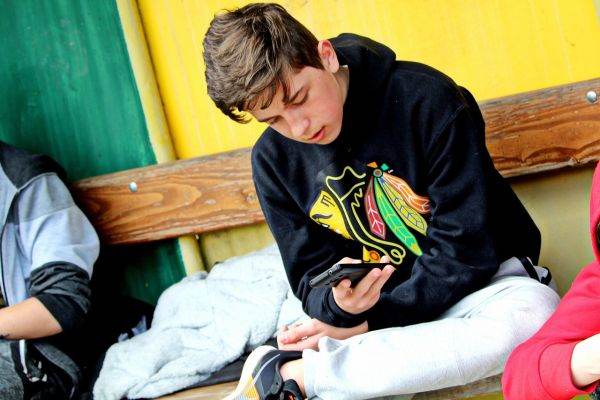
The effect of social networks on children is increasingly harmful. Numerous specialized studies show it, but the situation is also visible to the "naked eye". The influence of schools and parents is decreasing, while that of platforms such as Facebook, Instagram and TikTok is increasing. Many challenges launched online are bordering on the absurd, and children become their victims. News about violence, accidents, crimes involving minors appears daily. Without clear intervention by the authorities, including at the legislative level, the issue can become very serious for the entire society. Two recent examples from our country show the depth of the problem.
A 14-year-old girl was pre-arrested by the Bihor Court for 15 days, for child pornography, rape committed against a minor and blackmail, after she produced several videos with a minor in which she had explicit sexual behavior. The 14-year-old girl also allegedly coerced the same minor, threatening to post the already made materials on the internet, to enter into a video call and perform sexual acts. The investigators also found photos of minors in sexual poses on the phone of the person under investigation. The police stated that the 14-year-old girl threatened the victim with posting the videos online if she did not obtain a social media account with many followers. A 10-year-old child from Viziru commune, Brăila county, was attacked with a knife by another minor of the same age, amid a disagreement over a toy (kendama), informs the Brăila County Police Inspectorate (IPJ). The aggressor applied 24 knife blows and then buried his victim in the snow, the latter arriving, after being discovered by an adult, at the hospital in serious condition. Violence is out of control, and many minors do not even understand that they are doing something wrong in some cases.
On the other hand, there are also positive examples of combating the effects of the internet on minors.
• Australia, an example
A month after the ban on the use of social networks by young people under 16 came into force in Australia, 4.7 million accounts have been deactivated, the country's internet regulator announced last week. The action comes in the context that the ban on the use of social networks came into force on December 10, 2025. "Today we can announce that this measure is working. It is a source of pride for Australia. This was pioneering legislation worldwide, but now it is being followed around the world," Prime Minister Anthony Albanese said in a press conference, according to NBC News.
The number of deactivated accounts is much higher than initial estimates. According to the Associated Press, Meta, the company that owns Facebook, Instagram and Threads, announced that it had deleted about 550,000 accounts belonging to young people under the age of 16. "We don't expect safety laws to eliminate every violation. If that were the case, speed limits would be considered a failure because people break them, and alcohol restrictions would be a failure because, believe it or not, some children have access to alcohol,” said the commissioner for electronic safety.
A study conducted with mental health experts will analyze the long-term impact of the ban over several years.
Australia became the first country in the world to introduce a minimum age for access to social networks in December. The move comes after years of criticism of big technology companies, accused of delaying implementing real solutions to reduce the risks to which children are exposed online.
• Britain, France, Denmark, Spain, Germany, Italy and Greece are considering introducing restrictions
Australia's ban has sparked a wave of debate and legislative initiatives globally, with the UK seen as a leading candidate to follow suit, according to CNBC. The Australian law, which came into force through the Online Safety Amendment Act, requires platforms such as Reddit, X, Instagram, YouTube and TikTok to implement strict age verification methods, under penalty of fines of up to 49.5 million Australian dollars. While reactions from teenagers, technology companies and experts have been divided, pressure on governments is growing.
"This is a global problem, and governments everywhere are under pressure to respond,” said Daisy Greenwell, co-founder of the British organization Smartphone Free Childhood. According to her, "no one believes the status quo is working for children, parents or society anymore.”
In addition to the UK, countries such as France, Denmark, Spain nia, Germany, Italy and Greece are considering similar restrictions for minors under 16. In the United States, a federal ban is considered unlikely, but there is growing interest at the state level.
Ravi Iyer, director of the Neely Center at the University of Southern California, says that "federal policy is hard to predict,” but acknowledges that the issue enjoys rare bipartisan support. He estimates that more US states could adopt such measures in the coming years, with California and Texas already considering initiatives for 2026.
At the same time, the tech giants are opposing these moves. Reddit has challenged the Australian law in court, arguing that it excessively restricts freedom of expression, while Meta has called for the ban to be reviewed. The X network has told users that enforcing the restrictions "is not a choice, but a legal obligation.” In the UK, the House of Lords is set to vote on an amendment to the Children's Wellbeing and Schools Bill that could introduce a ban on children under 16. A recent campaign by the organisation Smartphone Free Childhood generated over 100,000 emails to MPs calling for "reasonable and age-appropriate limits to protect children's wellbeing”. British Prime Minister Keir Starmer has spoken out in favour of the idea, saying "we need to do a better job of protecting children from social media” and that he is studying the Australian model.
France is at an advanced stage of debate, with two bills under consideration, one backed by President Emmanuel Macron, which would restrict access to social media for children under 15. French public health authorities have stressed that the negative effects of social media on young people are "numerous and well documented”. According to Ravi Iyer, if such a ban becomes a global norm, the social pressure on teenagers to be present on social networks would decrease significantly.

























 Euro
Euro Dolar SUA
 Franc elveţian
 Liră sterlină
 Gram de aur





























