 English


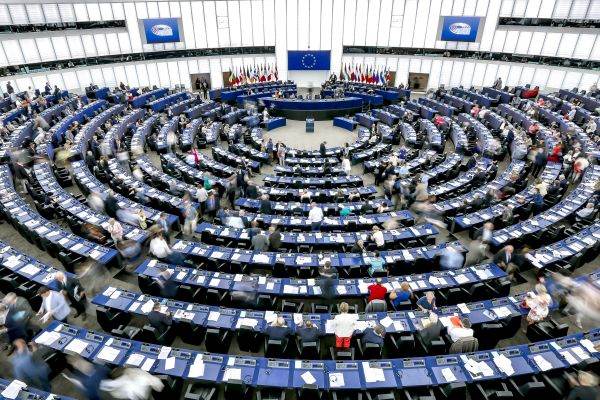
The European Parliament's Committee on Budgets is set to adopt today the report on the European multiannual financial framework 2028-2034, according to a statement made last week in Brussels by MEP Siegfried Mureşan (VP of the EPP), co-rapporteur, together with Carla Tavares (S&D), on the document.
The Vice-President of the European People's Party, Siegfried Mureşan, told us: "In the coming years, we will have more European funds for everything related to citizen security, on the following components: defense, border security, cybersecurity and energy security. It is also essential to guarantee food security, seeing what is happening around us, in the Middle East, taking into account the situation in Ukraine and the effects of climate change in Africa. It is clear that the European Union will have to produce more food in the coming years, not less, and farmers will need greater support from the European level. The European Commission initially proposed merging the common agricultural policy and cohesion policy into a single fund for each state and eliminating the second agricultural pillar. This would have been wrong, and the European Parliament asked the Commission to review its proposal. Parliament wants a common agricultural policy and a cohesion policy, each with a separate budget, guaranteeing predictability for beneficiaries of European funds and with a predictable legal basis. Under pressure from Parliament, the Commission reconsidered its proposal and proposed to restore Pillar 2, allocating euro48 billion for rural development. The European Parliament's proposal will support the clear separation of the common agricultural policy from the cohesion policy and a predictable budget for each. We support the allocation of a total of euro385 billion for farmers, consisting of: euro260 billion for direct subsidies (Pillar 1); euro48 billion for rural development (Pillar 2); euro45 billion as additional support in the context of the Mercosur free trade agreement. For cohesion policy, we propose an allocation of euro274 billion, equivalent to the allocation in the current period. Overall, the European Parliament supports an increase in the European Union budget by 10% compared to the Commission's proposal. The Commission proposed a draft budget of 1.15% of gross national income (GNI) of the Member States, but the challenges are increasing: security risks, the desire to invest in competitiveness, digitalization and artificial intelligence. The European Union cannot do more with the same budget, and staying at the same level would be a mistake. Therefore, the Parliament's proposal is an increase for projects up to 1.26% of GNI".
The European Parliament's co-rapporteur for the MFF 2028-2034 also showed that the Community Executive proposed that the repayment of the 200 billion euros, representing the debts for the PNRR, be made from the European Union budget. Mr. Mureşan specified that the Parliament's position is that the repayment of debts should not be made at the expense of existing programs, such as support for farmers, SMEs, researchers, hospitals or schools.
"We propose that the reimbursement be made from the European Union's own sources of revenue, outside the traditional budget. Any own source of revenue must be decided unanimously by all governments in the Council, ratified by national parliaments and voted by an absolute majority in the European Parliament. My objective was to work inclusively and transparently with the pro-European groups to ensure a united Parliament in adopting this budget”, said Siegfried Mureşan.
The negotiations were extremely tough and difficult, because at the level of the European Parliament there is no consensus between the main European political families. The Social Democratic Group supported the need for a specific fund for the health area, which no longer existed in the European Commission's proposal, and obtained a consistent allocation of several billion euros for the housing area. Emphasis was also placed on a specific allocation for agriculture, maintaining cohesion policy and adequate resources for education.
As Vice-President of the European Socialists and coordinator of the political group on the multiannual financial framework, Victor Negrescu, rapporteur of the Health Committee for future national plans and rapporteur of the Budget Committee for the Common Agricultural Policy, imposed, through an amendment, the need for a convergence of subsidies. According to him, at the level of the European Parliament, the maintenance of the N+3 rule in the implementation of programs with European funds from national envelopes was further supported, it was requested that cohesion policy funds not be conditioned by reforms that are difficult to implemented, given the European Court of Auditors report, which shows that this method was not functional. It is also desired to simplify access to European money and to ensure complementarity between programs.
Victor Negrescu, Vice-President of the European Parliament, added: "For Romania, it is crucial to maintain at least the proposed envelope of 60 billion euros (similar to the current one) and to have a specific allocation for each Member State in the European Competitiveness Fund. In this regard, an amendment has been tabled for an integrated approach to the allocation of resources, given the change in proportions proposed by the European Commission. Currently, 60% of the funds go to the Member States, but the current Commission proposal reduces this share to around 40%, giving the European executive control over more resources. For the Erasmus programme, we have requested that in the next financial year there be an allocation of 20% for education, youth and skills training. Although the current negotiations indicate an amount of around 40 billion euros (a 5% increase in real terms), adjusted for inflation and the merging of programmes, the amount is equal to the current one and does not correspond to the ambitions of the Draghi and Letta reports. European Parliament will require an increase in the European budget of around 10% compared to the current one. The major problem is that the 2 trillion euros announced by the Commission depend on new European taxes and increased contributions from member states, which are currently reluctant. The Social Democratic Group has proposed alternatives, including a European tax on the gambling and online betting industry, which would go into funds for education, youth and prevention”.
If the Budgets Committee report is adopted today, it will be followed by a vote in Parliament, with the European Parliament's position also being presented at the EU Council meeting, which will take place on 23-24 April in Cyprus. If the vote on Parliament's position is postponed to May, then the EU Council will give its opinion in June, under the Cypriot presidency, or in July, under the Danish presidency.

















 Euro
Euro Dolar SUA
 Franc elveţian
 Liră sterlină
 Gram de aur





























