English

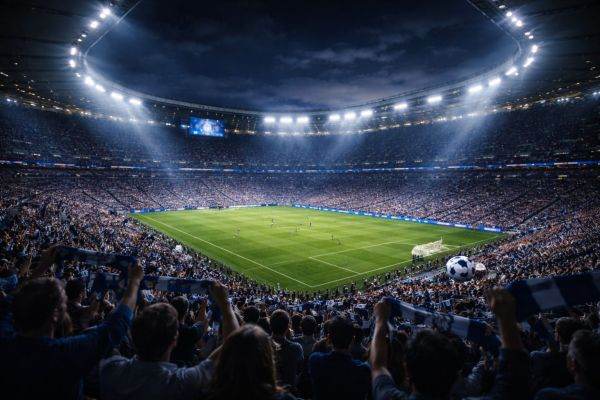
UEFA's position on the exclusion of Russian clubs and the national team from international competitions "remains unchanged," said the president of the continental forum, Aleksander Èeferin. The decision is directly linked to Russia's invasion of Ukraine, which began in February 2022, and the condition for a possible return remains the same: an end to the conflict. "UEFA's position is clear and has not changed," Èeferin said in a press conference. He stressed that the European body cannot comment on the decisions of other sports institutions or governments: "I cannot comment on what FIFA does or what governments say. The world is changing. We will see what the future holds for us." The ban imposed on Russia applies to both the national team and clubs, which have been eliminated from all UEFA competitions since the first days of the war.
• FIFA position: signals for possible reinstatement
In contrast to UEFA's position, FIFA president Gianni Infantino recently suggested that Russia's reinstatement could be considered. In an interview with Sky News on February 3, Infantino responded affirmatively to a question about lifting the ban on Moscow: "We have to consider it, that's for sure."
The statement was seen as the first explicit overture from the FIFA leader about Russia's return to international competition, although there is currently no official timetable or procedure.
• Russia's reaction: pressure to return to world football
The Russian Football Federation has consistently criticized the sanctions, considering them "political" and contrary to the principles of neutrality of sport. Russian officials have repeatedly argued that: the exclusion is hurting the development of domestic football; players are being "collectively punished"; Russia should be treated the same as other states in conflict. In recent years, Moscow has even considered the possibility of moving from UEFA to the Asian Confederation, but the project has not materialized.
• Reactions of other European federations
UEFA's position also reflects pressure from many European national federations. Countries strongly opposed to Russia's return are: Ukraine, Poland, the Baltic States, the Nordic countries. These federations have warned that they could boycott competitions if Russia were reinstated before the end of the war. Other federations in Western Europe have adopted a more reserved tone, arguing that decisions should be made based on sporting principles, but only after extensive international consultations.
Russia's suspension from international football was one of the harshest sports sanctions adopted after the outbreak of the war in Ukraine. The measure led to: the exclusion of the national team from qualifying for major tournaments; the elimination of Russian clubs from European cups; significant financial losses for Russian football.
Currently, the divergence between the positions of UEFA and FIFA shows that the issue remains extremely sensitive politically and in sports, and a possible return of Russia depends, to a large extent, on the developments of the conflict.











 Euro
Euro Dolar SUA
 Franc elveţian
 Liră sterlină
 Gram de aur