English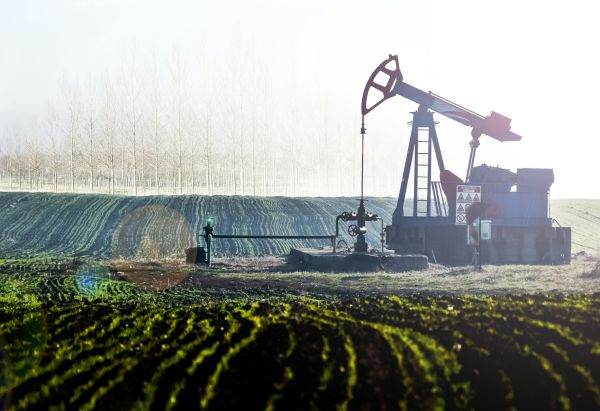
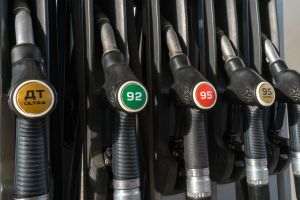
Oil prices rose sharply on foreign markets yesterday after President Donald Trump said the United States would continue its attacks on Iran without committing to a timetable to end the war, fueling investor fears of supply disruptions.
West Texas Intermediate (WTI) crude for May delivery was at $109.89 a barrel on the New York Mercantile Exchange at 7:59 a.m., up 9.7 percent from Wednesday's close, while Brent crude for June delivery was at $109.15 a barrel, up 7.9 percent.
The advance followed earlier declines of more than a dollar for both crudes, which came before Trump's televised address to the nation.
Iran's closure of the Strait of Hormuz in retaliation for US-Israeli attacks has disrupted about 20% of global oil and liquefied natural gas (LNG) supplies, causing the world's worst energy crisis in decades.
"We're going to hit them very hard in the next two to three weeks. We're going to put them back in the Stone Age, where they belong," Trump said, marking a sharp change from earlier statements this week that suggested US forces could leave Iran within a similar timeframe.
The White House official also said the US military had almost achieved its objectives in the conflict.
• Natural gas prices rise in Europe
European natural gas prices rose yesterday amid the dynamics of the war in Iran. On the Amsterdam Stock Exchange, the price of the benchmark TTF contract rose nearly 7% in the second half of the day to 50.81 euros/megawatt-hour as markets reassessed supply risks following new remarks by US President Donald Trump on the Iran war.
The rise came after natural gas prices had eased in recent sessions amid hopes of a ceasefire in the Iran conflict.
Traders continued to monitor developments in the Middle East, particularly risks to critical oil and gas transit routes, while also assessing the potential impact on liquefied natural gas flows to Europe, according to the Anadolu Agency.
European gas markets have remained highly sensitive to geopolitical shocks following the energy crisis triggered by the Russia-Ukraine war, with supply concerns often fueling sharp price swings in the region.
• Gold, in decline
Gold prices fell yesterday, after four consecutive positive sessions, following statements by US President Donald Trump. Gold futures for June delivery were at $4,627.90 an ounce on the Comex New York as of 07:58 local time, down 3.9% from the previous day. The spot price of the yellow metal was at $4,608.43 an ounce at the same time, down 3.2%.
The decline came as investors reacted to Trump's remarks. The White House official also said that the United States will not allow Tehran to obtain nuclear weapons.
• Radu Puiu, XTB: "Aluminum price is exploding”
While the Middle East war is causing losses for many industries, aluminum is among the raw materials that have had a positive evolution during this period, says Radu Puiu, financial analyst at XTB Romania, noting that the metal price has reached record levels for the last four years, fueled by geopolitical tensions, but also reduced industrial reserves.
As airstrikes and disruptions in shipping shake the Middle East, the global supply chain for this "green transition” metal is facing its most important test in the last decade. Thus, since the beginning of this week, aluminum has advanced by about 8% until today's session, reaching a local high of $ 3,527 per metric ton, notes Radu Puiu.
According to the source cited, aluminum on the London Metal Exchange (LME) has risen by about 10% in March and recently reached a price of almost $3,450 per metric ton. Radu Puiu says: "The main catalyst is a series of attacks affecting major smelters in the Persian Gulf, in particular facilities operated by Aluminium Bahrain (Alba) and Emirates Global Aluminium (EGA). While the companies are still assessing the full extent of the damage, Alba has already reported capacity cuts of almost 20%. The effects on production are also amplified by the blockages in the Strait of Hormuz. This narrow waterway is a crossing point for about 5.5 million tons of primary aluminum annually, which represents about 9% of global production. Given that over 80% of the region's metal is destined for export, any transit risk turns a regional production problem into a global shortage event.”
The market is sending out a classic crisis signal known as "backwardation,” points out Radu Puiu, specifying: "This phenomenon occurs when the spot price (the purchase price of the metal today) is much higher than the price for delivery in three months. Currently, this premium has jumped above $60 per ton, the highest level since 2007 and highlights the acute imbalance in the metal market. Traders are paying this "deficit tax” amid the disappearance of the main safety nets in the financial market. Stocks in LME warehouses have decreased by over 60% since May last year and have fallen to their lowest levels since mid-2023. At the same time, supply remains rigid: aluminum smelters are energy-intensive, difficult to restart after a shutdown, and possible equipment breakdowns can delay the resumption of production for months.”
Demand is also supported by China, where the manufacturing PMI index has risen above 50 again, signaling expansion. If the world's largest aluminum consumer accelerates its purchases again at a time when Gulf supply remains affected, the market deficit will quickly deepen, emphasizes the financial analyst at XTB Romania.
Radu Puiu also states: "When stocks are so low, prices become volatile. Every news item about a delivery delay or an update on a smelter can trigger significant price fluctuations. This creates a "risk premium' for aluminum, which other similar metals such as copper or nickel do not currently have. For investors, the situation puts the spotlight on producers and recyclers who could benefit from higher margins. In addition, aluminum is the "backbone' of modern manufacturing, playing a key role in transportation, as it reduces the weight of electric vehicles and those in the aerospace industry. Moreover, it is also frequently used in the packaging industry, but also in infrastructure, through electrical grids and solar panel frames.” As production costs rise, manufacturers must decide whether to absorb the impact on their margins or pass the costs on to consumers. If these supply shocks persist, aluminum could become a major driver of "persistent” inflation in the industrial sector, argues Radu Puiu.
The current crisis shows that the Western world depends on just a few large production centers. The Persian Gulf is a powerhouse in the field of metals for export, and the Strait of Hormuz is the only transition route.
Radu Puiu concludes: "As geopolitics returns as the main catalyst for the raw materials market, companies are forced to reassess risk. This will likely lead to a higher price environment for a long time, as companies invest in more resilient, albeit more expensive, supply chains.”
• IEA: Middle East disruptions to hit Europe in April
Middle East oil supply disruptions will increase in April and start to affect the European economy, with the closure of the Strait of Hormuz severely reducing supplies, Fatih Birol, head of the International Energy Agency (IEA), warned on Wednesday, Reuters reports, according to Agerpres.
Following Tehran's attack on energy assets in the region, after US and Israeli air strikes, and restrictions on transport, more than 12 million barrels of oil have been lost, Birol explained, adding: "April's oil losses will be double the level in March, in addition to losses of liquefied natural gas (LNG) and will be added to rising inflation and reduced economic growth forecasts in many countries."
Losses are expected to increase in April, as a number of LNG and oil tankers that arrived in March were contracted before the war began and continued on their way to their destinations.
The biggest problem is the shortage of kerosene and diesel, which is already affecting Asian countries but will also be felt in Europe in April or May, Birol said.
He recalled that the IEA is considering releasing oil from its strategic reserves again.
The current disruptions in LNG and oil supplies are worse than those during the two crises in 1973 and 1979 combined and the loss of Russian gas volumes after Moscow's invasion of Ukraine in 2022, Birol said.
The IEA chief drew attention to the fact that about 40 key energy assets in the Middle East have been hit since the war began and it will take time for them to become operational again.
"We are heading for a major disruption and the biggest one yet," Birol warned.
In mid-March, the IEA decided to release about 400 million barrels of oil from its reserves to mitigate the price increase triggered by the Middle East war. This is the sixth release of oil from strategic reserves and, at the same time, the largest operation of this type ever carried out in the history of the institution.
• World Bank, concerned about the economic consequences of the war in Iran
The Director General of the World Bank, Paschal Donohoe, said Wednesday that he was "very concerned" about the impact of the Middle East war on the global economy, at a time when a number of countries were already facing difficulties due to a series of global crises, AFP reports.
"We are very concerned about the consequences that this war will have on inflation, jobs and food security, which is why we are preparing to be able to provide assistance" to countries that request it, Donohoe told AFP, according to Agerpres.
The Washington-based institution is paying particular attention to the situation in African and Asian countries, which are particularly vulnerable to rising energy prices and supply shocks.
"We are consulting with many governments and countries to understand their needs and I expect to learn more in the coming weeks," Donohoe added.
"These countries have concerns about the supply shock and its implications for availability... and, of course, the consequences for food and fertilizer availability are highlighted in our discussions," explained the World Bank director. According to him, the international financial institution will take advantage of the spring meetings, which will be held in Washington between April 12 and 17, "to assess the scope of the potential response."
In the short term, "we are looking to determine what funds are available and what interventions may be needed to help countries address the short-term effects of the conflict in Iran," Donohoe said.
The help could be not only financial, but also technical, in particular by highlighting the reforms that need to be implemented to support the economic recovery in the medium term.
"We know that, beyond the importance of (financial) intervention in the acute phase of the crisis, the subsequent political response will be extremely important, so we are considering the advice we can offer to countries," Paschal Donohoe continued.
• IMF, World Bank and IEA to coordinate efforts on Iran war
The International Monetary Fund (IMF), the World Bank and the International Energy Agency (IEA) will collaborate to respond to the economic consequences of the Iran war, Reuters reports, according to Agerpres.
The three organizations agreed to share data, coordinate policy advice and mobilize relevant stakeholders to support countries in need, according to a joint press release issued on Wednesday.
They will also assess the countries' potential financing needs.
"The impact is substantial, global and highly asymmetric, disproportionately affecting energy importers, especially low-income countries," the heads of the three institutions said.


















 Euro
Euro Dolar SUA
 Franc elveţian
 Liră sterlină
 Gram de aur