English


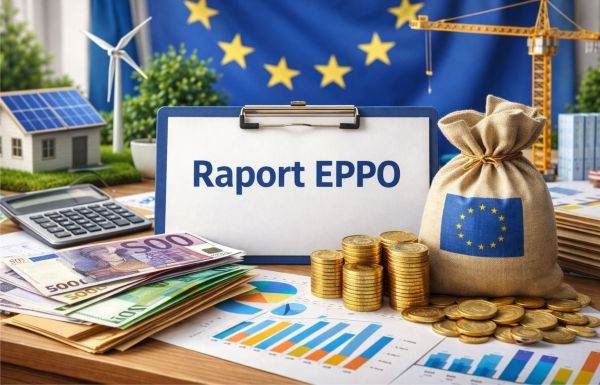
Our country is in second place regarding fraud of European funds, according to the European Public Prosecutor's Office (EPPO) activity report for 2025, published yesterday on the website of the institution in question.
With 535 active cases and estimated total damages of 6.05 billion euros (of which 303 cases opened in 2025, with damages of 3.91 billion euros), which means approximately 9% of the total damages estimated at European level - 67.27 billion euros, Romania is behind Italy - estimated damages worth 28.71 billion euros, but ahead of France - damages of 5.94 billion euros, Germany - 5.77 billion euros and Belgium - 3.14 billion euros, according to data from the report prepared by the EPPO.
We mention that the respective top regarding fraud of European funds is made only for the states participating in the EPPO (24 EU member states). Denmark, Ireland and Hungary do not appear with national sheets in the report (non-participants), so a complete ranking of all 27 cannot be made strictly "according to the data in the file”.
Regarding the activity report for last year, Laura Codruţa Kovesi, Chief Prosecutor of the European Public Prosecutor's Office, stated in the preamble of the cited document: "By the end of 2025, we had 3,602 active cases, with a total damage estimated at over 67.27 billion euros. This is a huge figure. Unfortunately, these numbers will continue to grow in the coming years. What do they actually mean? First, that our prosecutors and staff are working on thousands of cases simultaneously. This indicator reflects sufficiently documented suspicions of fraud, committed essentially between 2017 and the present, in which a criminal investigation is underway, as well as criminal prosecutions pending before the competent courts. This is an impressive workload for an institution of our size. Second, they mean that we have started to direct the attention of relevant partners to organised crime groups that defraud EU revenues."
According to the data on Romania in the EPPO report, 44 cases refer to corruption crimes, which would have caused damages estimated at 130.99 million euros, 28 cases concern VAT and customs fraud - damages estimated at 271.5 million euros, and the majority of cases refer to fraud of allocated amounts, and here the total estimated damages reach 5.03 billion euros, of which 4.98 billion euros represent fraud of the European budget. For the cases investigated in our country, the European Public Prosecutor's Office ordered the seizure, last year, of 120.83 million euros and froze assets of 10.83 million euros.
According to the document cited, at the end of last year, the EPPO had 3,602 cases pending (a 35% increase compared to 2024), with a total estimated damage of euro67.27 billion, which is a tripling of the damage compared to 2024, when the total damage was estimated at euro24.8 billion. Of the total damage estimated in 2025, over two-thirds - euro45.01 billion - is related to fraud affecting EU revenue sources, namely VAT fraud and customs fraud, revealing a criminal industry that has been ignored or tolerated for too long.
Laura Codruţa Kovesi, Chief Prosecutor of the European Public Prosecutor's Office, said: "With 981 ongoing cases of customs and VAT fraud, worth an estimated euro45 billion to both EU and national budgets, we are striking a blow at a criminal industry that has been ignored or tolerated for far too long. This is imperative for our security in the European Union, as well as for our public finances." The report's authors argue that the EPPO's investigations demonstrate that criminal enterprises operating in the field of VAT and customs fraud are making very high profits while facing relatively low risks. This explains why conventional criminal activities focused on illegal goods (counterfeit goods, drugs, weapons, etc.) or on the criminal exploitation of vulnerable persons (labour exploitation, prostitution, human trafficking) are increasingly combined with or even replaced by criminal activities related to the trade in legal goods, carried out in criminal ways that cause massive damage to the financial interests of both the EU and its Member States. Furthermore, the European Public Prosecutor's Office has observed recently an alarmingly high level of fraud orchestrated by large-scale organised criminal groups, related to the import and sale of goods originating from outside the EU, with a strong influence of Chinese criminal networks.
The cited document also shows that 512 active cases concern fraud of amounts allocated through the Recovery and Resilience Facility (RRF), the key instrument of NextGenerationEU, which demonstrates a sharp increase compared to 2024 (66.7%). Therefore, EPPO prosecutors state that, due to the large volume of payments expected until December 2026, the risk of fraud and corruption remains high for this mechanism.
Regarding these cases related to the Recovery and Resilience Mechanism, the European investigative website Follow the Money reveals, in an article published yesterday, that almost two thirds of the investigations opened target Italy, a state that is also the main beneficiary of the RR, with 153 billion euros received out of a total of 394 billion euros allocated. Warnings about the risk of fraud with European money are not new: since the launch of the RRF in 2021, OLAF has signaled that such a large volume of funds will inevitably attract fraud networks, while governments and the European Commission have been criticized for the lack of transparency regarding the real beneficiaries and for the refusal to use all available anti-fraud tools, including blacklists of known fraudsters. Recently, the European Court of Auditors warned that the EU budget is insufficiently protected against fraud related to the recovery fund and that the amounts lost may never be recovered. The pressure is even greater as the recovery mechanism draws to a close: Member States must meet all the milestones they have undertaken by 31 August, and after 31 December 2026 no more payments can be made, with euro122 billion in grants and euro61 billion in soft loans still unspent. Without stronger controls and real fraud detection, a significant part of this colossal European financial effort risks being lost forever.





















 Euro
Euro Dolar SUA
 Franc elveţian
 Liră sterlină
 Gram de aur