English


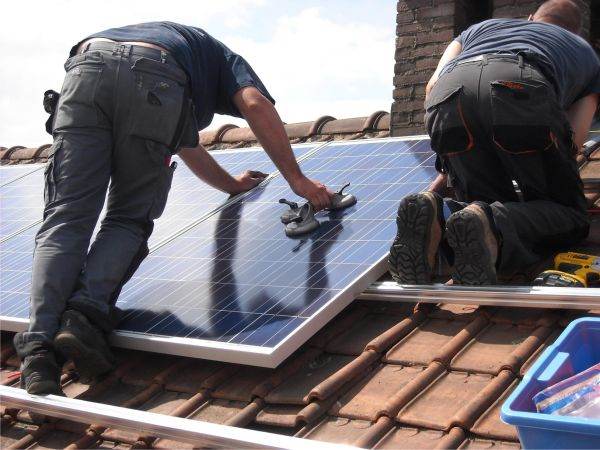
The accelerated growth in the number of prosumers has become one of the most visible transformations in the Romanian energy sector, but this success has raised a series of issues regarding costs, energy equity and sustainability, according to a study conducted by XLAED Business Hub SRL, at the request of the Romanian Energy Suppliers Association (AFEER).
According to the cited document, the number of prosumers in our country increased from 303 in 2019 to almost 300,000 at the beginning of 2026, while their installed capacity increased exponentially from 5 megawatts (MW) to approximately 3,400 MW at the end of 2025, with an estimated annual production of 4.5 terawatt-hours, i.e. the equivalent of almost 9% of the country's total electricity production.
The average annual growth rate of over 200% exceeded the dynamics of mature European markets, confirming the efficiency of support mechanisms, but simultaneously amplifying pressures on networks and suppliers.
At the heart of the debate is the issue of redistributed costs. The President of AFEER, Laurenţiu Urluescu, stated yesterday, at the presentation of the study: "Of course, the increase in electricity prices was the main economic factor in the emergence and spectacular evolution of prosumers. But, according to the study, if we were to relate the additional costs of suppliers to the amount of electricity introduced into the network by prosumers, we would obtain the additional cost of each MWh produced by them, between 200 and 372 lei/MWh, a cost that, in the end, is borne by consumers. The existence of prosumers on the internal energy market has many beneficial effects. Prosumers contribute to the modernization of the energy system by: increasing the share of renewable energy; the potential to participate in balancing services through aggregation and storage; accelerating digitalization and the adoption of new technologies. However, this impressive evolution has significantly disrupted activity in the sector, especially because it overlapped the effects of the energy crisis and price caps. That is why we requested this study: to better assess what is happening in market, what happens to distributed generation, what conclusions are reached and, above all, what to do in the future”.
The study shows that the current regulatory model generates additional costs for suppliers and network operators, which are transferred, directly or indirectly, to non-prosumer consumers. Estimates indicate an annual impact of tens of millions of euros for the situation in 2024, with a tendency to increase proportionally to the number of connected prosumers. From this perspective, the study brings into discussion the topic of cost socialization, described by the president of AFEER as a problem not only economic, but also moral: "We must emphasize the fact that there is a socialization of costs, namely the coverage of costs is done by including them in the invoices issued to consumers and here we believe that a major moral problem arises, mainly because prosumers are people with higher incomes. We do not find it fair and ethical to socialize their costs with other customers”.
• Large number of prosumers in economically strong counties
The analysis of the geographical distribution in the presented study supports this statement, showing an obvious correlation between the density of prosumers and the level of average income: prosperous counties (Ilfov, Cluj, Timiş, Braşov, Constanţa, to which the study adds the municipality of Bucharest in first place) concentrate the majority of installed capacities, while low-income areas remain poorly represented.
"Counties where citizens have incomes of over 5,000 lei/month concentrate approximately 65% of the installed power by individuals, while counties with incomes of less than 3,500 lei/month reach approximately 10% of the installed power. The geographical and socio-economic distribution of prosumers indicates a concentration of the benefits of the current scheme among households with incomes above the average, which generates a form of cross-subsidization from non-prosumer consumers, predominantly with lower incomes, to prosumers,” the cited study states.
The coordinator of the study, Viorel Pinţea, stated that the document should not be read as a criticism of prosumers, but as a signal of strategic recalibration. "We tried to develop a balanced and objective study. The study, as an idea, is about the order of magnitude of the transition and not about the accuracy of the figures; it is about the dynamic of the process. The discussion should be about what plan we have in this direction, what are the reference points and how we verify them. Any energy transition needs money, and the money must be collected and managed”.
The expert stressed that extremely generous support mechanisms, such as net metering, are intended to accelerate market development, but inevitably generate systemic costs: "The net metering mechanism offers prosumers a transparent and easy-to-understand compensation, but generates a significant cost for suppliers, who are forced to pay a price above the market price”.
In his opinion, Romania is at a critical point, where the emphasis must be shifted from quantitative growth to sustainable integration: "In the next stage of the energy transition, accelerating growth is no longer so important, but the sustainable integration of prosumer production into the energy system”.
• Low density of prosumers, but higher installed capacity compared to the European average
According to the cited study, it is estimated that in 2030 we will have almost 800,000 prosumers, with a total installed capacity of 15,000 MW, and, therefore, it would be necessary to make investments of between 6 and 8 billion euros in the next six years to integrate them into the national energy system. This increase in the number of prosumers will also be reflected in European statistics, where, currently, we are located, with a density of 10.5 prosumers per 1,000 inhabitants, below the European Union average of 27 prosumers per 1,000 inhabitants.
The same is true, according to the cited source, regarding the integration of storage, with a European average approaching 10%, while in our country we are located below 5%.
In contrast, in terms of the average production capacity of prosumers, Romania is at a value double the EU average. The study presented yesterday shows that, while the EU has an average capacity of 6.2 kilowatts per prosumer, our country has 12 kilowatts per prosumer, which puts immense pressure on the transmission and distribution networks.
Therefore, of the investments necessary to integrate prosumers into the national energy system in the next four years, almost 5 billion euros should be directed to distribution networks, somewhere between 1 and 2 billion euros to electricity transmission networks and almost 800 million euros to digitalization, the cited source also shows.
One of the most sensitive topics remains that of imbalances. During yesterday's debate, the chairman of the Senate Energy Committee, Istvan-Lorant Antal, stated: "Since I have chaired the Energy Committee, I have seen only one very pragmatic study, which aimed to deal with imbalances quantified in values, that is, in money. Until then, I had heard statements like "the imbalances are very large, there are a lot of prosumers', that is, some generic figures. And this study, which was carried out by a major distribution company a year ago, shows that prosumers, at a national level, were generating an imbalance of about 8 million euros. And if we socialize this amount to over 8 million consumers, it would mean an absolutely insignificant cost."
Regarding the data, Viorel Pinţea, the coordinator of the cited study, said: "In order to quantify imbalances, data at the network area level is needed. It is very difficult to separate the imbalances of prosumers from the imbalances of other renewables. We do not insist too much on imbalances, precisely because it is an extremely difficult issue to quantify". In his opinion, the real stake is not a point value, but the principle of equal treatment: "Network users, in an energy democracy, have the same treatment. It is not just a matter of impact and magnitude, but of principle and energy education".
• Electricity networks need investments of at least one billion euros
The study also shows that the rapid development of prosumers has placed additional pressure on an insufficiently modernized distribution infrastructure. Senator Istvan-Lorant Antal, chairman of the Energy Committee, mentioned: "A lot of problems also come because the distribution companies, unfortunately, in the last three decades have not really kept up with the development of the economy and this means that, especially in the natural gas chapter, we are underdeveloped. So somewhere around 40-45% of the whole of Romania is connected to the natural gas networks, and in the case of the electricity networks we also have, unfortunately, many problems there. And what I usually say is that the biggest current challenge is that we have to solve the problems that were unresolved in the past, especially in terms of distribution. We also have to respond to the challenges of today and we must somehow have the ability to project the future. And I think this is a huge challenge, because it is easier to say that the prosumers are to blame for I don't know what or is it easier to say that renewables generate the biggest imbalances. Although I for one am not a fan of the Green Deal or the greening of Europe. I mean I rather believe in on-grid electricity generation capacities, but I say that a major challenge: if in the last 15 years maybe that billion euros had been spent on network reinforcements or new electricity networks, then maybe today we would have other challenges or maybe we would no longer have some of the existing challenges”.
In this context, the study's recommendations converge towards the accelerated modernization of networks, digitalization, storage integration and the development of flexibility markets. However, Viorel Pinţea warns that financial resources are not unlimited: "We should do things more pragmatically, because the money will not be enough to cover everything needed”.
Laurenţiu Urluescu, president of AFEER, also showed that legislative predictability is also needed: "We advocate that any necessary change should apply to future investments. Changing the rules during the game is unethical and unproductive".
Following yesterday's debate, it emerges that the energy of the future will be decentralized, digital and democratic, but this transformation cannot be supported by technological enthusiasm alone, but involves difficult decisions about cost distribution, equity between consumer categories and the realistic speed of infrastructure adaptation.











 Euro
Euro Dolar SUA
 Franc elveţian
 Liră sterlină
 Gram de aur