English


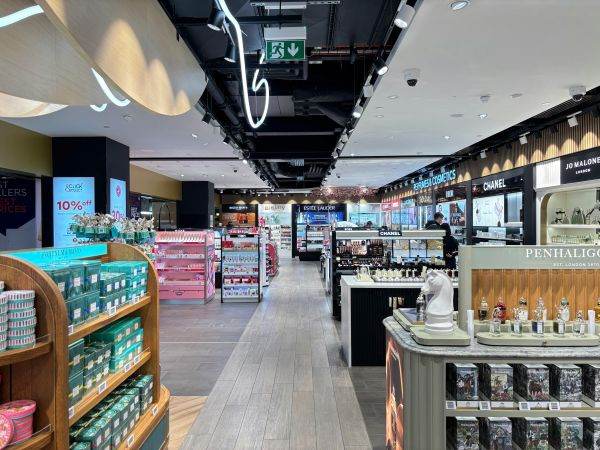
Duty-free stores specializing in premium perfumes and luxury spirits are feeling the full impact of the conflict in the Middle East, as airport closures and travel restrictions severely affect passenger flows across the region, Reuters reports.
The situation risks worsening if the war continues, increasing pressure on an industry already weakened by declining global demand. The disruptions, now in their sixth week, highlight the significant dependence of luxury goods and cosmetics manufacturers on airport shopping and major Gulf aviation hubs. For many companies, these markets have in recent years offset weaker demand in China and Europe.
Analysts warn that even temporary airport closures can have visible effects on the quarterly profitability of major industry groups, especially if air traffic does not return quickly to normal.
Major industry players under pressure
According to analysts' estimates, a prolonged reduction in air traffic in the Middle East could deepen the difficulties of an industry still trying to stabilize after the shock caused by the COVID-19 pandemic.
Companies exposed include beauty and luxury giants such as Estee Lauder, Puig, and L'Oreal.
Visible declines in sales for major groups
French luxury group LVMH announced that tensions in the Middle East reduced quarterly sales by at least 1%, due to weaker consumption in the Gulf region.
"What we are seeing today is that demand remains very low,” LVMH Chief Financial Officer Cecile Cabanis recently said.
Meanwhile, Kering reported that the war reduced total sales by 3% in March and by 1% for the entire quarter, with the impact particularly affecting the Gucci brand.
The global travel retail industry, valued at approximately $74 billion, is being forced to rapidly reorganize operations. Several companies have:
relocated inventory to other markets;
temporarily closed stores in affected airports;
attempted to minimize losses by redistributing products to locations with higher traffic.
Dubai International Airport, one of the world's most important commercial hubs and home to stores of brands such as Aesop, Gucci, and Jo Malone, is currently operating with a reduced number of terminals after a drone attack prompted the temporary closure of some facilities.
At the same time, Kuwait International Airport has been completely shut down following repeated drone attacks, directly affecting retailers such as Avolta and Boots.
Some segments temporarily benefit from travel disruptions
However, not all effects are entirely negative, Reuters also notes.
According to Avolta Chief Financial Officer Yves Gerster, some partially closed airports have seen increased sales of food and essential products due to passengers being stranded in terminals.
"In some cases, affected airports generated solid sales of food and other items because travelers were stranded there, as happened in Dubai,” he explained.
Investors closely watching financial results
The market is now closely monitoring financial results from companies in the sector to assess the real impact of the conflict on business performance.
In particular, investors are awaiting:
Estee Lauder's quarterly report, scheduled for May 1, as the company evaluates a possible $40 billion acquisition of Spanish rival Puig;
L'Oreal's results, due to be published on April 22.
Analysts warn that a return to normal for the region's duty-free trade could take several months, even if tensions ease quickly.
For now, the luxury and cosmetics industries face another major challenge at a time when they are still trying to rebuild margins after the difficulties of recent years.



















 Euro
Euro Dolar SUA
 Franc elveţian
 Liră sterlină
 Gram de aur