 English

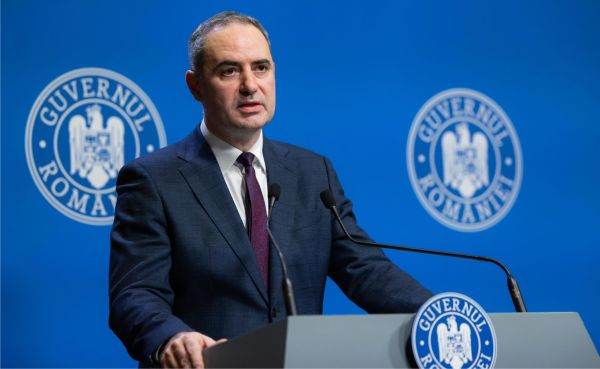
The economic recovery plan discussed by the central authorities with representatives of the business environment will have a budgetary impact of almost 2.2 billion lei in 2026 alone, stated yesterday, during a press conference held at the Victoria Palace, Alexandru Nazare, Minister of Finance.
Alexandru Nazare specified: "The impact for all financing schemes is on a medium term of 5-7 years; they will have to be notified to the European Commission. We intend to approve this package together with the administration reform package. The impact of 2.2 billion lei for 2026 will be compensated. Our strategy is to compensate this budgetary impact from the administration package because we intend to adopt them simultaneously. The administration package covers these 2.1-2.2 billion lei. When the administration package is presented, it will be presented with its positive impact, but I can tell you that it covers the negative budgetary impact of the economic recovery package. (...) We have taken into account all scenarios (ed. note - including the administration package falling through the Constitutional Court), today we are in the phase of publicly presenting the economic recovery program, and the discussions will be finalized at the first opportunity when the governing coalition meets. Because such decisions are made in the governing coalition. Our position, that of the Ministry of Finance, is to mitigate this impact with the benefit that the administration package brings. There can be many scenarios, but we operate with the information we have at the moment”.
In presenting the economic recovery package, the Minister of Finance
started from the measures already applied, of which he recalled that since December the flat rate of 1% for micro-enterprises was introduced, a measure integrated into this broader plan, and that the portfolio guarantee through the Investment and Development Bank is already active, with over 6 billion lei available for micro-enterprises and SMEs. In parallel, for large companies, the turnover tax was reduced from 1% to 0.5%, a clear signal that the uniformly applied fiscal pressure is being replaced by a more finely calibrated system. A central element of this change is the redefinition of the role of the Investment and Development Bank, which will become the administrator of support schemes, including state aid, and will be able to create or participate in private equity investment vehicles, alongside institutional structures already existing in the market.
In the area of research and development, Alexandru Nazare announced a major correction of an old blockage: in addition to the existing 50% deduction, a 10% tax credit is introduced, a fiscal instrument that will be extended to other support schemes. The tax credit thus becomes a key piece of the investment stimulus policy, with the potential to multiply the private capital attracted.
The facility regarding invested profit will, in turn, be significantly strengthened, through the possibility of using accelerated depreciation, and for 2026, super-accelerated depreciation of 65% is introduced, compared to 50% currently, for investments in equipment. The message is explicit: the state wants investments in production and in the modernization of industrial capacities.
In the same register, the ceiling for fixed assets is increased from 2,500 to 5,000 lei, after years in which it was not updated, and companies that choose to list on the Bucharest Stock Exchange will benefit from an additional deduction of 50% when calculating the fiscal result. Also for simplification and predictability, the deadline for declaring and paying the profit tax is definitively set at June 25.
The Minister of Finance also announced that micro-enterprises will benefit from a substantial package of corrections that solve known problems. The term of employment of the sole employee is extended from 30 to 90 days, the sale of one fixed asset per year will no longer be included in the ceiling of 100,000 euros, to avoid the automatic loss of micro status, and companies can return to the micro-enterprise regime when they meet the conditions again.
The issue of sick leave will also be regulated by establishing an annual ceiling of 30 days, eliminating absurd situations in which companies lost their fiscal status for reasons beyond their control. Alexandru Nazare also recalled that the bonuses for legal entities, paid in December for over 150,000 companies, will be resumed in 2026, and explicitly announced the introduction of a bonus for individuals who pay their obligations on time or in advance. In addition, the VAT ceiling on receipt will increase to 5 million lei in 2026 and to 5.5 million lei in 2027, after remaining stuck at 4.5 million for five years.
On the large investment component, the economic recovery plan establishes a state aid scheme for strategic projects with values from 1 billion lei or 200 million euros upwards. The scheme is open to both Romanian and foreign investments, with clear conditions: minimum share capital of 25 million lei and assets of at least 50 million lei, the criteria to be notified to the European Commission and established by government decisions. In parallel, the scheme for industry is being redesigned so that projects that reduce trade balance deficits are given additional points, directing public resources precisely to the areas where the Romanian economy is losing competitiveness.
Minister Alexandru Nazare also announced an instrument dedicated to the valorization of material resources, with a focus on critical mineral resources and new technologies, as well as a distinct scheme for artificial intelligence, semiconductors, robotics and the scaling of companies in the accelerator area to the market. Also, through the new economic recovery plan, the defense industry will benefit from a coherent financing instrument, through a 200 million euro package negotiated with the Ministry of Investments and European Projects, intended for Romanian companies in the sector, including those organized in joint ventures.
For SMEs, a separate instrument is prepared, for smaller projects, with values between 7 and 50 million euros. In addition, the "National Facility for the Preparation and Technical Assistance of Public-Private Partnership Projects" is established, aimed at resolving the blockage of documentation and the rigorous selection of PPP projects at the government level. At the same time, the economic recovery package also includes a dedicated ceiling for Romanians in the diaspora who want to come and invest in Romania.
According to Minister Alexandru Nazare, the economic recovery package will be financed with almost 4 billion euros, the financing schemes will start in 2026 and will be completed in 2032, each of the schemes benefiting from a maximum ceiling of between 100 million and 150 million euros annually.
We note that the legislative package regarding the economic recovery measures was published yesterday, in the decision-making transparency procedure, on the website of the Ministry of Finance.





















 Euro
Euro Dolar SUA
 Franc elveţian
 Liră sterlină
 Gram de aur





























