 English

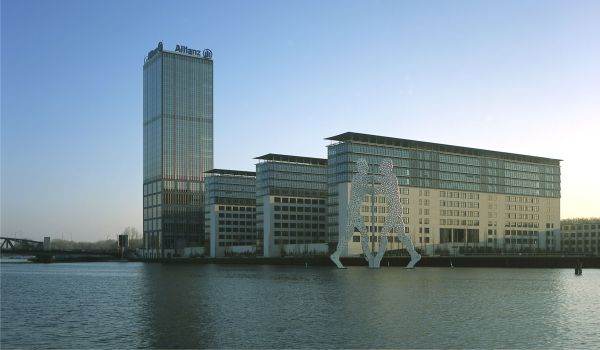
Allianz's travel insurance division will cut up to 1,800 jobs as it ramps up its use of AI (artificial intelligence), Allianz Partners CEO Tomas Kunzmann said, confirming a Reuters report.
Between 1,500 and 1,800 jobs are expected to be cut by Allianz Partners over the next 12 to 18 months, according to Reuters sources, Agerpres reports.
Allianz Partners has about 22,600 employees, of which 14,000 handle customer inquiries and complaints by phone.
Allianz is Europe's largest insurance company.
Historic investments in AI, which are expected to exceed $700 billion this year, are putting pressure on companies to offset rising costs in their businesses. Oracle, Amazon, Microsoft and Meta Platforms have all laid off thousands of employees this year.
Over 100,000 tech workers have been laid off in the past year, according to estimates by firms that track labor market trends.
• Allianz Research: Global insurance market grew in 2025
The global insurance market grew by 7.1% in 2025, reaching 6.9 trillion euros in written premiums, according to a report by Allianz Research, published at the end of May.
Although the growth rate moderated compared to 2024, when an advance of 9.4% was recorded, it remained above the average compound growth rate of 5.6% per year over the past decade and confirms that the industry maintains its growth factors unchanged.
Life insurance remains the largest segment, with premiums written of euro2.86 trillion, followed by non-life insurance at euro2.32 trillion and health insurance at almost euro1.68 trillion.
The study authors show that the non-life insurance market is moving from an accelerated rate growth cycle to normalization. Global premiums grew by 3.8% in 2025, significantly below the 8.5% expansion in the previous year and below the average compound growth rate of the segment of 5.6% per year over the past decade, as rate cycles matured and claims inflation began to stabilize. North America remained the dominant market, generating 52% of global non-life insurance premiums, but growth slowed to 2.2% last year, down from 9.7% the previous year.
At the same time, the life insurance market remained robust in 2025, even though the momentum in North America, following the interest rate hike, noticeably moderated. Globally, life insurance premiums grew by 6.9% in 2025, down from 11.3% in 2024, but still comfortably above historical averages. Asia returned to the forefront as the main growth engine of the industry, with life insurance premiums growing by 9.9% in 2025, while the Chinese market alone recorded an advance of 11.4%. Asia remains the largest life insurance market globally, in the context of favorable factors such as aging populations, high savings levels and public pension systems with lower coverage.
Health insurance is becoming the most dynamic segment with structural growth in the industry, the research shows. Globally, health insurance premiums rose 12.3% in 2025, the strongest increase since 2014, as an aging population, rising medical costs and increasing pressure on public healthcare systems continued to fuel demand for private insurance. The North American market alone grew 14.9% as healthcare inflation continued to accelerate, with the US accounting for over 70% of global health insurance premiums. Despite a normalization after the post-COVID surge, long-term growth potential remains particularly high in Asia, where health insurance penetration is still below 1% in almost all markets. The Romanian insurance market grew 10.6%, with total premium income of EUR 5 billion, according to the report. General insurance advanced by 8.8%, while life insurance increased by 19.1%, well above the average for the period 2015-2025. Health insurance also recorded a strong advance of 10.5%.
Overall, the global insurance market is expected to grow at an annual rate of 5.3% over the next ten years, slightly above the pace of economic growth. For Romania, the estimated annual growth is 5.3% (nominal GDP: +5.1%). For general insurance, a global annual growth of 4.7% is anticipated until 2036 (Romania: +3.2%). The segment will register solid growth rates in almost all markets, the increase in the need for protection being a global phenomenon.
























 Euro
Euro Dolar SUA
 Franc elveţian
 Liră sterlină
 Gram de aur





























