 English

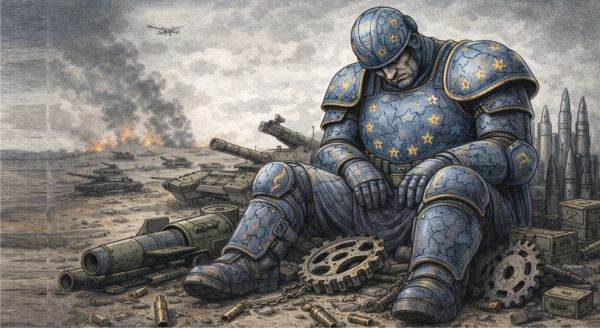
Europe urgently needs a defence union to take responsibility for its own security and transform the fragmented capabilities of member states into a coherent and effective force, Andrius Kubilius, the European Commissioner for Defence and Space, told the European Parliament in Strasbourg yesterday.
His speech in the European Parliament plenary session insisted on the need for a solid institutional framework for defence cooperation, stressing that it is time for a strategic revolution: "European responsibility for defence requires an institutional framework for our cooperation. A European Defence Union,” said Andrius Kubilius, adding: "Produce. Produce. Produce. The defence industry must rise to this historic challenge.”
The European Commissioner explained that this responsibility does not mean in any way an eclipse of the North Atlantic Alliance, but a consolidation of the European part that can really strengthen NATO. He drew attention to the need for Europe to develop its own strategic capabilities to replace the essential contributions that the United States currently provides, explicitly mentioning space intelligence and in-flight refueling as elements that should, over time, be taken over by European industries.
Andrius Kubilius took a brutal X-ray of the military reality in which the European Union finds itself: defense investment has seen an unprecedented increase, and if the member states respect their commitments within NATO, defense spending by European countries will reach 6.8 trillion euros by 2035. However, without real cooperation, these amounts will be wasted on dozens of national military policies and structures that cannot face common strategic challenges.
"This security crisis also makes us stronger. Historically, the European Union is an economic giant. When it comes to defense, the EU is also a giant, but a sleeping giant. In this world of giants, we must be a giant too. Dear friends, let us wake up the sleeping European giant together,” Andrius Kubilius pleaded in the European Parliament plenary.
This radical message is not isolated from the broader strategic coordinates that the European official is promoting. The European Commissioner for Defense and Space recently announced that he is preparing a wide-ranging tour of the continent to discuss with governments and the defense industry the increase in missile production, essential both for supporting Ukraine and for rebuilding and strengthening the EU's own stockpiles. The stated objective of this approach is to "engage” member states and the industry in practical discussions on how to accelerate the delivery of missiles to the Ukrainian front and to European arsenals.
The context of this effort is dramatic: Ukraine relies overwhelmingly on missiles to defend itself against Russian invasion, but most of them currently come from the United States, which exposes not only Kiev, but also the European Union, to a deep strategic dependence. In such a context, Brussels is trying to link the financing of military purchases to what the Commission calls "European preference”, i.e. the obligation that the products purchased be mostly manufactured in Europe. However, this construction clashes with industrial reality: if the European market cannot supply the necessary armaments, including the missiles requested by Ukraine, the rules allow purchases to be made from outside the EU, perpetuating dependence on American production.
A senior EU official summed up this vulnerability for Euractiv.com: "We know that they do not have enough missiles”, thus underlining Europe's current inability to respond alone to the needs of a high-intensity conflict.
This awareness of dependence and risks led to Andrius Kubilius' warning to the EU about a possible withdrawal of US troops from Europe and to finding solutions to replace the strategic presence of approximately 100,000 US soldiers deployed on the continent, as he stated in other public interventions.
In this strategic picture, the European Commissioner expressed dissatisfaction with the current fragmentation: Europe functions as "a collection of separate national armies", unable to coordinate effectively and pool their resources. This radical criticism has been expressed repeatedly, including through comparisons that highlight the absurdity of maintaining dozens of disparate military structures instead of a coherent and common force.
Kubilius' message is clear: without a European Defence Union capable of channeling resources, industries, technologies and political will into a common strategy , Europe risks remaining passive in the face of threats. At stake is not only supporting Ukraine, but the very credibility of the European Union as a global security actor, capable of defending its interests, supporting its partners and securing its own stockpiles in a world where military risks are returning to the forefront.













 Euro
Euro Dolar SUA
 Franc elveţian
 Liră sterlină
 Gram de aur





























