English

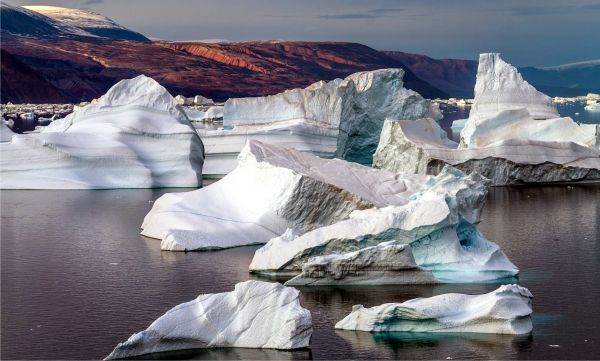
The Arctic has experienced its warmest year on record, according to a report published by the National Oceanic and Atmospheric Administration (NOAA) in the United States, highlighting the region's extreme vulnerability to climate change, AFP reports. Between October 2024 and September 2025, average temperatures in the Arctic were 1.6 degrees Celsius higher than the 1991-2020 average, according to the annual NOAA report, based on data covering the period since 1900. "It is alarming to see such warming in such a short period. The trend seems unprecedented in recent times and perhaps even for several thousand years," said Tom Ballinger, a researcher at the University of Alaska and co-author of the study. The year under review included the warmest autumn on record, the second warmest winter and the third warmest summer ever observed in the Arctic.
• Sea ice melt
The Arctic region is affected by a phenomenon known as "Arctic amplification,” which causes faster warming than in mid-latitude areas. The process is fueled by the reduction of snow cover and sea ice surface, which amplifies the absorption of solar energy, the report notes. In March 2025, Arctic sea ice reached its lowest maximum extent in the history of satellite observations. According to the National Snow and Ice Data Center (NSIDC), the maximum sea ice area was 14.33 million square kilometers on March 22, a record low in more than four decades of monitoring. "This poses an immediate problem for polar bears, seals and walruses, which depend on the ice for movement, hunting and reproduction,” explained Walt Meier, co-author of the NSIDC report. Although melting sea ice does not directly contribute to rising sea levels, it has major climate impacts, accelerating global warming by reducing the ability to reflect sunlight.
• Global Effects and Ecosystem Changes
Accelerated Arctic warming is narrowing the temperature difference between the poles and mid-latitudes, leading to more frequent and intense cold snaps in other regions of the globe, according to several climate studies. The NOAA report also points to a new record for precipitation in the "water year” of 2024-2025, which is among the top five wettest years on record since 1950. The warmer temperatures and increased humidity are contributing to the greening of the tundra, a fragile ecosystem that covers a permafrost soil that stores twice as much carbon dioxide as the atmosphere and three times as much as human emissions from 1850 to the present. In 2025, the peak level of circumpolar tundra greening was the third highest in 26 years of satellite observations.
Thawing permafrost releases iron and other substances into waterways, generating the phenomenon known as "rusty rivers.” According to the report, more than 200 rivers have been identified as discolored or orange, a sign of deteriorating water quality and loss of aquatic biodiversity. The report's findings confirm that the Arctic is rapidly transforming, with global climate and ecological consequences, and the pace of change raises serious questions about the capacity of ecosystems and human societies to adapt.






















 Euro
Euro Dolar SUA
 Franc elveţian
 Liră sterlină
 Gram de aur