English


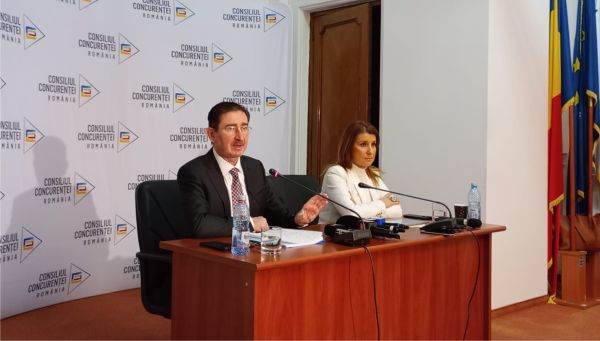
The Competition Council is expected to complete the investigation, opened several years ago, into possible agreements between banks to set the ROBOR interest rate by June 30, 2026, said Bogdan Chiriţoiu, president of the Competition Council, yesterday during a press conference in which he presented the 2025 activity report of the public institution he heads.
Bogdan Chiriţoiu stated: "The most anticipated cases remain those in the banking sector, regarding the ROBOR index and credit scoring. As for the first investigation, regarding the ROBOR index, the investigation team's report is finalized and is in the process of internal verification by us and consultation with the European Commission, to ensure a uniform application of European legislation. It is potentially the most important case of the year, because the fines are proportional to the turnover, and the banks in the ROBOR system are very large companies and, if found guilty, the fines are significant. We want to finalize this investigation in the first semester of this year, because our mandates end in the middle of this year and, in order to avoid procedural problems, we do not want to exceed this deadline." He specified that, after this investigation is finalized, the report will be sent to the respective banks to express their point of view, and only after that the Council plenary, i.e. the nine members, will make a decision. Bogdan Chiriţoiu mentioned that, if the report is not finalized by then, the decision will be made by the next plenary session of the Council, the one in the fall of this year.
According to data published by the media, the 10 banks that fulfill the role of participant in the ROBOR calculation are: Banca Comercială Intesa Sanpaolo Romania, Banca Comercială Română, BRD - Groupe Societe Generale, Banca Transilvania, CEC Bank, Eximbank, ING Bank NV Amsterdam - Bucharest Branch, OTP Bank Romania, Raiffeisen Bank and UniCredit Bank.
• Romgaz's entry as a supplier into the natural gas market could have a beneficial effect on the price
Regarding the monitoring of the market in our country, the head of the Competition Council expressed satisfaction with the way in which the electricity market was reliberalized last year and expects things to proceed in the same way from April 1, 2026, when the natural gas market will be reliberalized. Furthermore, the President of the Competition Council recommends that the Government not postpone the liberalization of gas prices, expecting Romgaz to enter the supply segment for household consumers, and this entry to have the same effect on the gas market as Hidroelectrica's entry into the electricity market.
Bogdan Chiriţoiu said: "The reliberalization of the electricity market has gone extraordinarily well. Here, what was interesting was the activity of Hidroelectrica, which, so far, I believe has had a positive role in the market, because the entry of this company into the electricity market has increased competition, put increased pressure on suppliers and we have seen how their prices have decreased. (...) In 2026 we will have a reliberalization of the natural gas market; at least that is our recommendation to the Government, so that it does not prolong the current cap. And, on the electricity model, we expect Romgaz to enter the natural gas market as a supplier and put pressure on other suppliers, pressure that will lead to a decrease in prices".
The President of the Competition Council added that our country is the last EU member state that still has a generalized support scheme and, therefore, we are facing an infringement of the European Commission on this issue. Therefore, and in light of the fact that, at this moment, natural gas prices in the free market are at the level before the outbreak of the war in Ukraine, he believes that there is no point for the Government to extend the cap, but only to take support measures for vulnerable consumers.
Also regarding the activity of monitoring the internal market, the head of the Competition Council also referred to the reliberalization of the price of mandatory car insurance, the RCA policy. After analyzing the data from the Financial Supervisory Authority, Bogdan Chiriţoiu stated that two-thirds of the RCA tariffs have registered increases, the remaining one-third of the tariffs have decreased and that, under these conditions, the average increase in this policy is below 10%, that is, below the inflation rate. Regarding the localities where the RCA increase was above 10%, the president of the Competition Council mentioned the Capital, but showed that, since the beginning of the year, there have been decreases in tariffs for carriers.
• Capping the commercial addition to food, an ineffective measure
Related to the monitoring of the domestic market, asked by the BURSA newspaper what else we have in the context of the capping of the commercial mark-up on basic foodstuffs, a capping that was introduced two and a half years ago by the government led by Marcel Ciolacu, Bogdan Chiriţoiu told us: "We want a free market. This measure of capping the commercial mark-up has already lasted for too long. There are things that make sense at a certain point, but that no longer need to be maintained if market conditions return to normal. For example, in the case of gas, prices have already returned to the level before the crisis phase. In the case of food, we have found that the market is adapting: after a while after the capping of the mark-up, companies increased the prices of other products, making the respective measure ineffective. As a rule, these interventions only have an effect for a few months, because people and companies learn to adapt, and their effectiveness decreases. I expect us to liberalize the markets and supervise them.”
The President of the Competition Council also referred to state aid, stating that, in 2026, attention is focused on the restructuring plans of Tarom and the Oltenia Energy Complex, the latter having to replace polluting coal-fired production with gas-fired power plants and solar panels. He specified that discussions are underway with the European Commission on the plan for the modernization of Unit 1 of the Cernavodă Nuclear Power Plant and indicated that the necessary steps have begun at European level for the procedure necessary to authorize state aid necessary for the construction of units 3 and 4 of the same power plant, among the proposed solutions being the use of mechanisms such as contracts for difference and state guarantees for bank loans.
Regarding state aid, I asked the head of the Competition Council whether, after their approval by DG Competition, anyone still checks whether the aid is still paid on the same bases or initial premises. The question of the BURSA newspaper arose following the publication, last year, in the pages of our daily newspaper, of a journalistic investigation carried out by the investigative website Follow the Money, an investigation which revealed that the administrators of the Oltenia Energy Complex had saved 250 million euros by reporting a lower amount of CO₂ than the real one.
Bogdan Chiriţoiu answered us: "State aid is granted based on forecasts. It is essential that, at the time of granting, the information is correct and well analyzed. Once the decision is made, if the market circumstances change, we do not penalize the company. If someone intentionally lies, then it is a problem. However, if the best decision is made based on what is currently known, and in two years the forecasts are not confirmed (without being lies), we will not take the money back. We do not correct such situations, because we would create even bigger problems in the market, penalizing a company for better performance or for circumstances that were unpredictable at the time of the decision."
• Transactions regarding Carrefour and Lukoil are expected
The President of the Competition Council also referred to the two transactions about which information appeared in the market since last year, regarding the sale by Carrefour of assets in our country and the sale by Lukoil of assets in the EU, following the economic and trade sanctions imposed on the Russian Federation. Regarding Carrefour Romania, Bogdan Chiriţoiu said that the competition authority in our country was not notified of a possible sale of the assets of this company, but mentioned the challenges of such a transaction.
"When a new player comes from outside the country, it's simple for us, it doesn't really create any competition problems for us, but those in national security don't really like it, because they have to see where it comes from, where it gets its money, etc. There were speculations in the press, they were denied, but we didn't receive any official notification. (...) We only receive notification when they have reached an agreement. When a company talks with three other companies, they normally don't inform us. Only when they have chosen one of the three or when they have signed the contract or they are very advanced, only then do they notify us. (...) On the other hand, if we find ourselves with another retail chain that wants to buy Carrefour, we would have problems there. If the Kaufland group comes and wants to buy Carrefour, that would be problematic at the very least," Bogdan Chiriţoiu specified.
Regarding Lukoil's assets in our country, the head of the competition authority said that in this case too he had not received any notification and indicated that, if the transaction would concern several EU member states, the approval decision would belong to the European Commission, not the Competition Council. "We will provide a point of view (input), but the Commission's final decision will take into account the competition situation in Romania, Hungary and other affected countries. The laws applied are the same, regardless of whether the analysis is done by us or by the Commission's experts," said Bogdan Chiriţoiu.
• 119 authorized economic mergers last year
Regarding the Competition Council's activity report for 2025, we note, first of all, the record number of authorized economic concentrations: 119 transactions, the highest level in the last 22 years. Strict conditions were imposed in two major cases, namely in the takeover of Telekom Romania Mobile Communications by Digi Romania and Vodafone Romania and in the transaction through which the Regina Maria Group was taken over by Mehiläinen Oy. Moreover, in the case of the takeover of La Cocoş stores by the Schwarz Group, the Competition Council launched a study on the compatibility of the operation with the competitive environment, a rare undertaking, being the first study of its kind in the last eight years. Also, in the case of La Cocoş, the competition authority requested the maintenance of the low-cost concept for the assets taken over by the future company, a concept to be developed. More specifically, it requested that the global markup be capped at the current average markup on products sold in La Cocoş stores and that the company that will take over the assets develop new low-cost stores.
On the investigations front, 2025 confirms an institutional profile oriented towards severely sanctioning serious violations. 18 investigations were completed, as in the previous year, but their financial impact was significantly more visible, with the total value of the fines applied reaching 347.4 million lei. Approximately 56% of this amount comes from sanctions applied for cartel-type agreements, which indicates the persistence of illegal coordination practices between companies, despite the increasing risks. In total, 68 entities were sanctioned, and a relevant indicator for the efficiency of the investigations is the fact that 70% of them admitted to violating competition law.
At European level, Romania once again ranked first in the European Union in terms of the number of completed cases targeting possible violations of Articles 101 and 102 of the Treaty on the Functioning of the European Union, with a total of nine cases, ahead of states with a strong tradition in the enforcement of competition law, such as Italy, France and Germany. Among the most important sanctions is the fine of 163.71 million lei imposed on a group of eight companies in the automotive industry for an anti-competitive agreement on the labor market, aimed at limiting employee mobility and artificially keeping wage costs at a low level, the first investigation of this type completed in Romania. Other major fines targeted the heated tobacco products market, rigged road infrastructure auctions and the luxury eyewear market, illustrating the diversity of sectors affected by anti-competitive practices.
Beyond the completed investigations, the dynamics of 2025 are also reflected in the high number of new cases. 14 investigations were launched, maintaining the trend of 2024, in sensitive areas such as the automotive industry, road signs, IT public procurement and the supply of medical products and equipment used in the prevention of epidemic situations. Half of these investigations target possible agreements between companies, which confirms that the risk of illegal coordination remains high. At the end of 2025, the Competition Council had 46 investigations underway, of which 74% relate to anti-competitive agreements.
The control activity was also reflected in the record number of unannounced inspections: 21 in total, carried out at 52 offices and work points, the highest level in recent years. In parallel, the authority intensified its checks in the field of unfair competition, carrying out inspections at the premises of six large retail chains, as part of investigations into compliance with the legislation on unfair commercial practices in the agricultural and food supply chain, in relations with milk and dairy product producers. Another major pillar of activity in 2025 was that related to state aid, in a year in which public intervention reached exceptional values. The Competition Council was involved in the development and approval of support measures financed from national and European funds, including the PNRR, with a total value of over 50.6 billion lei in 2025 alone. These targeted critical areas such as district heating in Bucharest and strategic companies such as CEC Bank, Exim Banca Românească, Tarom or Complexul Energetic Oltenia. Between 2019 and 2025, the budgets of the approved support measures reached historic peaks, with a maximum of almost 145 billion lei in 2022, which amplified the role of the Competition Council as a guardian of the correct use of public funds.
In terms of regulation and institutional planning, the authority developed approximately 350 opinions, opinions and points of view in 2025, intervening in sensitive files such as the RCA market, road transport of persons, the energy sector and the implementation of support schemes from the PNRR, with an emphasis on compliance with European rules and avoiding overlapping funding. Externally, the Competition Council has strengthened its international presence through active participation in European and international competition networks, coordination of European projects on combating rigged tenders and provision of technical assistance to the authorities of the Republic of Moldova and Ukraine.
The results in court complete the picture of a strong year for the competition authority: 90% of the decisions of the High Court of Cassation and Justice were favorable to the Competition Council, and the courts maintained, in 95% of cases, the value of the contested fines. All these elements outline a year 2025 in which the Competition Council has not only reacted to market challenges, but has redefined intervention standards, consolidating its position as a key actor in protecting competition and economic stability in a period of profound transformations.









 Euro
Euro Dolar SUA
 Franc elveţian
 Liră sterlină
 Gram de aur