 English

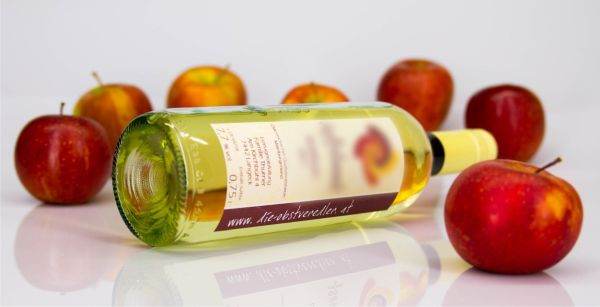
The European Commission wants to regulate a product whose production has been operating for decades without a unified legal definition: cider. According to an article published by Euractiv, while the European Union is preparing a regulation for 2026 aimed at establishing what can be officially called "cider" on the community market, the European Commission's initiative risks triggering an open conflict between tradition and industry, between clarity for the consumer and a regulatory complexity that could produce exactly the opposite effect to that declared.
The lack of a harmonized definition at EU level has so far allowed drinks with radically different recipes, quality and content to be marketed under the same name, and the Commission states that it wants to fill this void precisely in order to help consumers better distinguish products sold under the "cider" label and to guarantee clearer information about their composition.
The stakes are not small, according to the source cited, as, according to industry analysts, the cider market is valued at around euro6 billion. France and Spain are among the main producers within the European Union, while, in terms of consumption, Spain, Germany, Ireland and France are among the top markets, even though the UK remains by far the largest European outlet for cider. It is precisely this diversity of traditions, volumes and production models that explains why the attempt to harmonise labelling rules is encountering strong resistance.
During a closed-door meeting held last Thursday, the European Commission presented several options for standardising labelling rules. According to a draft delegated act for 2026 consulted by Euractiv, the new rules could come into force as early as April. The initiative is supported by several member states who want to protect traditional producers from competition from drinks made from industrial mixtures, but support is not unanimous.
In the French regions of Brittany and Normandy, true strongholds of cider, producers proudly claim their drinks made from 100% apple juice. A long-standing tradition also exists in northern Spain, where cider is dry, acidic and obtained exclusively by the integral fermentation of apples. The picture changes radically in the Nordic countries, however, where a large part of the cider sector intended for mass consumption is based on different recipes, in which the apple juice content can drop below the 20% threshold, even if, in parallel, artisanal variants are gaining ground.
According to the cited source, the latest proposal advanced by the European Commission outlines a three-level classification system, which would be found on product labels. The term "premium cider” would be reserved for drinks containing 100% apple juice, "cider” would designate drinks containing at least 50% apple juice, and the term "cider-based” would be applied to products with a minimum juice content of 20%.
Another idea under discussion would involve associating the traditional names "sidra”, "cider” and "Apfelwein” with drinks produced in Spain, France, Germany and Austria respectively, with these names being reserved exclusively for drinks containing 100% fruit juice.
A European diplomat told Euractiv that the current text "seems to be an improvement on previous versions”, but stressed that it still needs to be "refined”, in particular to find "the right balance between protecting traditional methods and taking into account industrial producers”. The current approach is considered significantly more flexible than the draft presented last year, which proposed a minimum 50% juice content for any drink labelled as "cider”. That option prompted Sweden, Denmark and Finland to warn the Commission about the risk of hampering the development of their national sectors.
However, the dissatisfaction does not come only from the Nordic countries. Even French producers, who have repeatedly insisted on the principle of "either 100% apple juice or nothing”, rejected the new proposal, considering it too permissive. In addition, a second proposal presented in October 2025, concerning optional labelling rules, also met with opposition, with several EU member states considering it too complex, according to the minutes of the meeting.
In the discussions last autumn, France, Poland, Belgium and Italy were among the most insistent voices calling for a clear definition of cider at EU level, while Denmark, Finland, Sweden and Ireland expressed reservations. However, suspicions persist. A second European diplomat warned the source that the latest draft of the European Commission risks becoming "very confusing for consumers”. Moreover, in his opinion, the new rules and marketing contradict the simplification objective displayed by the Commission. "Consumers willing to pay more for a quality artisanal cider do not risk confusing it with an industrial cider sold at a reduced price," he stressed, suggesting that regulatory intervention risks solving a problem that, in reality, does not exist.






















 Euro
Euro Dolar SUA
 Franc elveţian
 Liră sterlină
 Gram de aur





























