English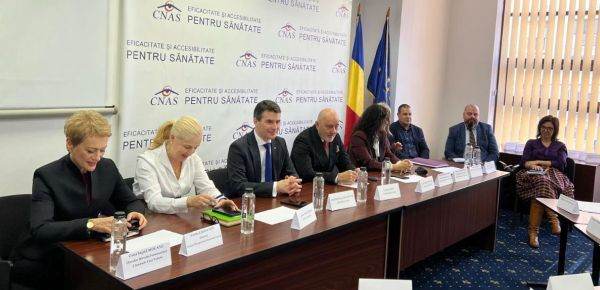
The National Health Insurance House continues its analysis and control actions on public and private providers of medical services, in order to detect cases of fraudulent use of public funds, the institution's representatives announced. According to an official statement, CNAS constantly monitors how providers comply with the legislation and settlement rules in their relationship with patients and insurance houses. "Our priority is to discourage unhealthy practices and stop the phenomenon of fictitious settlements, which not only reduce the funds available to the insured, but can also put their lives in danger," said Horaţiu Moldovan, the institution's president.
• Controls in several counties and criminal reports
Following the checks carried out in the counties of Caraş-Severin, Constanţa, Dolj, Ialomiţa and Prahova, irregularities were identified, and in some cases the criminal prosecution bodies were notified. According to CNAS data, in the previous year 610 healthcare units were controlled, and the amounts recovered following the violations found exceeded 109.6 million lei. The institution also presented the results of a thematic control action carried out by the Dolj Health Insurance House at a private provider. The inspectors found that numerous oncological patients, who presented themselves for the verification or change of bladder catheters, were reported as beneficiaries of extracorporeal lithotripsy (ESWL) sessions that were not performed. The provider was contractually sanctioned with 3,490 lei, and the authorities were also notified in connection with the withholding of a patient's health card. Given the suspicions regarding the reporting of unreal services, CAS Dolj notified the Dolj County Police Inspectorate - Economic Crime Investigation Service. According to information publicly communicated by the police, the investigations target four employees of the medical unit for entering false data into the computer system in order to obtain settlements. The estimated damage amounts to 285,120 lei.
CNAS encourages patients to report suspicions regarding fictitious investigations, emphasizing that the correct use of public funds is essential for the functioning of the health system.
























 Euro
Euro Dolar SUA
 Franc elveţian
 Liră sterlină
 Gram de aur