English


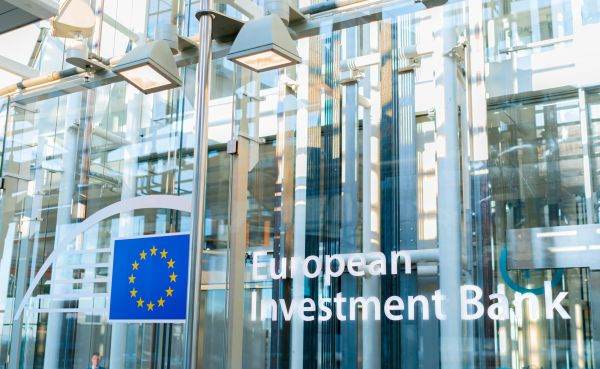
The European Investment Bank chose to focus its financial and strategic resources allocated last year in our country not only to stimulate economic growth, but also on recovering historical infrastructure gaps, accelerating the energy transition and definitively anchoring the Romanian economy in European value chains, according to a press release issued yesterday by the institution.
The 1.6 billion euros in new financing granted last year by the EIB to projects in our country represent an important intervention in a development model that has long been underfunded, fragmented and vulnerable to external shocks. Through these funds, the EIB managed to mobilize total investments of approximately EUR 5 billion, equivalent to 1.3% of Romania's GDP, a macroeconomic impact that places the European institution in the position of a structural actor of development, not a marginal financier.
88% of the financing was oriented towards cohesion objectives, and over half of the operations had a direct climate and environmental component, a sign that our country is treated as an economy simultaneously in recovery and in transition. Over EUR 1.17 billion went towards transport and urban infrastructure, that is, precisely those areas that have been holding back economic competitiveness and labor mobility for decades. Investments in energy, of almost EUR 185 million, accelerated the move from a rigid and polluting energy system to one compatible with the European Union's green taxonomy. SMEs received over EUR 170 million, while innovation, digitalisation and human capital attracted over EUR 150 million, in a clear attempt to move the Romanian economy from the low-cost to the value-added zone.
The most powerful symbol of this EIB intervention remains the A1 motorway, on the Piteşti-Sibiu sector, a project that has long since surpassed the status of a simple infrastructure work and has become a test of institutional maturity. The first tranche of EUR 500 million of the EIB loan co-finances the 122 kilometres that cross the Carpathian Mountains, a critical missing link in the TEN-T network. With a total estimated cost of EUR 5.5 billion and an EIB financing ceiling of up to EUR 1 billion, the project effectively connects the Capital to the west of the country and to European markets, reducing transport times, road risks and the economic isolation of entire regions. The fact that the EIB is not only providing money, but also technical advice on this project, shows the level of complexity and strategic importance of the investment.
In energy, 2025 was the year in which European financing moved from classic infrastructure to sophisticated market instruments. The EIB became the anchor investor in Electrica's first corporate green bond, a euro500 million issue listed simultaneously in Luxembourg and Bucharest. The message to investors was clear: the Romanian energy sector is starting to be bankable, predictable and aligned with European sustainability standards. The funds attracted are directed to eligible projects according to the EU taxonomy, which moves Romania from the position of a passive beneficiary of funds to that of a credible actor on the green financing market.
In parallel with the major projects, the EIB Group has also worked on preparing investments. Through the JASPERS programme, the EIB entered directly into the Jiu Valley, one of the most sensitive regions of the just transition, where it ordered the financing of integrated urban mobility projects in six localities, with investments estimated at around 30 million euros.
In addition to these investments, the EIB provided advisory support in Bucharest for the modernization of the metro network, modernization that aims not only at expansion, but also at energy efficiency and long-term sustainability, a sign that European financing is starting to condition the quality, not just the quantity, of investments.
The European Investment Fund completed this picture with a massive intervention in the area of the real economy. The 346 million euros mobilized in the form of guarantees and capital instruments fueled the financing of SMEs and innovation, precisely where the Romanian market remains fragile. A geopolitically significant element was Romania's accession to the Export Credit Guarantee Facility for Ukraine, managed by the EIF, through which Exim Banca Românească received a guarantee of EUR 43.75 million to support trade flows between the EU, Romania and Ukraine. It is a signal that Romania is not only a beneficiary of European solidarity, but also an economic intermediary in a complicated regional context.
Looking ahead to 2026, the stakes are rising. With a consolidated capital base and an annual investment upgrated to 100 billion euros, the EIB is repositioning its role as a pillar of European strategic autonomy. For Romania, this means continuity and expansion: more major infrastructure projects, financing for energy security, investments in critical industries, digitalization and economic resilience. The portfolio already built and the ongoing advisory missions indicate that 2026 will not be a year of transition, but one of amplifying European financial intervention.


















 Euro
Euro Dolar SUA
 Franc elveţian
 Liră sterlină
 Gram de aur