English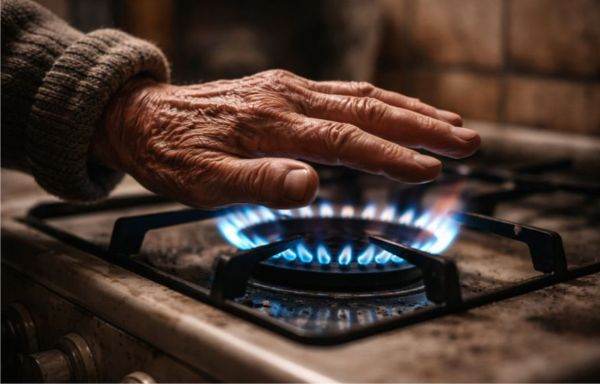
Bogdan Ivan, Minister of Energy, stated yesterday, at the end of the Energy Command meeting, that natural gas consumption has increased in our country, due to weather conditions, and that in order to cover the entire necessary quantity, gas imports have also been resorted to.
Bogdan Ivan stated: "Currently, natural gas consumption has increased to around 58 million cubic meters per day, approximately 17% more than the annual average for the same period in 2025. Every day, we extract a domestic production of approximately 23.6 million cubic meters, we extract 25.5 million cubic meters from deposits, and for the difference we juggle the market with imports from neighboring states".
This situation is also evident from the data published yesterday by Transgaz, which shows that daily domestic production is 23.6 million cubic meters, and extraction from deposits has risen to approximately 26 million cubic meters, values below the maximum technical thresholds, but close enough to indicate an operation almost at the limit. The difference between production and consumption is covered by substantial imports, Romania being supplied both from the south, through Bulgaria, on line 1 of the Trans-Balkan gas pipeline, with a daily volume of 12.8 million cubic meters, and from the west, through Hungary, at the Arad-Csanadpalota point, where 2.4 million cubic meters enter per day, six times more than the previous day.
In parallel, Romania continues to export gas, especially to the Republic of Moldova, where 5.6 million cubic meters of gas are exported daily via Ungheni, to which is added approximately 1 million cubic meters delivered to Ukraine via the Isaccea 1-Orlovka 1 pipeline. Even with these exports, the balance is clear: Romania is a net importer, with a net volume of 8.6 million cubic meters of natural gas per day, a significantly higher level than in previous days and equivalent to almost a third of current domestic production.
This gas is rapidly absorbed by domestic consumption that has exceeded the threshold of 58 million cubic meters per day, fueled by low temperatures, residential heating in individual plants, district heating systems and electricity production. At this time, gas-fired power plants are Romania's main source of electricity, delivering over 1,900 Megawatts (MW) of hourly power, a critical role in an already strained system.
In this context, Bogdan Ivan openly emphasized the strategic importance of coal-fired power plants, especially during periods of extreme cold, explaining why the central authorities decided to keep part of these capacities even after the revision of the National Recovery and Resilience Plan. Initially, our country was supposed to close 1,755 Megawatts of coal-fired capacities by December 31, 2025, but energy reality forced a tough renegotiation with the European Commission.
"In terms of electricity production, today we are at an average production of approximately 7,800 MW and consume approximately 8,500 MW in 24 hours. In terms of structure, 24% of Romania's energy production is based on hydrocarbons, on gas, in particular, 24% on hydro, 16% on nuclear, 14% on coal. If we had not managed to have that negotiation with the EC and to continue keeping the coal-fired power plants, today we would have had a huge problem with energy production", warned the Minister of Energy.
Beyond the political discourse, the current situation highlights an uncomfortable reality: Romania's energy security remains vulnerable to temperature shocks, and dependence on imports quickly reappears when consumption explodes. With domestic production and storage pushed close to the limit, each episode of extreme cold becomes a stress test for the entire national energy system.
























 Euro
Euro Dolar SUA
 Franc elveţian
 Liră sterlină
 Gram de aur