 English


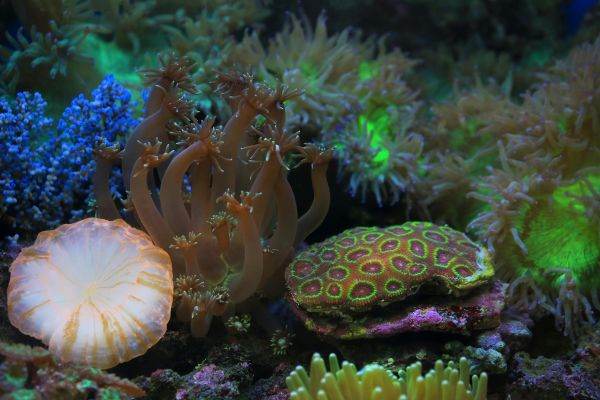
The waters between Australia and Southeast Asia have been a major driver of marine biodiversity in the geological past, according to a recent study led by Edith Cowan University. The research indicates that the largest coral reef expansion in the past 100 million years occurred 10 to 20 million years ago, in the area now known as the Indo-Australian Archipelago, according to Xinhua. This region is now considered the richest in the world in terms of marine biodiversity. Coral reefs play a crucial role in ocean ecosystems, supporting about a quarter of marine species, despite occupying less than 1% of the ocean surface, explained researcher Alexandre Siqueira, the study's lead author.
• Tectonic and climatic changes triggered the reef "explosion”
The study combined geological, fossil and genetic data to reconstruct the evolution of these ecosystems. The results show that environmental changes, including tectonic and climatic ones, produced about 20 million years ago, created ideal conditions for the rapid development of reefs. This period coincides with the emergence of modern lineages of corals and fish, including iconic species such as parrotfish. The expansion of reefs generated new habitats and ecological niches, facilitating the accelerated diversification of marine life.
• Vestiges of a giant system, still visible today
Researchers suggest that reefs off the northwestern coast of Australia may represent the remains of one of the largest reef systems that ever existed on Earth. The study, published in the journal Science Advances, provides crucial insight into how today's marine biodiversity arose and highlights the crucial role these ecosystems play in planetary balance. The discovery comes at a time when coral reefs are increasingly threatened by climate change and human activity, making understanding their origins and evolution all the more important for future conservation.

























 Euro
Euro Dolar SUA
 Franc elveţian
 Liră sterlină
 Gram de aur





























