English

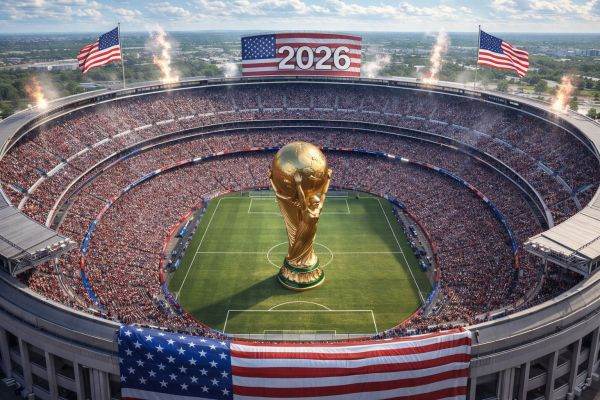
In a tense international landscape, in which relations between the European Union and the United States are under pressure from a rarely seen diplomatic dispute, the idea of boycotting the 2026 World Cup - organized in Canada, the United States and Mexico - has entered public debate in Germany and in some European political circles. The origin of the tension is not related to football, but to a geopolitical crisis around Greenland, informs AFP. US President Donald Trump reiterated his intention to take control of the Arctic island, arguing that it is essential for US national security. As a measure of pressure, Trump announced the imposition of additional customs tariffs of up to 25% on some European countries, including Germany, if they oppose this plan or will not negotiate the "sale" of Greenland. These threats have drawn condemnation from EU leaders, and Germany, along with its European partners, has begun preparing coordinated responses to what some European capitals describe as "economic blackmail.”
• Political calls for boycotts: who is making them
In this context, several leading German political voices have suggested that a boycott of the 2026 World Cup could be used as a pressure tool. Jurgen Hardt, foreign policy spokesman for the Christian Democratic Union (CDU), told Bild that canceling Germany's participation in the World Cup would be the "last resort” to get the Trump administration to drop pressure over Greenland. Roderich Kiesewetter, another CDU MP, was quoted by German media as saying that if the US trade threats materialize, "it is difficult for me to imagine that European countries will participate in the World Cup.” MPs from the Social Democratic Party (SPD) also said that the boycott option should be considered as part of a broader response to pressure from Washington. However, the German government has made it clear that the decision on participation in the football competition does not belong to the executive branch, but to the sports federations: both the German Football Association (DFB) and FIFA will decide "autonomously” on a possible boycott. The federal government has said that it respects the autonomy of sport and will not politically intervene in this decision.
• Public opinion and symbolic impact
A poll conducted by the INSA institute for the Bild newspaper shows that 47% of Germans would support a boycott of the World Cup if the US annexed Greenland, while 35% would oppose such a measure. For a nation with a strong footballing tradition - Germany is a four-time world champion and has participated in every tournament since 1954 - a withdrawal from the competition would have a major symbolic and sporting impact.
• European reactions and international echoes
The Greenland dispute has gone beyond the idea of a sporting boycott. The European Union recently decided to suspend ratification of a trade agreement with the US, considering the tariff threats as "unacceptable" and contrary to the principles of transatlantic trade relations. Leaders such as Emmanuel Macron have promised a unified and coordinated EU response to these pressures, and plans for economic countermeasures, including tariffs on American products, have been discussed at the diplomatic level. The German case highlights the tension between the autonomy of sports bodies and external political pressures. In theory, FIFA and national federations decide on their participation in international competitions. In practice, however, when a global tournament is used as a tool for geopolitical bargaining, the lines between sport and politics blur. FIFA President Gianni Infantino has recently attempted to reach out to the Trump administration, including by offering a special award, which has drawn criticism in some circles of the international football community. So far, there has been no official decision by Germany or other European nations to boycott the 2026 World Cup. The final decision remains in the hands of the sports bodies, and the development of the geopolitical situation in the coming months could profoundly influence both sport and transatlantic relations.













 Euro
Euro Dolar SUA
 Franc elveţian
 Liră sterlină
 Gram de aur