English


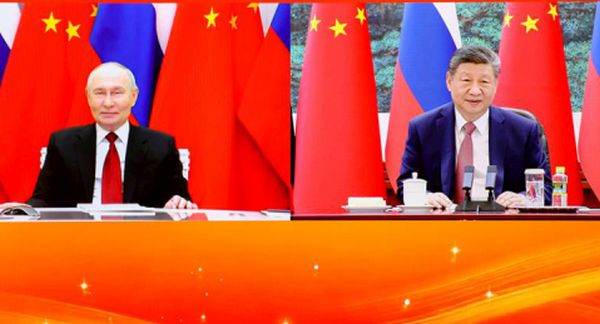
The Middle East entered a phase of open conflict of major proportions after the United States and Israel launched military strikes on Iran, and Tehran immediately retaliated, extending the violence to some states allied with Washington in the Gulf and to Israeli territories. This escalation has exposed the divisions, alliances and strategic recalibrations of global powers, revealing who stands with whom in a conflict that has the potential to reconfigure the balance of power in the region.
But who are Iran's allies? First of all, over the last 60 years, China and Russia, the two states that have expressed firm positions against the ongoing attacks by the US and Israel on the regime in Tehran. In the face of this military operation, the Ministry of Foreign Affairs in Beijing denounced the US-Israeli strikes on Iran as "unacceptable” and a "blatant aggression”, calling for an immediate cessation of hostilities and a return to diplomatic dialogue before the war spreads further. Chinese Foreign Minister Wang Yi stressed, in a telephone conversation with his Russian counterpart, the need to respect the sovereignty of states in the region and criticized what he described as an attempt at the right of "regime change” by force. China has also issued evacuation warnings for its citizens in Israel and Iran.
Russia, for its part, has adopted a position of harsh condemnation of the attacks, accusing the US and Israel of "throwing the Middle East into an abyss of uncontrolled escalation”. In its communications, Moscow denounced the offensive as a "dangerous adventure" with the potential to cause humanitarian and economic catastrophes in the region, and stressed that political dialogue and diplomatic solutions are the only ways forward to avoid a full-scale regional war. Vladimir Putin said the killing of Ayatollah Ali Khamenei was a "cynical assassination", and Russian officials also emphasized that the US and Israeli strikes were carried out despite Iran's openness to negotiations. Kremlin spokesman Dmitry Peskov spoke of "deep disappointment" in the airstrikes carried out by the US and Israel in Iran. Peskov said that the US had decided in favor of "direct aggression" against Iran, despite ongoing negotiations in that country. The Russian Foreign Ministry issued a press release yesterday expressing concern over the spread of armed confrontation throughout the Middle East region as a result of the US and Israeli aggression against Iran.
"It has become obvious that, beyond seeking regime change in the Islamic Republic of Iran by the most unscrupulous means - including the assassination of the leadership of a sovereign state - Washington and Tel Aviv are trying to disrupt the process of normalizing relations between Iran and its Arab neighbors. The comprehensive measures to protect civilians and civilian infrastructure in all countries in the region against a girls' school in the Iranian city of Minab, which allegedly killed dozens of innocent children, warrants unequivocal condemnation. Any attack on civilian facilities - whether in Iran or in Arab states - is unacceptable and must cease immediately. We once again urge the parties to renounce the use of force in resolving their differences and return to a political and diplomatic path to resolve all outstanding issues, with full respect for the legitimate security interests of each state in the region,” the press release issued by the ministry led by Sergei Lavrov said.
But the positions of China and Russia remained strictly in the diplomatic area, even if some states close to the two countries, located in Asia, Africa and Latin America, would have expected other concrete actions, from an economic or military point of view, against the US and Israel. Especially since, as Bloomberg and Reuters showed on February 9, Chinese regulators (the People's Bank of China and the National Administration of Financial Regulatory) advised financial institutions to reduce their holdings of US bonds due to concerns about concentration risk and concentration risk and action during February during these requests.
China has not responded to the expectations of those who would have expected the authorities in Beijing to block contracts with the US on rare earth exports. However, Iran's allies are forced to take into account the fact that the White House Administration has found an alternative for rare earths from China, namely Australia, with which Donald Trump's representatives signed an agreement on October 21, 2025, worth $ 8.5 billion, according to the BBC and the Antipodes press.
However, it remains to be seen whether this topic will be discussed by the leaders of the Chinese Communist Party on the occasion of the meeting of the Great National Assembly, which will be held on Wednesday and Thursday in Beijing.
In addition to China and Russia, the conflict has also attracted proxies allied to Iran, such as Hezbollah and Hamas in Lebanon, which have begun launching missiles and drones at Israel, prompting counterstrikes that have killed dozens of civilians and caused significant damage in southern Beirut and adjacent areas. This is not only a military reaction, but also a manifestation of the strategic ties between Tehran and armed groups in the region, including the Houthi rebels in Yemen, consolidating an opposition front to Israel and the US.
As for the allies of the US-Israeli camp, we are primarily talking about Great Britain, which announced its support for the attacks launched in Iran and even carried out defensive missions against ballistic missiles and drones sent by Tehran towards Israel and American bases in the Gulf. In light of this support granted by the London Cabinet, the regime in Tehran sent a drone to the British military base in Akrotiri, Cyprus, without causing material damage in the area.
Surprisingly, Washington's traditional allies in Europe did not directly support the military campaign launched by the US and Israel in Iran. The governments in Paris, Berlin and Madrid were keen to clearly state that they did not participate in the air strikes, emphasizing that their objective is to maintain peace and resume diplomatic negotiations, not military escalation. In a joint statement, French leaders Emmanuel Macron and German Friedrich Merz condemned Iran's missile launch and called on Tehran to refrain from attacks that endanger civilians and further destabilize the region. But Europe went further than just criticism: some Western capitals reiterated the need for a retreat to negotiations, saying the implications of war were far too serious for global security. European leaders and EU officials have made it clear that "bombs and missiles do not solve disputes, but only lead to death, destruction and human suffering.” This rhetoric, combined with opposition to military strategies without clear post-conflict plans, has led to the perception that the European Union wants to remain an actor of diplomatic stability, not an automatic military ally of US-led operations.
This European stance has been heavily publicized in the context in which NATO has limited itself to declaring that it is "closely monitoring” developments in the Middle East, without making firm commitments to additional military involvement. Alliance spokeswoman Allison Hart simply stated: "NATO is following the situation, without engaging in direct operations.”
In contrast, amid Iranian missile and drone attacks on critical infrastructure in Kuwait, Bahrain, Saudi Arabia, the United Arab Emirates and Qatar, most Gulf states, which had previously avoided direct confrontations with Tehran, have expressed their indignation and reaffirmed their strategic alliance with Washington, even if not in direct military terms. A joint statement by these states, along with Jordan and the United States, condemned Iran's actions on Sunday evening as "irresponsible” and dangerous to civilians and infrastructure, stressing the need for Tehran to immediately cease its attacks.
The Gulf states' reaction reflects a significant shift in tone from previous periods of tension with Iran. According to an analysis published in The Wall Street Journal, the Iranian strikes have had exactly the opposite effect that Tehran intended: instead of further isolating American support, they have united the Gulf states in the face of a common threat, increasing their resolve to coordinate with the US and Israel in the defense of their territory and strategic interests.
In conclusion, the alliances in this conflict are neither uniform nor simple: China and Russia have openly positioned themselves against the military campaign led by the US and Israel, advocating for diplomatic solutions; Europe has remained distant from direct involvement, emphasizing international law and negotiations; the Gulf Arab states, initially isolated by sharp reactions, have reaffirmed their strategic ties with Washington amid direct threats; and proxies allied with Iran are expanding their confrontation on multiple fronts.


















 Euro
Euro Dolar SUA
 Franc elveţian
 Liră sterlină
 Gram de aur