 English


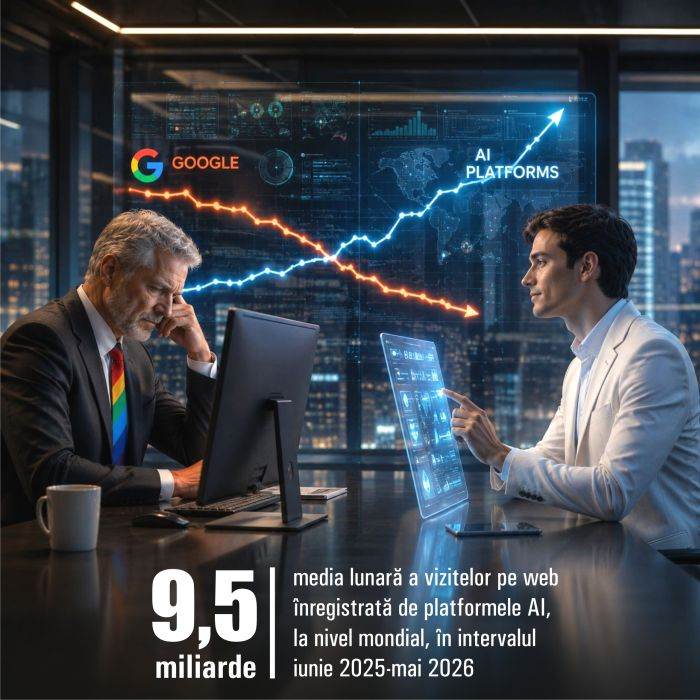
Generative artificial intelligence is no longer just a spectacular technology, reserved for programmers, innovation enthusiasts or companies at the forefront of digitalization, but will soon become the main gateway to information, products, services and purchasing decisions, according to the "2026 Generative AI Landscape: The Evolution of AI Search” report, based on data collected over the past year by Similarweb.
According to the document cited, published late last week, ChatGPT, Gemini, Claude, Perplexity, DeepSeek, Grok and other artificial intelligence platforms have not replaced Google and do not seem to be, for now, on the verge of doing so, but they have added a new layer of discovery to the internet, capable of influencing what information users receive, which brands are shortlisted and which sites they subsequently visit. The report describes a profound transformation of the digital ecosystem: search is no longer just the place where the user goes to formulate a question, but increasingly the mechanism by which information is found in the applications, social platforms, online stores, browsers and productivity tools that they already use.
The scale of the phenomenon shows how quickly artificial intelligence has moved from experiment to mass infrastructure. Generative AI platforms globally saw an average of 9.5 billion monthly web visits between June 2025 and May 2026, up 70% year-over-year. Average monthly unique visitors rose 57% to 655 million, and mobile app downloads reached approximately 2.7 billion. The report does not include usage through APIs, desktop apps, or AI features embedded in other web or mobile apps, meaning the true scale of the phenomenon is much larger than these figures capture. In just a few years, generative AI has become one of the fastest-growing areas of the internet, while traditional categories-search engines, social media, e-commerce, and online media-have seen much more moderate growth or even declines.
• ChatGPT and DeepSeek lose speed
ChatGPT remains the largest independent AI platform by web traffic and continues to increase its lead in the app market, but its dominance is no longer unchallenged. ChatGPT's share of the combined traffic of independent AI sites has gradually declined as Gemini, Claude, Perplexity, DeepSeek, and Grok have expanded their audiences. In the US app market, ChatGPT grew its monthly active users by 87% between June 2025 and May 2026, Gemini grew by 31%, Meta AI by 435%, Grok by 117%, Perplexity by 94%, and Claude by 349%. Meanwhile, Microsoft 365 Copilot saw a 31% decline and DeepSeek saw a 23% decline, suggesting that initial success does not guarantee user loyalty in a market where capabilities, integrations, and experiences change from month to month.
But the stakes are much higher than just driving traffic to independent sites and apps. The future of AI is one of direct integration into products that already have billions of users. Google is introducing AI to Search through AI Overviews and AI Mode, Microsoft is including it in Bing and the 365 suite, Amazon has integrated Alexa for Shopping, formerly known as Rufus, into the purchasing process, Shopify is developing Sidekick, and Meta is distributing Meta AI across Instagram, Facebook, Messenger, and WhatsApp. Browsers are also becoming a new battleground, with products like ChatGPT Atlas and Perplexity Comet. Meta AI illustrates the power of this strategy: its publicly reported monthly user base grew from 384 million in September 2024 to one billion in October 2025 and to 1.2 billion in March 2026. These numbers can't be mechanically compared to the audiences of independent platforms, as users access AI through existing Meta apps, but they show how quickly AI can scale when introduced into an ecosystem with a huge user base. Google, in turn, is pushing more and more searches towards experiences built natively around AI. AI Overviews appear in a growing proportion of searches, and visits to AI Mode have climbed steadily since launch. The strategy resembles a funnel: the AI-generated answer first appears above traditional results, after which the user is encouraged to continue in a conversational interface. Google does not content to add artificial intelligence to the classic results page, but is gradually turning search into a conversation. This change is also starting to change the way people formulate traditional searches. The average length of Google queries has increased in the last year, and the share of searches longer than five words has risen from 13.6% in May 2025 to 16.1% in May 2026. Users, accustomed to talking to language models in longer and more natural sentences, are bringing the same behavior to the classic search engine.
• Claude - partner for complex reasoning, planning and writing
However, the rise of artificial intelligence does not equate to the disappearance of Google. On the contrary, the data shows that the market is competitive, but not exclusive. About 461 million ChatGPT users, representing 95% of the platform's audience analyzed between March and May 2026, also used Google. There is also significant overlap between the ChatGPT, Gemini, and Claude audiences, indicating that people do not necessarily choose a single assistant, but rather test and use multiple tools, depending on the task. Artificial intelligence does not eliminate old search habits, but rather complements, fragments, and redistributes them across more and more digital surfaces.
The platforms are starting to differentiate themselves not only by technology, but also by the roles they play. Claude and ChatGPT are used for larger conversations, with longer messages and more exchanges in a session. Claude stands out as a partner for complex reasoning, planning, and writing, while ChatGPT combines the depth of conversation with a very wide variety of professional, educational, and personal uses. Gemini and Copilot are more associated with quick answers, short searches, and performing one-off tasks, while Perplexity occupies an intermediate position, focusing mainly on research and documentation. The market is not converging towards a single product, but is divided between conversation, research, productivity, execution, and quick answers.
• 50% of AI platform users are between the ages of 18 and 34
And the audiences for each platform are starting to take on a distinct profile. Compared to Google Search visitors, ChatGPT users are 2.4 times more likely to visit restaurants and delivery sites, 2.3 times more likely to visit health sites, and 2.1 times more interested in fashion and clothing. Claude's audience shows 25 times more affinity for university and college sites, three times more for programming and business services, and 2.7 times more for jobs. Gemini users are 4.8 times more likely to visit graphics and web design sites, 3.1 times more likely to be attracted to cybersecurity, and 2.2 times more likely to be interested in hardware. ChatGPT thus attracts a broad consumer audience, Claude is more focused on professionals and students, and Gemini has a pronounced technology audience.
The use of AI is simultaneously expanding into almost all areas of life. Technology is the largest category of conversations held on ChatGPT, followed by professional services, education, media and entertainment, arts and recreation, health and commerce. Among the most important subcategories are artificial intelligence, software development, marketing, psychological support, creative design, exam preparation, legal and economic education, digital content creation, gaming, literature, mental health, medical research, nutrition, and online shopping. The generalist chatbot is thus transformed into a permanent assistant, in demand for work, study, health, creation, consumption and even emotional support.
The change is also visible in the demographic structure of the public. In May 2026, half of the users of AI platforms were between 18 and 34 years old, and the other half were over 35 years old. The share of the 18-24 year old segment decreased from 28% in May 2024 to 22% in May 2026, and that of the 25-34 year old group, from 33% to 28%. In contrast, the 45-54 year old and over 55 year old categories each reached 18%. This is not about the disappearance of young people, but about the expansion of use to older generations, one of the clearest signs that artificial intelligence is overcoming the initial enthusiasm phase and entering the daily routine.
• Companies Visible on ChatGPT, Claude, and Other AI Platforms
For companies, the big change is that visibility is no longer just about ranking in Google results. Brands are now competing to be mentioned, recommended, and quoted in AI-generated answers. In the beauty industry, CeraVe leads the AI visibility rankings, followed by Ulta, Sephora, La Roche-Posay, and The Ordinary. That rankings matters because users are much more likely to visit the brand recommended by AI than a competitor that doesn't appear in the response. After the recommendation of American Express, 7.2% of users visited the company, compared to 3.1% who went to Capital One. When the AI recommended Capital One, the proportion of visits to it rose to 14.2%, compared to 3.8% for American Express. In travel, a recommendation to Skyscanner was followed by a visit to the platform by 9.5% of users, and a recommendation to Kayak generated a rate of 12%. In the beauty sector, Sephora and Ulta also benefited from a clear advantage when they were recommended. In general, brands suggested by AI attracted two to four times more visits than non-recommended competitors. This influence does not mean that the AI decides the purchase itself, but it does allow it to control one of the key steps: compiling the shortlist. The user can then check the information on Google, go directly to the site, or compare the offer elsewhere, but the first selection has already been guided by the algorithmic response. For marketers, performance measurement must go beyond the number of clicks and track the subsequent effects of a mention: increased brand name searches, direct hits, product interest, conversions, and revenue. ChatGPT has also started to use real-time information from the web more frequently. The proportion of responses that include web citations has increased more than fivefold in less than a year, reaching 6.8% in May 2026. The differences between domains are large: 22.6% of travel responses contained citations, compared to 13.5% in retail, 10.7% in sports, 8% in finance, 6.6% in technology, 6.3% in health, 6% in media and entertainment, and 4.8% in education. Artificial intelligence searches the web most frequently when a user needs up-to-date data, compares products, plans a trip, or is approaching a purchase decision.
The sources chosen by AI differ radically from one industry to another. User-generated reviews and content, press, social media, search engines, online stores, consumer services, and trade publications all have different weights depending on the question. In beauty conversations, 54.7% of the citations analyzed come from retail and e-commerce. In travel, 54.1% are generated by user reviews and content, and in finance, 36.6% come from specialized financial sources. There is therefore no universal recipe for optimizing AI responses. A company needs to understand what types of sources are considered credible in its own industry and build its presence in that ecosystem.
However, the traffic sent by AI to other sites remains small compared to the total volume of the internet, but it is growing rapidly. Between June 2025 and May 2026, marketplaces received 46.8 million visits from AI, press 44.5 million, travel 44.5 million, finance 19.1 million, consumer electronics 17.1 million, fashion 7.1 million, and beauty 2 million. The largest percentage increases were recorded in the smaller-based domains: 312.5% in beauty and 278.2% in fashion. Marketplaces, dominated by platforms such as Amazon and Temu, are an exception, as they combine the highest volume with a 237.3% increase, a sign that AI often favors large platforms with a diversified offer, to the detriment of smaller vertical stores.
Competition between AI platforms is already moving into the area of user-paid purchases. ChatGPT, Gemini, and Claude have all increased their pay-per-click advertising spend, but the relationship between money and audience growth is not automatic. Gemini has accelerated its investments the most aggressively, while Claude has achieved the strongest audience growth with a much smaller increase in advertising budget. The market is thus entering a stage where technological advantage, notoriety, distribution through existing products, and financial strength will all count simultaneously, without any of these elements guaranteeing victory on their own.
• 5% decrease in average monthly unique visitors to news sites
For the press and content producers, the transformation is ambivalent. AI platforms can cite publications and send traffic to them, but they can also provide the answer directly, removing the reason for the user to open the source. News sites saw a 5% decrease in average monthly unique visitors over the analyzed period, while AI grew by 57%. This development does not alone prove a direct causal relationship, but it shows the pressure exerted on the traditional model in which search engines distributed traffic to publishers. Publications will need to invest more in direct readership, notoriety, loyalty, distinctive content and their own communities, because they can no longer assume that the old channels will return the same audience volume.
The big change described by the Similarweb report is not, ultimately, the simple emergence of a new form of search, but the entry of the internet into an era of distributed discovery. Consumers search, compare and decide in search engines, conversations with AI, social platforms, online stores, browsers and productivity tools. For companies, Google ranking remains important, but it is no longer enough. Authority, notoriety, algorithmic recommendation, citation, referral traffic, presence in sources considered credible and the ability of the homepage to transform the visitor into a customer become components of the same struggle for visibility.
• ChatGPT, increasingly used as a therapist
Emotional support and companionship have become the main use of generative artificial intelligence, according to the analysis "How People Are Really Using Gen AI in 2025”, published by Harvard Business Review. The research, which analyzed thousands of user stories and ranked 100 uses of language models, places "therapy and companionship” in first place, up from the second position occupied in 2024. The next places are the organization of personal life and the search for a purpose in life, and the category "personal and professional support” has become the most important of the six major areas identified. The trend is confirmed by other data: 71% of Mexicans say they use AI tools for mental health support, and 24.8% of Spaniards first resort to digital self-diagnosis. Psychologists María Fernanda Cruz Urquiza and Cecilia Paredes Aldama explain the appeal of ChatGPT by its constant availability, immediate responses, low cost and lack of judgment, but warn that excessive validation provided by AI can distort the user's perception of their own life. Artificial intelligence can help organize thoughts, prepare for difficult conversations and temporarily reduce anxiety, but it does not eliminate the causes of suffering and cannot replace the relationship between therapist and patient.
• Cheap AI models from China threaten huge investments by American giants
The Chinese startup Moonshot AI last week launched "Kimi-K3”, one of the largest artificial intelligence models built so far, which, in just 24 hours, reached the top of the programming rankings, surpassing systems developed by Anthropic and OpenAI, according to MKTContext. The model can process up to a million tokens in a single request, enough to analyze a large code base or document collection, and directs requests only to the necessary components, thereby reducing resource consumption. Aggressive pricing and open distribution of models such as Kimi, DeepSeek, Qwen, and Llama allow companies to move common tasks to cheaper systems and keep expensive models only for difficult problems. This trend threatens the revenues and return on investment of unprecedented investments made by OpenAI, Anthropic, Google, and Meta, but may benefit cloud infrastructure providers Microsoft, Google, and Amazon: costs per token are collapsing, but the use of artificial intelligence continues to grow, fueling demand for data centers.
























 Euro
Euro Dolar SUA
 Franc elveţian
 Liră sterlină
 Gram de aur





























