English

The last month of last year was marked by reaching the budget deficit target agreed with the European Commission, especially since the signals for the Bologna government, regarding the budget execution in 11 months, were encouraging, as they showed that the fiscal measures undertaken in July and September are starting to bear fruit. However, December compressed a period of governance "on the edge", in which the Executive simultaneously pushed three fronts with political cost and direct financial stakes: the reform of magistrates' service pensions, fiscal-budgetary discipline until the approval of the 2026 budget (expected for early February 2026 in Parliament) and the acceleration of the corporate governance reform at state-owned companies, where the PNRR milestones may block financing if the provisional remains the rule.
At the center of the tension was the controversial file of special pensions, procedurally forced by engaging the Government's responsibility and defended in Parliament, with clear thresholds (ceiling of 70% of the last net salary, seniority increased to 35 years and retirement age gradually pushed towards 65), but inevitably pushed towards institutional conflict, after the failed motion of censure introduced by the opposition and the referral to the Constitutional Court. In parallel, the "little train ordinance" and the new package of fiscal measures included in it have shaped the direction of the fiscal transition: cuts and brakes on spending, incentives and simplifications (the minimum turnover tax has been reduced, a 1% tax for micro-enterprises, a calendar for eliminating the "pillar tax"), targeted protections (support for the minimum wage and vulnerable consumers), but also strengthening control over areas where the state traditionally loses, such as cryptocurrencies, excise duties, traceability and authorizations.
In the same context, the Government has moved from principles to lists, deadlines and sanctions in the reform of public enterprises, setting a deadline - March 31, 2026 - for the selection of administrators and putting the spotlight on energy and transport, while the agenda included economic security decisions and specific exemptions for critical infrastructure.
The picture of the month is also seen in the background figures and in the public shocks that amplified the pressure: the budget execution for 11 months of 2025 indicates a gradual consolidation (lower deficit, growing revenues, moderate spending in pace), while the record of FIDELIS subscriptions and the level of foreign exchange reserves offered signals of confidence, against a still tense external backdrop.
On another level, the Recorder investigation on "Captured Justice" inflamed the institutional and political scene, bringing accusations of systemic blocking of major files and chain reactions, from meetings at Cotroceni and a clear fracture between the two sections - judges and prosecutors - within the Superior Council of Magistracy, to announcements of radical parliamentary initiatives.
For the past month, we also review the partial local elections of December 7, which quickly redrawn the map of power: in Bucharest, the liberal Ciprian Ciucu, former mayor of Sector 6, became the general mayor, and Buzău reconfirmed that it remains a PSD pole of influence, as long as the former prime minister and social-democratic leader Marcel Ciolacu was elected as the head of the County Council.
• Magistrates' pension reform, the Gordian knot of the end of the year
The point of maximum political tension came on December 2, when the Government analyzed the amendments submitted to the draft law for the modification and completion of some normative acts in the field of service pensions, in the procedure for assuming responsibility. It was a test of strength, not just a technical debate: 42 amendments were registered, most of them coming from the Parliamentary Group of the Young People's Party (19), MP Dumitru Coarnă (12), MP Raisa Enachi (6) and the AUR Group (5).
The Government rejected the amendments, keeping the form submitted to Parliament, and at its center are three milestones that radically change the current architecture: capping the pension at a maximum of 70% of the last net salary, increasing the minimum length of service from 25 to 35 years and raising the retirement age from 48-50 years to 65 years, in a transition of approximately 15 years.
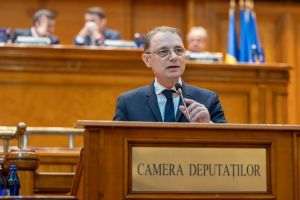
On the same day, the Executive assumed its project in Parliament, and the dynamics remained tense throughout the month: the opposition tried to overthrow the Government through a motion of censure, rejected on December 15, with 139 votes "in favor" out of a necessary 233, and the file then moved to the Constitutional Court. However, a fter a first postponement of the case to December 28, on that date the judges appointed to the Court at the proposal of the PSD left the courtroom and did not return, thus the hearing lacked the quorum required to make a decision. The case was postponed to January 16, when, based on an expert report submitted to the file by the High Court of Justice and Cassation, the CCR decided that it would rule on the reform of magistrates' pensions only on February 11.
Basically, we are dealing with a chronology that shows why the issue of special pensions for magistrates was treated as a pivot: the reform was pushed to the procedural limit, defended in Parliament and, inevitably, legally challenged, with a direct effect on the political and budgetary calendar.
• State-owned companies, carefully analyzed by decision-makers within the Government
December was the month in which the Government also pressed hard on the reform of state-owned companies, in a mix of deadlines, sanctions and concrete lists of companies. An important step came through the ordinance on the corporate governance of public enterprises, which attempts to prevent operational blockages and PNRR risks generated by unfinished selection procedures at boards of directors. The text includes important data: about 48 central public enterprises had exceeded the maximum legal term of 12 months for provisional mandates, through successive appointments of provisional administrators. Consequently, it set a timetable: the tutelary authorities must finalize the selections by March 31, 2026 and appoint the administrators of state-owned companies; AMEPIP was given the obligation to verify the procedures, identify the culprits and apply sanctions; if the selections are not completed by March 31, 2026, the heads of the tutelary authorities risk double the maximum fine provided for by the relevant regulation, and failure to fulfill the obligations to appoint interim directors may also be sanctioned with doubling the amount of the fine.
In this context, on December 5, a memorandum was approved that redefined the role of the Interministerial Committee for Supporting the Implementation of Corporate Governance in State-Owned Companies and validated the list of the first 17 central public enterprises subject to analysis. The list, with precise tutelary authorities, put the spotlight on several energy and transport companies, including Electrocentrale Bucureşti, OIL Terminal, CFR SA, CFR Călători, Metrorex and TAROM.
Subsequently, on December 24, the Government expanded the list through a new memorandum, adding four more companies: Minvest, Romaero, Remin and Avioane Craiova.
• Increased local taxes and new fiscal measures through the "little train” ordinance
On December 17, the Government intervened in the area of local taxation, establishing that, by December 31, 2025, local councils must approve decisions on tax rates and fees for 2026, amending the previous rule that required adoption at least three working days before the end of the budget year. A coercive instrument also appeared: the possibility for the Ministry of Finance to temporarily stop supplying income tax rates and amounts for balancing, with the exception of mandatory salary and social expenses, if the decision is not adopted.
On December 23, the Government delivered the "little train” ordinance, through which it ordered the reduction of some expenses, recovery and simplification measures, support for the vulnerable and local authorities, plus strengthening the fight against evasion and control in the area of excise products.
The new regulatory act included, among other things, the reduction of the minimum turnover tax (IMCA) to 0.5% in 2026 for all taxpayers and its elimination in 2027, the application of a single 1% income tax rate for microenterprises regardless of income or type of activity, the elimination of the construction tax ("pole tax") from 2027, but also the consolidation of digitalization by expanding and clarifying the RO e-Invoice and simplifying the RO e-TVA mechanisms.
In the same logic of social protection, the Government extended support for employees with the minimum wage by maintaining a non-taxed portion (300 lei until June 30, 2026 and 200 lei from July until the end of 2026), announced the increase in the minimum wage starting July 1, 2026, the extension of support measures for vulnerable energy consumers until December 31, 2026, with eligibility rules considered fairer.
On the local administration side, the ordinance opened access to Treasury loans of up to 500 million lei for the co-financing and implementation of PNRR projects until June 30, 2026 and provided up to 200 million lei for district heating, including the coverage of arrears and losses, until March 31, 2026.
In the same legislative package, combating tax evasion was pushed into areas where the state traditionally loses: the authorization of operators in the product centralized excise tax collection at ANAF, assessment of the financial credibility of administrators and the source of funds, extended financial guarantees for importers and distributors of energy products, tightening authorization and control for traceability, plus shortening transaction chains by limiting intermediaries without authorized storage capacities.
• Budget execution in the terms agreed with the European Commission
All of these above measures were taken by the Government in light of the budget execution for the first eleven months of 2025, which, according to data published last month by the Ministry of Finance, shows a budget deficit of 6.40% of GDP, equivalent to 121.77 billion lei, a significantly lower level than the 7.15% of GDP recorded in the same period of 2024. This reduction in the deficit, achieved in a still tense economic context, reflects a combination of solid revenue growth and a moderation in the rate of expansion of public spending relative to GDP.
Total state revenues amounted to 591.91 billion lei in the analyzed period, registering an annual increase of 13%. General consolidated budget expenditures totaled 713.68 billion lei, nominally increasing by 9.9% compared to the same period in 2024. Reported to GDP, expenditures reached 37.52%, compared to 36.93% in the previous year, but the growth rate decreased visibly, signaling a slowdown in the expansion of public spending. This evolution suggests a more accentuated fiscal discipline, in an effort to gradually balance the state's finances. Against the backdrop of these budgetary developments, the FIDELIS government bond program provided a clear signal of confidence from the population. The last edition of 2025, held in December, attracted subscriptions of almost 1.5 billion lei, marking an absolute record and confirming Romanians' appetite for safe, state-guaranteed savings instruments. In total, in the 11 editions of the year, Romanians invested over 21.1 billion lei, the largest amount attracted in a single year since the launch of the program.
At the macroeconomic level, data published by the National Bank of Romania indicate a relatively solid external position. The NBR's foreign exchange reserves stood at 64.8 billion euros at the end of December 2025, and total international reserves, including gold, reached 77.017 billion euros, significantly above the level at the end of 2024. The gold reserve remained at 103.6 tons, but its value increased substantially, amid the favorable evolution of international prices.
At the same time, the current account of the balance of payments recorded a larger deficit in the period January-October 2025, reaching 24.636 billion euros, an evolution influenced by the deterioration of the balance of goods and primary income, partially offset by a higher surplus in the services area. Direct investments of non-residents increased significantly, exceeding 7.2 billion euros, a sign that Romania remains attractive for foreign capital.
Total external debt continued to increase, reaching 225.6 billion euros at the end of October 2025, but its structure and sustainability indicators show a more balanced management. The share of long-term debt remains dominant, the external debt service rate has significantly decreased compared to the previous year, and the degree of coverage of short-term debt with foreign exchange reserves exceeds 100%, a comfortable indicator for financial stability.
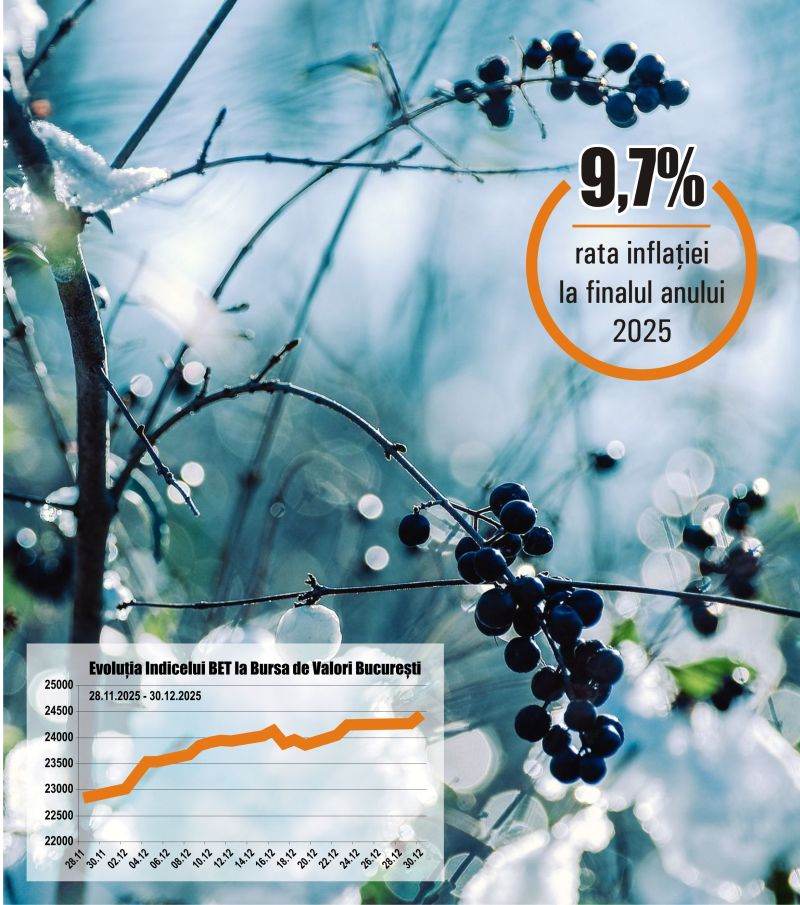
At the same time, also at the macroeconomic level, the National Institute of Statistics announced that at the end of December 2025 inflation reached 9.7%, above the NBR's forecasts. According to INS data, food prices increased by 7.75% in December 2025 compared to December 2024, with the highest price increases being recorded for cocoa and coffee, by 24.67%, in December 2025 compared to December 2024. INS shows that non-food prices increased by 10.48% in December 2025 compared to December 2024, with the highest price increase being recorded for electricity, by 60.91%, in December 2025 compared to December 2024, while the category "electricity, gas and central heating" increased by 37.54%, in December 2025 compared to December 2024. The services sector also experienced a price increase of 11% in December 2025 compared to December 2024, and here we mention rail transport, whose price increased by 24.40% in December 2025 compared to the same period of the previous year.
• Controlled or monopolized justice?
An investigative documentary broadcast in early December by Recorder triggered one of the strongest public scandals in recent years regarding the functioning of the Romanian judiciary, bringing to the fore serious accusations that major corruption cases are "systematically buried" through refined mechanisms, built over time and consolidated including through legislative amendments. The investigation, entitled "Captured Justice", outlines the image of a deeply vulnerable judicial system, in which cases with damages of tens or even hundreds of millions of euros end up being settled through final acquittals, after years of procedural delays.
According to the investigation, the path analyzed in the case of several corruption cases shows a repetitive pattern: convictions in first instance, followed by years of postponements, changes of panels, controversial procedural interpretations and, finally, final acquittals that empty the initial investigations of their content.
According to the magistrates who appeared in the investigation, the situation in the Justice system has reached an unprecedented level of seriousness, and the decisions and actions taken in recent years would systematically undermine the independence of the Justice system. In this context, several magistrates explicitly point to Lia Savonea, the president of the High Court of Cassation and Justice, as one of the central figures of this mechanism, which would also include the leadership of the Bucharest Court of Appeal. In a public reaction to the appearance of the documentary, Liana Arsenie, the president of the Bucharest Court of Appeal, rejected all the accusations, denying any involvement in blocking or influencing corruption cases, but was contradicted by judge Raluca Moroşanu, who stated that everything recorded in the Recorder investigation is real.
The scandal generated rapid reactions at the highest political and institutional level. The President of Romania, Nicuşor Dan, met at the Cotroceni Palace with representatives of the dissatisfied magistrates, promising to organize an internal referendum in the magistracy, as a tool for consultation on the issues reported. At the same time, the Superior Council of Magistracy came to the center of public attention, after divergent positions between the Section for Judges and the Section for Prosecutors appeared in the public space, a sign of a deep internal fracture.
The government reacted in turn by announcing the establishment of a special committee intended to identify and resolve the structural problems facing the judicial system.
• Ciprian Ciucu becomes head of the Capital, Marcel Ciolacu "elected” head of Buzău County
The partial local elections held on December 7, 2025 redrawn the political map both in Bucharest and in Buzău County, in an exceptional political context, generated by the election of Nicuşor Dan as President of Romania, following the presidential election in May. His departure from the Capital City Hall to the Cotroceni Palace triggered a major electoral test for political parties, with high stakes on the administrative direction of the largest city in the country and on the local balances in the territory.
In Bucharest, the competition for the position of general mayor took place against the backdrop of a moderate voter turnout of 32.64% of the total of 1,807,214 voters registered on the electoral lists. Of the 585,313 valid votes cast, victory went to the candidate of the National Liberal Party, Ciprian Ciucu, who obtained 36.16% of the votes. At the time of the elections, Ciucu was the mayor of Sector 6, a position from which he built his profile as an administrator focused on infrastructure, urbanism and the management of public services. The result confirms the transfer of trust of a substantial part of the Bucharest electorate to the PNL, at a time of major political transition at the national level.
In second place in the race for the Capital was Anca Alexandrescu, with 21.94% of the votes, closely followed by Daniel Băluţă, who obtained 20.51%. Cătălin Drulă came in fourth place, with 13.9%, a score that indicates the difficulties of the USR in reconsolidating its electoral base in Bucharest, despite the favorable tradition of previous years. The distribution of votes reflects a significant fragmentation of political options and a tight competition for secondary positions, while the winner managed to clearly stand out.
In parallel with the elections in the Capital, Buzău County was the scene of a categorical victory for former Prime Minister Marcel Ciolacu, who won the presidency of the County Council with 51.97% of the votes, respectively 44,767 votes, after centralizing all the minutes. The result confirms his dominant position at the local level and his ability to mobilize the social-democratic electorate in a county traditionally considered favorable to the PSD. The turnout in Buzău was 24.18%, below the average in Bucharest, but sufficient to validate a mandate obtained without emotions.
The set of early local elections in December 2025 outline a clear political picture: the consolidation of the PNL in Bucharest, in a symbolic moment of change in national leadership, and the reconfirmation of the PSD's strength in the counties where local leaders benefit from accumulated political capital. The results send strong signals regarding the reconfiguration of centers their administrative power and offers relevant indications for future electoral strategies, in a political climate marked by transition, repositioning and increased expectations from the electorate.
















 Euro
Euro Dolar SUA
 Franc elveţian
 Liră sterlină
 Gram de aur