English


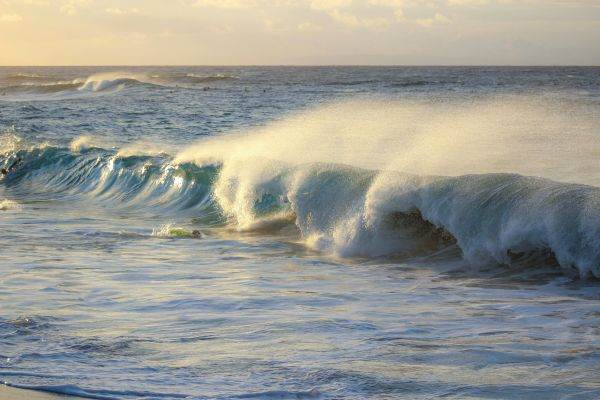
A landmark treaty to protect the planet's oceans has become international law since January 17, 2026. It is the High Seas Treaty, officially known as the Biodiversity Beyond National Jurisdictions (BBNJ) Agreement, an unprecedented legal instrument that will regulate the protection of approximately two-thirds of the global ocean surface for the first time. The World Wide Fund for Nature (WWF) welcomes the entry into force of the agreement and calls on governments, ocean industries and the scientific community to collaborate so that the treaty is effectively implemented, reports the ANSA agency.
• A historic moment for the oceans and global governance
The BBNJ Treaty is the result of almost two decades of international negotiations and covers marine areas beyond national jurisdictions - the equivalent of almost half of the Earth's total surface area. Until now, these regions have been poorly regulated, despite playing a critical role in regulating the climate and maintaining global biodiversity. "The entry into force of the High Seas Treaty marks a historic moment for the world's oceans and for all of us who depend on them,” said Kirsten Schuijit, Director General of WWF International. She said the agreement ushers in "a new era in ocean governance and international cooperation,” with great potential to contribute to a healthier and more resilient ocean economy.
• A crucial opportunity to achieve biodiversity goals
WWF stresses that the implementation of the treaty is essential to achieving the global goal set by the UN Convention on Biological Diversity, which calls for protecting at least 30% of the world's oceans by 2030. The agreement also supports the objectives undertaken by the European Union through the EU Biodiversity Strategy 2030. Although some progress has been made in recent years, only a small part of the Mediterranean Sea is currently effectively protected, and the area managed in a way that ensures ecological connectivity is even smaller.
• The Mediterranean paradox: high biodiversity, extreme pressures
The Mediterranean region faces a major paradox. It is one of the richest areas in the world in terms of marine biodiversity, but also one of the most intensively exploited. "Shipping, fishing, coastal development, pollution and the climate crisis are putting unprecedented pressure on marine life and the livelihoods of coastal communities,” said Paolo Lombardi, WWF Mediterranean Representative. In this context, the creation of connected networks of marine protected areas, including migratory corridors, is no longer optional but a necessity. The High Seas Treaty also strengthens global standards for environmental impact assessment for activities such as fishing, shipping, offshore energy or future exploitation of the seabed. In the case of the Mediterranean Sea, the agreement will add to an already complex governance framework, which includes the Barcelona Convention, European Union policies and regional fisheries bodies such as GFCM and ICCAT.
• The major challenge: from commitments to concrete actions
However, WWF warns that international treaties and strategies will only have a real impact if they are translated into concrete measures. "The Mediterranean Sea is not suffering from a lack of commitment, but from a lack of implementation,” said Carlotta Bianchi, Policy Manager at WWF Mediterranean. She stresses the need for coordinated, well-funded and politically supported action in areas such as marine spatial planning, fisheries management, pollution prevention and effective management of protected areas.
The BBNJ agreement was adopted in June 2023 and reached the minimum threshold of 60 national ratifications in September 2025, a necessary condition for its entry into force after 120 days, on 17 January 2026. The treaty has now been ratified by over 80 states, and the first Conference of the Parties (COP) is expected to take place later this year. However, less than half of the countries bordering the Mediterranean Sea have ratified the agreement so far. WWF Mediterranean calls on all states that have not yet done so to ratify the treaty without delay.



















 Euro
Euro Dolar SUA
 Franc elveţian
 Liră sterlină
 Gram de aur