English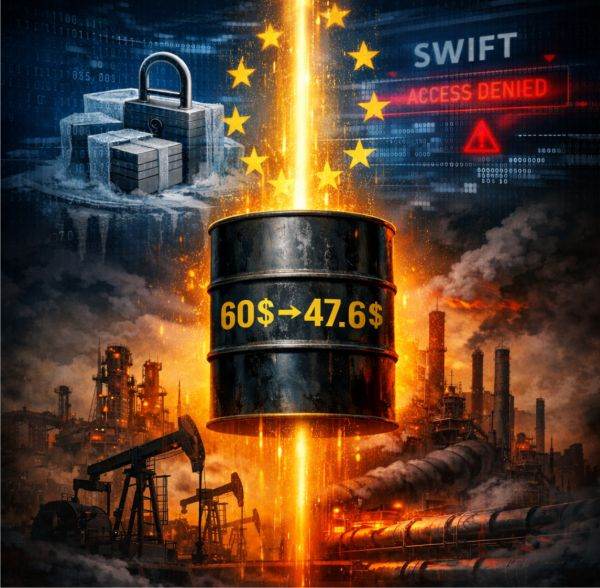
Since February 24, 2022, the day the Russian Federation launched a full-scale invasion of Ukraine, international and European sanctions have ceased to be "an instrument of deterrence” and have become a permanent infrastructure of coercion: a set of prohibitions, asset freezes, embargoes, price caps, cuts in access to financing and technologies, built in successive layers, calibrated to reduce Moscow's war resources and degrade its industrial, military and financial capacity.
In practice, the European Union has made sanctions a state policy. Thus, if, after the invasion of Crimea by the Russian Federation in February 2014, the EU introduced sectoral sanctions, since February 2022 the same legal basis has been supplemented with much harsher and much broader measures. According to information published on the website of the Council of the European Union, by the end of last year, 19 packages of sanctions related to the war launched by the Russian Federation against Ukraine had been adopted, and yesterday's meeting discussed another package of sanctions, on which no agreement was reached due to the threat of a veto by Hungary, amid the dispute over oil supplies through the Druzhba pipeline, an episode reported by Reuters and other international publications.
However, the foreign ministers of the EU member states decided yesterday to extend sectoral economic sanctions, i.e. those that directly hit finance, trade, energy, transport, technology and services, until February 24, 2027.
The first shock of the introduction of sanctions was financial. In the first days of the invasion, the red line was drawn where it hurts the most: reserves and the banking system. The EU points out that, with the third package of sanctions adopted on February 28, 2022, assets of the Central Bank of Russia worth approximately 210 billion euros were "freezed". Subsequently, the EU bloc also established mechanisms for using the revenues generated by these assets: the EU Council adapted the framework in May 2024, and the rules of October 25, 2024 provide for the allocation of 95% of the extraordinary revenues to the EU budget, to support the EU-G7 loan repayment mechanism (around 45 billion euros), with the remaining 5% going to the European Peace Facility; in December 2025, the EU also introduced a temporary ban on the transfer back to Russia of Central Bank assets frozen in the EU member states. More broadly, a European Parliament analysis paper estimated in February 2024 that the total Russian sovereign assets frozen by the EU and the rest of the G7 member states were around euro260 billion, and globally could reach close to euro300 billion.
The second blow targeted the circulation of money and banking messages. On 2 March 2022, the EU Council announced the exclusion of some Russian banks from the SWIFT system, and then expanded the list of affected institutions to include several Russian and Belarusian banks. At the same time, the US applied sectoral sanctions and restrictions that also covered the energy sector and the application of the price cap.
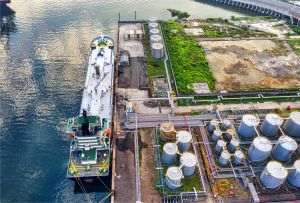
The third major line of sanctions concerned the energy sector, which represents the main source of foreign exchange and financing for the Russian state apparatus. In the EU, the embargo on Russian oil was built with a timetable and exceptions, but with a clear direction: reducing Moscow's dependence and revenues. In parallel, the West introduced price caps for shipping and related services, so that Russian oil could continue to flow to third markets without causing a global supply shock, but with limited revenues for Russia. The European Commission indicated at the time of its launch that the price cap for crude oil had been set at $60 per barrel. The G7 and Australia statement set the entry into force of the price cap for crude oil on 5 December 2022 (or immediately thereafter in participating jurisdictions), with a nationally supported implementation regime. Moreover, in July 2025 the EU decided to reduce the price cap for crude oil from the initial level of $60 to $47.6 per barrel, and for petroleum products it also set distinct levels (including for "premium” vs. "discounted” products), within the same capping policy. The implicit message is tough: if Russia finds detours, the EU moves the thresholds; if the market adapts, the EU recalibrates its instrument. And behind this mechanism lies a reality often ignored in debates: sanctions do not aim to simply "stop the war” overnight, but to degrade the capacity to sustain it for years, by eroding recurring export revenues.
The fourth direction, perhaps the most strategic in the long term, concerns technological and industrial restrictions, i.e., the application of export bans on dual-use goods, drone components, advanced equipment and know-how that can feed the Russian military industry. The EU describes its economic sanctions as explicitly targeting the technology, defense, transport and services sectors and has developed an anti-circumvention component: sanctioning intermediaries and networks, extending restrictions to entities outside Russia that support the war effort, transit bans through Russia for certain goods, a "no-Russia clause” and due diligence requirements for European exporters.
The EU did not stop at banks and energy on its list of targets. It also targeted the ecosystem created by the Russian Federation for influence and legitimization, i.e., the EU sanctioned Russian propaganda, its financing and political networks. From the EU Council data, we note that the broadcast ban applies to 27 media outlets considered pro-Kremlin disinformation tools, and in the same set of measures, the community bloc has also introduced restrictions on the financing of actors in the European public space by the Russian state and its proxies. This also includes individual sanctions, such as asset freezes and travel bans, which have reached a scale difficult to imagine in Europe before 2022: the European regime "in respect of actions that undermine or threaten the territorial integrity of Ukraine" applies to over 2,700 Russian individuals and entities.



















 Euro
Euro Dolar SUA
 Franc elveţian
 Liră sterlină
 Gram de aur