 English

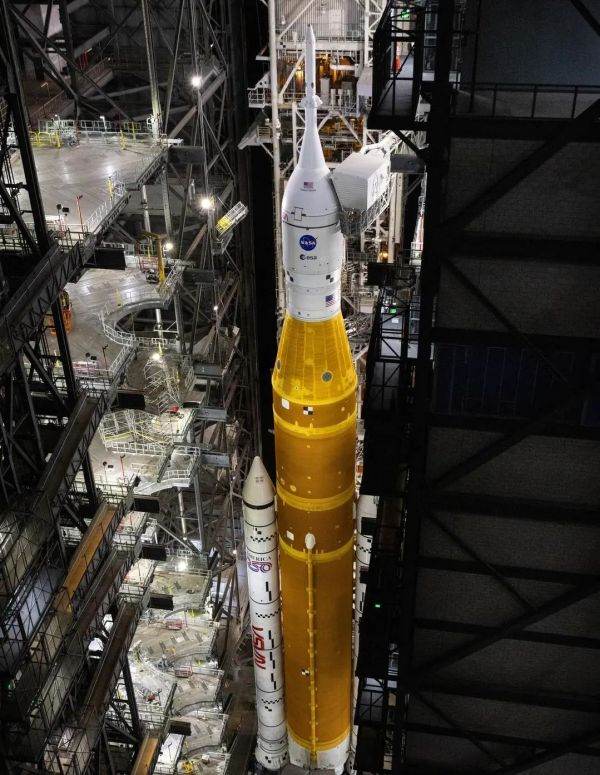
The Starship rocket, developed by SpaceX, has accumulated delays of at least two years in its development program, after NASA selected this vehicle in 2021 to transport the astronauts' lunar landing module as part of the Artemis lunar program, Reuters reports. According to a report published by the NASA inspector general and cited by Reuters, the US space agency's specialists estimate that the rocket may need even more time to overcome technical obstacles before it is certified for manned missions to the Moon.
• Race to return to the Moon
The Artemis program is one of the most ambitious space projects of recent decades. Launched by NASA with the support of private companies, the program aims to return astronauts to the Moon and establish a sustainable human presence on the Earth's natural satellite. To achieve this goal, NASA has signed contracts with several aerospace companies, in particular: SpaceX, the company founded by Elon Musk; Blue Origin, the space company of Jeff Bezos. The pressure on the Artemis program is amplified by the strategic competition with China, which plans to send its own crews to the Moon around 2030.
• Initial goal: 2024
Initially, NASA hoped to send astronauts to the Moon in 2024, but the deadline was considered optimistic even by American officials. Technical problems and delays in the development of the Starship rocket have led to successive postponements of the calendar. Currently, NASA maintains 2028 as the new target for the first manned lunar landing under the Artemis program.
The report of the NASA Inspector General indicates that refueling the Starship rocket in space is one of the most complex technical stages of the program. For a Starship to carry astronauts to the Moon, SpaceX will need to launch at least 11 additional rockets into Earth orbit. These will act as "space tankers” to transfer the fuel needed for the mission. The process would involve: launching a Starship to act as an orbital fuel depot;
launching more than a dozen additional Starship rockets to fill the depot;
transferring the fuel to the Starship for the lunar landing; and then flying it to the Moon. This type of cryogenic fuel transfer into space on such a scale has never been done before. Starship is fueled by approximately 1,200 tons of liquid methane and liquid oxygen, highly volatile fuels that must be kept at very low cryogenic temperatures, below about -150 degrees Celsius. Handling these fuels in orbit and transferring them between multiple spacecraft is a major technological challenge. According to the NASA report, the agency is monitoring "a significant risk” that some of SpaceX's cryogenic technologies are not yet mature enough for a crewed mission.
• Repeated Starship Tests
Since 2023, SpaceX has launched the Starship system 11 times in test flights, most of which took place at the company's base in Texas. The tests have been closely watched by NASA because the vehicle's success is critical to the Artemis program. Despite Elon Musk's company's rapid progress in reusable rockets, Starship remains the most complex aerospace project developed by the private sector to date.
• A milestone for the future of space exploration
In February, NASA announced the addition of an additional test mission to the Artemis program, implicitly acknowledging the technical difficulties facing its contractors. Under the current plan: SpaceX would conduct the first two crewed moon landings starting in 2028; similar missions would then be carried out by Blue Origin. The success or failure of the Starship rocket will have major implications not only for the Artemis program, but also for the future of deep space exploration, including Elon Musk's stated ambitions to send humans to Mars.


























 Euro
Euro Dolar SUA
 Franc elveţian
 Liră sterlină
 Gram de aur





























