 English

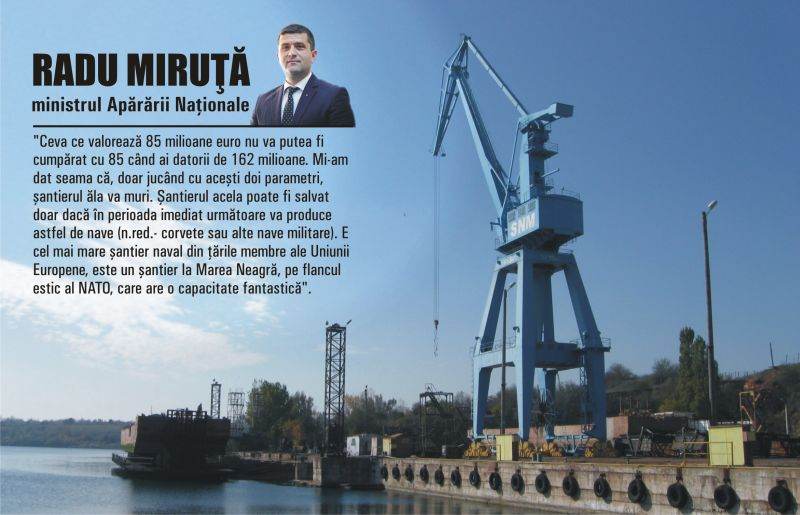
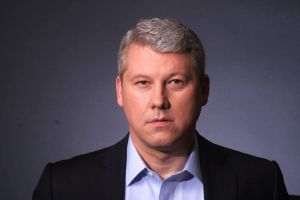
The statements made on Thursday, February 5, 2026, by the Minister of National Defense, Radu Miruţă, on the subject of the Mangalia Shipyard do not represent a paradigm shift, but the explicit confirmation of the continuity of a deeply mistaken industrial and strategic policy, inaugurated in 2018, during the PSD government led by Liviu Dragnea, and perpetuated, with variations in discourse, until now, whether the Social Democrats were led by Marcel Ciolacu or, more recently, by Sorin Grindeanu. With the mention that the current Minister of National Defense is not a PSD member, but a USR member.
Radu Miruţă stated, last Thursday, during a press conference held at the Ministry of National Defense: "I tell you very confidently that, if I had a unique power in this country, I would not even think about legal methods by which you could save a strategic shipyard. (...) Something worth 85 million euros cannot be bought for 85 when you have debts of 162 million. I realized that, just playing with these two parameters, that shipyard will die. That shipyard can only be saved if in the immediate future it produces such ships (ed. - corvettes or other military ships). It is the largest shipyard in the member countries of the European Union, it is a shipyard on the Black Sea, on the eastern flank of NATO, which has a fantastic capacity. (...) It got to this situation because Romania allowed its skin to be torn off, while it applauded when others they were doing that. (...) I have no preferences and no taste for the tax codes of various companies. I am interested in producing these four ships within the period in which SAFE can use the money, that is, until 2030”.
Beyond the rhetoric of rescue, beyond the invocation of strategic interest and beyond the promise of military orders financed through the SAFE mechanism, the essence of the message sent by the Minister of Defense clearly shows that the Romanian state insists on repeating exactly the mechanisms that brought the shipyard to its current state of collapse.
Radu Miruţă stated unequivocally that the rescue of the Mangalia Shipyard is conditional on the immediate production of military ships, including some financed through the European Security Action for Europe mechanism. "That shipyard can only be saved if in the immediate future it produces such ships”, declared the minister. This formulation, repeated obsessively, is revealing not only in what it says, but especially in what it ignores: the industrial reality, the contractual reality and the legal reality in which the shipyard finds itself, realities documented step by step since 2018, in the pages of the BURSA newspaper.
The Minister of Defense admitted, perhaps more openly than any of his predecessors, the disastrous financial situation of the shipyard. According to his statements, the liquidation value of the Mangalia Shipyard is 85 million euros, while the debts have reached 162 million euros and are increasing monthly. It is, in fact, the official recognition of the total failure of the model imposed by the state in 2018, when, through a combination of political decision and legislative amendment, operational control was wrested from the private investor, in the name of an illusory industrial sovereignty.
However, the solution proposed by the current Minister of National Defense does not break this vicious circle, but closes it even tighter. Radu Miruţă explicitly stated that the Romanian Army will be used as an instrument to financially rescue the shipyard, through orders paid from the defense budget or from European funds. "That shipyard can only be saved if in the immediate future it produces such ships," the minister reiterated.
Radu Miruţă also invoked the strategic importance of the Mangalia platform, stating: "It is the largest shipyard in the European Union, it is a shipyard on the Black Sea, on the eastern flank of NATO, which has a fantastic capacity.” This is exactly the same argument used eight years ago to justify the brutal intervention of the state in the management of the shipyard and to legitimize the exclusion of market mechanisms and industrial discipline. The difference is that, in the meantime, the "fantastic capacity” has translated into technical unemployment, insolvency and the complete loss of international credibility. The minister went further and acknowledged the political nature of the disaster, using a harsh formulation, but devoid of practical consequences: "We got into this situation because Romania allowed its skin to be torn off, while applauding when others did this.” The statement is correct in its diagnosis, but false in its solution. Because exactly this "grabbing" was the direct product of the decisions of the Romanian state, not of the private investor, and the perpetuation of the same logic - imposed orders, political deadlines, ignoring industrial realities - only serves to further risk repeating the failure.
Asked about a possible collaboration with Damen, the company that actually produces military ships in Romania and that has delivered over 30 ships to 13 NATO and EU states, Radu Miruţă replied: "I have no preferences and I have no taste for the tax codes of various companies. I am interested in producing these four ships within the time frame in which SAFE can use the money, that is, until 2030”. The statement is, again, revealing. While sources from the naval industry openly state that only the Damen Galaţi shipyard can deliver the necessary multifunctional corvettes by 2030, the Minister of National Defense insists on a political objective - the revitalization of the Mangalia Naval Shipyard - without explaining the realistic mechanism through which this objective could be achieved.
Radu Miruţă's statements do not reveal a restructuring strategy, a legal solution for exiting insolvency, a corporate governance plan that would avoid a repeat of the conflict between the state and the investor. All that emerges is the continuation of the same policy that began in 2018, a period when Romania was led by PSDragnea: using military programs to cover the state's failures as an administrator, transforming the Army into a financial lifeline, and sacrificing deadlines, costs, and efficiency on the altar of a poorly understood industrial nationalism.
Eight years after the debut of the "Mangalia model", the statements of the Minister of Defense confirm that the lessons have not been learned. The policy inaugurated by Liviu Dragnea's PSD and continued by Marcel Ciolacu's PSD and, recently, Sorin Grindeanu's PSD, has not only not been abandoned, but is being explicitly reaffirmed, with the same instruments and the same risks. The difference is that this time, the bill is much higher, and the time left is much shorter.
















 Euro
Euro Dolar SUA
 Franc elveţian
 Liră sterlină
 Gram de aur





























