English


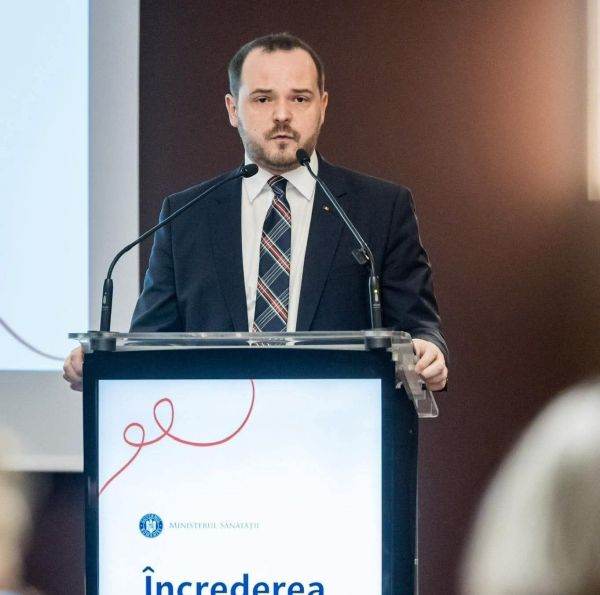
The national network of centers of expertise for rare diseases (CEBR) has expanded with the opening of a new center in Craiova and the recertification of another center in Timisoara, announced the Minister of Health, Alexandru Rogobete. "We continue to strengthen the national network of centers of expertise for rare diseases by opening a new center in Craiova and recertifying the second one in Timisoara,” the minister said in a Facebook post. The new structures are designed to offer patients clear medical pathways, focused expertise and coordinated care and operate within reference medical units.
An expertise center dedicated to the diagnosis and integrated management of hereditary angioedema, a rare disease with severe potential, requiring rapid assessment and specialized interventions, has been established at the Craiova County Clinical Emergency Hospital. At the same time, an expertise center for rare vascular anomalies operates at the "Louis Ţurcanu” Children's Emergency Hospital in Timişoara, focused on correct diagnosis, careful monitoring and long-term care coordination.
• Access to multidisciplinary teams and advanced diagnostics
According to the Minister of Health, the two centers ensure access to multidisciplinary teams capable of managing complex cases and providing integrated management for conditions such as achondroplasia and other skeletal dysplasias of genetic cause, but also for the prevention, genetic diagnosis and treatment of congenital malformations. Patients also benefit from molecular and genomic diagnostics, advanced imaging investigations, specialized analyses and genetic counseling - essential tools for shortening medical paths that, in the case of rare diseases, can take years.
• 52 functional centers of expertise at national level
"With the two centers, the national network reaches 52 functional centers of expertise. In less than a year of mandate, eight such centers have been introduced, a sign that we are catching up on delays and building a coherent infrastructure for patients with rare diseases,” stressed Alexandru Rogobete. The minister specified that the development of centers of expertise is doubled by expanding access to modern therapies.
In this context, Alexandru Rogobete recalled that, in addition to the drugs introduced in September, last week 52 drugs were added to the compensated list, including essential treatments for rare diseases and severe conditions that, until recently, had limited or non-existent options in the public system.
The new therapies target: severe inflammation of blood vessels, with a risk of major complications; rare blood diseases, with unpredictable evolution and vital potential; hereditary forms of amyloidosis, progressive conditions that affect vital organs; autoimmune neurological diseases, which can cause severe muscle weakness, vision loss or disability; rare genetic diseases of metabolism, which require long-term substitution treatment.
























 Euro
Euro Dolar SUA
 Franc elveţian
 Liră sterlină
 Gram de aur