English


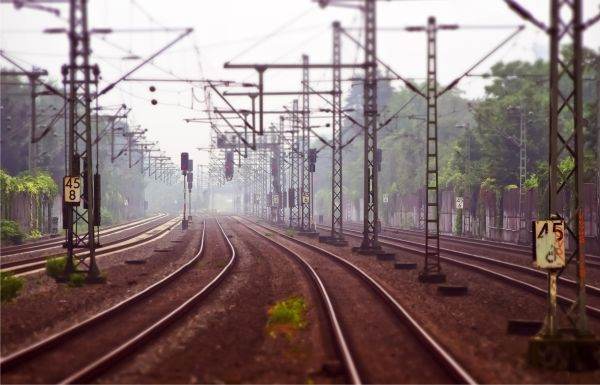
Our country continues to remain in the European top of the high number of people who died in railway accidents, according to an article published by Club Feroviar based on a situation presented by Eurostat. In a European Union that, overall, is becoming safer year by year, and which in 2024, recorded a 10.8% decrease in the number of people who died in railway accidents compared to 2023, Romania remains a painful exception, with 65 people dying in a single year, most of them due to the state's negligence regarding railway safety.
According to the cited source, only Poland and Germany have reported more victims, but the crude comparison hides an uncomfortable reality: these states have much more extensive railway networks and incomparably more intense traffic. In relation to the length of the network, Romania exceeds the European Union average, with over four deaths per thousand kilometers of railway, ranking in the upper half of the European ranking, alongside countries with major structural problems in terms of railway safety.
The Eurostat figures also dismantle one of the most frequent alibis of the authorities. It is not the trains that are unsafe, nor are the passengers and railway staff the victims of this grim record. Of the 65 deaths recorded in Romania in 2024, 54 involved unauthorized persons on the railway, and 11 occurred at level crossings. No deaths were reported among passengers or railway employees. The real problem is not the operational safety of the trains, but the chaotic and dangerous interaction between the railway infrastructure and the public.
In practice, Romania remains a country where access to the railway is free for everyone. The lines cross neighborhoods, villages and fields without fences, barriers, crossings or adequate signage. Illegal crossings have become routine, and dangerous practices are tolerated for years by authorities who intervene only after the fact, after the tragedy has already been recorded in statistics. In this context, it is not surprising that Romania is, along with Germany, Poland, France and Italy, among the countries that account for almost 72% of the deaths in the European Union caused by people hit by moving rolling stock. At European level, the number of significant rail accidents has decreased by over 32% compared to 2010, reaching 1,507 cases in 2024, in which 750 people lost their lives. However, countries that have systematically invested in the physical separation of infrastructure, in the elimination of level crossings and in access control have achieved radically different results. Austria, Spain, Finland and Ireland report minimal values, while Luxembourg and Slovenia have not recorded any deaths in rail accidents.
Eurostat reports separately suicides on railway infrastructure, which, at Union level, far exceed the victims of the accidents themselves. In 2024, 2,357 suicides were recorded, compared to 750 accidental deaths. In Romania, the number of railway suicides was 25, well below the levels reported in Germany, France or the Netherlands. However, this is not a reassuring argument, but on the contrary, it underlines the failure of the Romanian state precisely in the area where administrative and infrastructural intervention should be decisive.
The differences between Romania and Western Europe are not related to railway technology, which is comparable, but to investments, public policies and commitment. In Eastern and Southeastern Europe, including Romania, the high density of level crossings, uncontrolled access to the lines, the lack of fences and risky pedestrian behaviour continue to generate victims. Without physical separation, without crossings, without the elimination of illegal crossings, without education and real sanctions, the statistics will not decrease, no matter how many press releases are issued after each tragedy.
Railway safety in Romania has long ceased to be a technical issue, but one of public responsibility. As long as death on the railway is treated as an inevitable side effect, not as a failure of the state, Romania will remain caught between the tracks of its own negligence, in a Europe that has already demonstrated that these deaths can be prevented.

















 Euro
Euro Dolar SUA
 Franc elveţian
 Liră sterlină
 Gram de aur