English


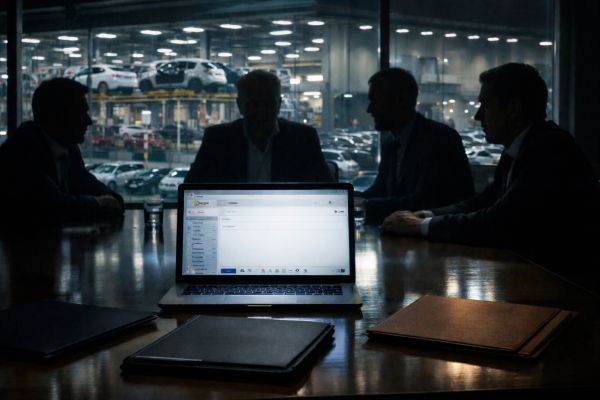
The major German car companies have reportedly discussed the coordination of strategies regarding toxic emissions as early as 2006, three years before the period officially retained by the European authorities in the diesel cartel case, according to documents contained in a file pending at the High Court of Justice in London, according to an article published last Friday by the investigative website Follow the Money. The cited source indicates that these are internal emails that show that representatives of BMW, Volkswagen and DaimlerChrysler discussed in detail the limitation of the performance of emission reduction systems, part of the documents being inserted in the article published by Follow the Money.
Recall that in 2021, the European Commission sanctioned the three German companies with total fines of 875 million euros, establishing that, between 2009 and 2014, they jointly decided to limit the effectiveness of nitrogen oxide reduction technology in diesel cars. The interval was essential for calculating the sanctions.
However, according to the cited source, the new documents indicate that discussions on a common approach would have started at least three years earlier, at a time when the Commission had already suspected coordination, but later stated that it could not prove this.
An internal Volkswagen email from October 2006, published by Follow the Money, records: "Everyone reaffirmed that a solitary effort (by one car manufacturer) at this time is to the disadvantage of everyone.” The formula suggests the existence of a common position on how to implement the emission reduction technology.
The discussions focused on the Selective Catalytic Reduction (SCR) system, which reduces emissions by injecting a urea-based solution into the exhaust gases. The system requires a urea tank: a large one is difficult to fit on small vehicles, and a small one requires frequent refilling, which is considered undesirable from a commercial point of view. According to the documents, manufacturers would have decided to reduce the urea injection level ("dosing”) in order to be able to use smaller tanks, even if the technology allowed for better performance in reducing pollution.
Another message is explicit: "Everyone wants a limitation because of the small size of the urea tank. No one wants to report the real motivation for this limitation of HWL dosing to the authorities (CARB, EPA)”. The reference to the American authorities is notable, given that, nine years later, they would discover the extent of the fraud in the Dieselgate scandal.
According to the source cited, in another email, a Volkswagen engineer wrote that the situation "is ultimately not a matter of technology, but of the most skillful presentation possible to the authorities.” A BMW employee noted that he was "already mentally preparing for the authorities to examine our new system with increased attention,” Follow the Money reports, adding that an internal DaimlerChrysler summary noted tensions between manufacturers, but also a consensus on the sensitive nature of the subject: "No agreement was reached on the VW proposal (...), but there is a consensus that this is a political issue and that a uniform solution must be found (especially because of communication with the authorities). The decision must come from a higher level.”
The source cited states that the emails were submitted as evidence in a class action lawsuit filed by a group representing 1.6 million diesel vehicle owners, a lawsuit that does not concern the existence of the cartel, which has already been established by EU authorities, but rather issues related to the alleged use of software to manipulate emissions tests.
A European Commission spokesperson told Follow the Money that the EU executive "is not aware of what evidence is contained in the file before the High Court in the UK, as it is not a party to these proceedings.”
Jan Blockx, professor of European economic law at the University of Antwerp, told the source cited that "it is difficult for an external observer to determine whether these documents were sufficient to say that a cartel already existed in 2006, given the complexity of the case.” He added: "The Commission could have chosen to proceed, but then it would have taken on the risk of the companies appealing to the Court of Justice,” stressing that a dispute could have lasted for years.
Representatives of Mercedes-Benz Group, the successor to DaimlerChrysler, told the source that they had cooperated with the European Commission and that the claims before the London court "are unfounded.” Volkswagen officials declined to comment, while BMW told Follow the Money: "The matter you are referring to was closed for us by the EU Commission decision of 2021.”















 Euro
Euro Dolar SUA
 Franc elveţian
 Liră sterlină
 Gram de aur