English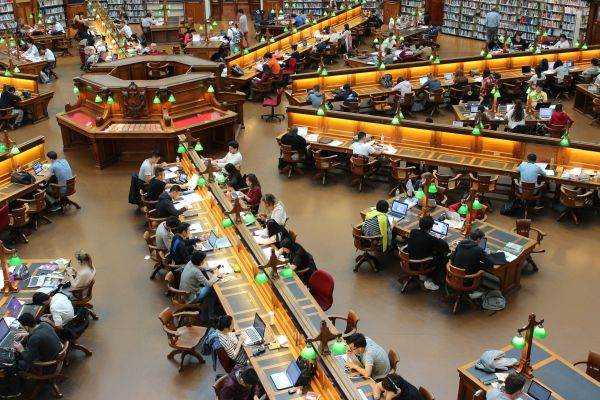
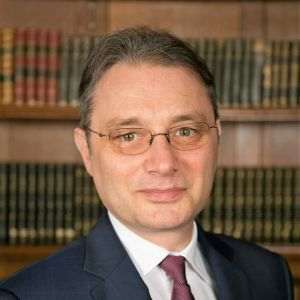
The new report by the Organization for Economic Cooperation and Development (OECD), the 2025 edition, confirms a major paradigm shift in education: the success of universities will no longer be defined by the volume of knowledge transmitted, but by their capacity to create mechanisms through which people can learn continuously, throughout their lives. The conclusion is underlined by the rector of the West University of Timişoara (UVT), Marilen Pirtea, who draws attention, in a press release, to the urgency of the necessary reforms in the Romanian education system. According to the UVT rector, the OECD report - Educational Policy Perspectives 2025 - highlights major structural gaps in Romania, given that adult participation in lifelong learning programs is among the lowest in the European Union. This situation is all the more problematic as the economy and society are undergoing accelerated transformations, generated by digitalization, artificial intelligence, the green transition and demographic changes. "Lifelong learning is a necessary condition for maintaining economic competitiveness, for the adaptability of the workforce to the dynamics of the labor market and for strengthening social cohesion. The strategic decision is not whether Romania can afford to invest in this type of education, but whether it can afford not to do so”, emphasizes Marilen Pirtea. In her vision, lifelong learning can no longer be treated as a marginal educational policy, but must be assumed as a national development reform, with a direct impact on Romania's capacity to cope with future economic and social changes.
• Education benchmarks of the future, according to OECD
The OECD report is based on the analysis of over 230 educational policies from 35 countries and outlines an integrated model of education throughout the life cycle. Key milestones identified include: parenting programs that stimulate early learning in the family environment; school curricula focused on developing socio-emotional skills and the capacity for action of adolescents; modular qualifications and micro-accreditations that allow adults to develop their skills without interrupting their professional careers; age-appropriate training programs designed to keep older workers active and economically and socially integrated. This approach explicitly challenges a persistent myth of traditional education, according to which "skills acquired early in life are sufficient for the entire career”.
• Structural vulnerabilities of Romania
The UVT rector identifies several systemic problems in Romanian education: the extremely low participation of adults in lifelong learning programs, the fragmentation of public policies between education, the labor market and digitalization, as well as the orientation of universities almost exclusively towards the 18-24 age segment. Added to this is the unequal access to effective professional reconversion and upskilling programs, as well as the limited use of micro-credentials and mechanisms for recognizing non-formal and informal learning.
• Proposed solutions: universities, regional skills hubs
To overcome these bottlenecks, Marilen Pirtea supports the integration of lifelong learning as a cross-cutting objective of public policies, as well as the development of educational programs differentiated according to age stages. Examples include programs dedicated to mid-career adults (35-45 years old), focused on real professional reconversion, but also initiatives aimed at people aged 55 to 65, aimed at supporting the maintenance of economic and social participation. At the institutional level, the UVT rector proposes the creation of inter-ministerial coordination mechanisms between the Ministry of Education and Research and the Ministry of Economy and Digitalization, as well as the strengthening of partnerships between universities, employers and local authorities. "Universities must become regional development hubs, around which to build ecosystems of skills,” says Marilen Pirtea.
The conclusion of the OECD report and the analysis formulated by the rector of the West University of Timişoara is clear: in a world marked by non-linear careers and rapid technological change, progress no longer depends exclusively on initial access to education, but on society's capacity to support lifelong learning.



















 Euro
Euro Dolar SUA
 Franc elveţian
 Liră sterlină
 Gram de aur