English


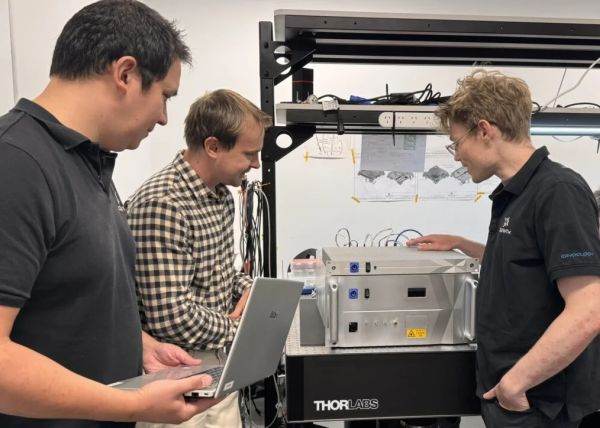
A team of researchers in Australia has successfully tested, in real maritime conditions, a new type of portable optical atomic clock, a technology considered essential for the development of the next generation of navigation, communications and scientific research systems, reports Xinhua news agency. The experimental device was tested aboard a Royal Australian Navy ship and represents a major step in the miniaturization and adaptation of one of the most accurate timekeeping technologies for use outside specialized laboratories.
• How the new atomic clock works
According to the University of Adelaide, the new optical atomic clock uses laser-cooled ytterbium atoms to measure time with extremely high precision.
Atomic clocks are considered the most accurate timekeeping instruments currently in existence and are the basis of critical technologies such as GPS systems, satellite communications and the global telecommunications infrastructure. Traditionally, however, these devices require tightly controlled environments and are operated almost exclusively in laboratories, due to their extreme sensitivity to vibration, temperature and other external variations.
• Laboratory technology adapted for the real world
The Australian researchers say the new device overcomes this limitation by being designed to operate in a portable format and in a variety of environmental conditions. By cooling atoms with lasers and monitoring an extremely precise atomic transition, the clock can measure the passage of time with much greater accuracy than conventional systems. "Our goal was to take state-of-the-art laboratory technology and turn it into a tool that can be used in the real world,” said Professor Andre Luiten, principal investigator on the project and a member of the Institute for Photonics and Advanced Sensors (IPAS) at the University of Adelaide. The results of the study were published in the prestigious scientific journal Optica.
• Successful test in difficult conditions at sea
One of the most important challenges of the project was to verify the operation of the clock in an unstable and unpredictable environment, such as the marine environment. Unlike controlled conditions in the laboratory, the marine environment involves constant vibrations, ship roll, temperature variations and continuous pressure changes. However, the researchers say that the device maintained its high performance during the tests carried out on board the Australian military ship. "The marine environment presents vibrations, movements and temperature variations that are very different from those in a controlled laboratory. The fact that the clock functioned smoothly under these conditions demonstrates that the technology is robust and ready to take a step forward into real-world applications,” Luiten explained.
• Possible military, commercial and scientific applications
The success of the test could have major implications for multiple technological and strategic fields. A portable, highly accurate atomic clock could significantly improve autonomous navigation systems, reducing reliance on GPS signals and increasing the accuracy of orientation for ships, aircraft or autonomous vehicles. At the same time, the technology could be used for advanced synchronization of telecommunications networks, for fundamental research in physics or for the development of new defense and monitoring systems.
• A step towards the future of global time infrastructure
While atomic clocks are already essential to the functioning of the modern world, their miniaturization and portability represent the next great technological frontier in the field. By demonstrating that such a system can work outside the laboratory and under real operating conditions, Australian researchers are paving the way for a new generation of high-precision equipment that could redefine the global timekeeping infrastructure.



























 Euro
Euro Dolar SUA
 Franc elveţian
 Liră sterlină
 Gram de aur