English


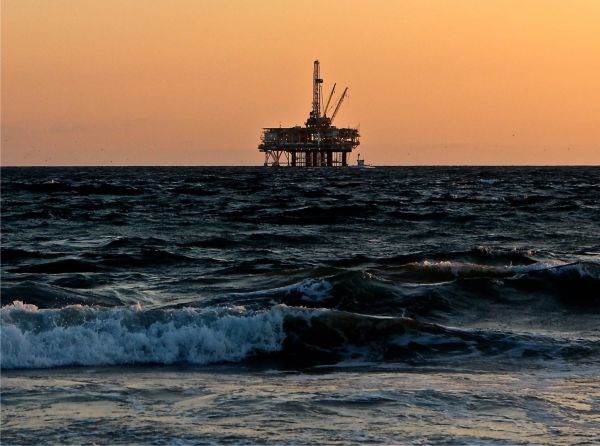
The Neptun Deep perimeter cannot be automatically defended by NATO in the event of an aggression, for an essential reason and often ignored in public discourse: it is not located on Romania's national territory, as defined by the Constitution and Law no. 350/2001, but in the Exclusive Economic Zone (EEZ) of Romania in the Black Sea, a space with a special legal regime, where the Romanian state has sovereign economic rights, but not full sovereignty.
This legal distinction, apparently technical, has huge strategic consequences: Article 5 of the NATO Treaty does not automatically apply in the EEZ, and any attack, sabotage or provocation on offshore energy infrastructure does not, by definition, trigger the collective defense mechanism.
This inconvenient truth was stated unequivocally by the Chief of the Defense Staff, General Gheorghiţă Vlad, who publicly warned, on Digi 24, that "the Exclusive Economic Zone is not covered by Article 5 of NATO” and that there is "a risk of interference in our area”, including from the Russian Federation. Furthermore, General Vlad stressed that Romania is obliged to develop its own capabilities for the defense of critical infrastructure, explicitly stating that it is not only about Neptun Deep, but also about submarine cables, energy and communication networks, all exposed in a space where the freedoms of navigation and overflight of other states coexist with Romania's economic rights.
In the same register of harsh strategic realism, retired Commander Sandu Valentin Mateiu, one of the most respected Romanian specialists in naval security, declared to the same cited source that Russia is playing an "intimidation game with the Europeans”, based on calculated provocations, hybrid actions, sabotage and psychological pressure. According to Mateiu, Moscow aims to send the message that the critical infrastructure of the states on NATO's eastern flank, including the energy one, can be vulnerable at any time, precisely in order to weaken political determination and Western cohesion. Neptun Deep, through its economic and symbolic importance, thus becomes an implicit strategic target, even in the absence of an open military conflict.
These military warnings are directly linked to the legal reality of the exclusive economic zone. According to the UN Convention on the Law of the Sea, confirmed including by the decision of the International Court of Justice in 2009, Romania has sovereign rights in the exclusive economic zone of the Black Sea to explore and exploit resources, but does not exercise full territorial sovereignty. Other states have the right to navigation, overflight and installation of submarine cables, as long as they respect Romania's economic rights. It is precisely this "hybrid” regime that makes the Neptun Deep infrastructure extremely valuable, but also structurally vulnerable in a geopolitical context dominated by indirect confrontation and hybrid warfare.
In this tense context, the speech delivered yesterday by the President of Romania, Nicuşor Dan, takes on a special strategic significance. The Head of State explicitly stated that Romania understands its strategic role in the Black Sea and that this region is essential not only for national security, but also for Euro-Atlantic stability. The President emphasized that Romania will act together with its allies to project stability, security and cooperation in the wider Black Sea region, at a time when this area has become a space of major strategic competition. He spoke about Romania's responsibility as a border state of NATO and the EU and about the need to strengthen security in the face of current threats.
But between the political declaration and the legal-military reality there is a tension that can no longer be ignored. Neptun Deep is simultaneously the backbone of Romania's future energy security and a weak point from the perspective of collective defense. Black Sea gas can reduce Europe's dependence on Russian resources, reposition Romania as a strategic supplier, and change the regional energy balance. That is why it inevitably enters Moscow's strategic calculation.
Therefore, Neptun Deep is not just an economic project, but a test of strategic maturity for the Romanian state. As long as it is located in the exclusive economic zone, its protection cannot be left exclusively to abstract guarantees or an optimistic interpretation of allied solidarity. Without its own military capabilities adapted to the maritime environment, without concrete allied cooperation, and without an explicit political assumption that energy security is an integral part of national security, Neptun Deep risks becoming not a symbol of Romania's strength on the Black Sea, but evidence of a strategic vulnerability that its adversaries understand much better than the authorities in Bucharest recognize.






















 Euro
Euro Dolar SUA
 Franc elveţian
 Liră sterlină
 Gram de aur