English


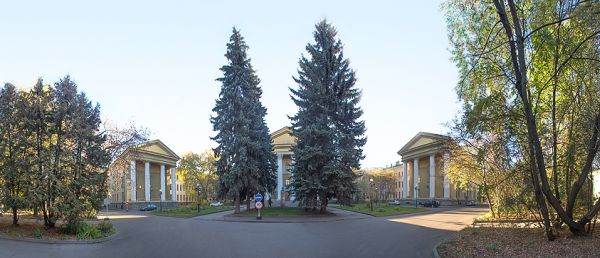
Russia has completed testing its first 70-qubit quantum computer, marking a major step in its strategy to develop quantum technologies. The announcement was made by Rosatom, the Russian Federation's state nuclear company, the information was reported by the Xinhua news agency. The system was developed by a team of researchers from the Lebedev Physics Institute (LPI) in Moscow and demonstrated its operation in a control experiment, according to Rosatom representatives. The test validates the progress of Russia's national quantum computing program, coordinated by the state company. "The experiment confirms the technical capabilities of the platform and represents an important result in Russian research in the field of quantum computing," LPI officials said, emphasizing that the new system paves the way for more complex industrial applications.
• A step forward in a highly competitive global race
Quantum computing is considered one of the most important technological frontiers of the 21st century. Unlike classical computing, which is based on bits with two possible states (0 and 1), quantum computers use qubits - units of information that can exist simultaneously in multiple states, thanks to the phenomena of superposition and entanglement. These properties could allow solving extremely complex problems in an incomparably shorter time than conventional computers. Currently, large technology companies such as Google, IBM and Microsoft, along with numerous start-ups and research institutes, are competing to develop a reliable and scalable quantum computer capable of commercial use.
• Perspectives tempered by the scientific community
Despite optimistic announcements, experts warn that quantum technology is still in its infancy. Michel Devoret, a French physicist and winner of the 2025 Nobel Prize in Physics for his research in the field of quantum computing, compared the current state of quantum computing to the beginnings of classical computing.
"I see this moment exactly as the evolution of classical electronics. We are really at the beginning of a new technology," Devoret said at a roundtable discussion on quantum computing organized by Google, a company for which he is the scientific director of the Quantum AI division, according to AFP. He recalled that the first classical computers, based on vacuum tubes, occupied entire rooms and consumed huge amounts of energy, while today billions of transistors can be integrated on a single chip. "There will be an absolutely similar evolution in the case of quantum circuits," the researcher stressed.
• Major challenges: scaling and error correction
Although the potential is considerable, the technical obstacles remain significant. According to Devoret, for truly revolutionary applications, especially in chemistry and materials science, quantum computers with about a million qubits would be needed. "There is no fundamental principle of nature that would stand in the way of this project. I am very optimistic. But from a technical point of view, there is still much to be understood and improved,” he said. Several technological directions are currently being explored, including superconducting circuits, trapped ions, neutral atoms and spin-based systems, each with its own advantages and limitations. For example, in the case of superconducting circuits, one of the difficulties is managing the very large number of connections needed to control qubits.
The Lebedev Institute of Physics announced that Russia aims to develop, by 2030, medium-sized quantum computers capable of solving real industrial problems. The strategy includes the use of efficient error correction mechanisms and complex quantum algorithms, which are essential for the stability and reliability of calculations. Although the 70-qubit system does not yet rival the most advanced prototypes developed in the West, Rosatom's announcement indicates Moscow's intention to remain a relevant player in a field considered strategic for global economic and technological security.













 Euro
Euro Dolar SUA
 Franc elveţian
 Liră sterlină
 Gram de aur