English

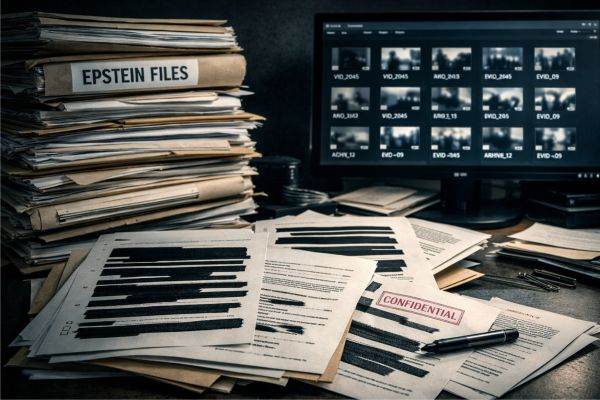
The publication by the US Department of Justice (DOJ) of the 3.5 million documents and files in the Epstein files, some of which were later withdrawn and others modified under the pretext of anonymizing some victims, raised the level of irritation among US civil society, which was waiting for a so-called moment of truth. A moment that did not come, because, it seems, as emerges from the articles published by the American press after the hearing of Attorney General Pam Bondi in the House of Representatives, that there are important people who do not want the culprits to be held criminally liable.
According to reports from CNN, ABC News, PBS News, CBS News and Zerohedge, Pam Bondi's House hearing on Wednesday night, which was supposed to provide clarity on the handling of the Epstein case, degenerated into a brutal political spectacle, dominated by evasions, outbursts of anger, a series of key unanswered questions and, in a rare moment of bipartisan division, sparked by Republican Thomas Massie, in a session that put the spotlight not just on the Justice Department's transparency but on the institution's very credibility. It all began when Democrat Jerry Nadler asked what should have been a routine question in a functioning state of law: Has the DOJ indicted or investigated any of Jeffrey Epstein's alleged accomplices? Nadler cited "concrete evidence of disgusting criminality” in the newly released files. Instead of a clear answer, Pam Bondi offered a show of aggressive avoidance. He tried to sidestep the subject, and when Nadler pressed him, his tone exploded. The attorney general raised his voice and declared that he would "answer the question the way I want to answer it,” cutting the congressman off and completely ignoring his fundamental duty to explain himself to Congress. In an almost hallucinatory pivot, Bondi abandoned the Epstein topic entirely and began invoking the Dow Jones, S&P, and Nasdaq indices, praising retirement accounts, a diversion that sounded more like a campaign speech than a formal answer under oath in a formal hearing. The pressure continued with California Democrat Ted Lieu, who moved from criticism to outright accusation: Bondi allegedly lied under oath when he cited a July 2025 DOJ memorandum alleging a lack of evidence to investigate "unindicted third parties.” Lieu referenced images of Prince Andrew, then aired a clip of Donald Trump and Epstein, explicitly asking whether underage girls were involved in those situations. Pam Bondi's response was not legal, but political and defensive: attacks on Democrats, praise for Trump, and the categorical statement that "there is no evidence that Donald Trump committed a crime.” When Lieu cited an FBI tip and a witness statement, asking the DOJ to interview the person, the attorney general's response was explosive and personalized: "Don't ever accuse me of committing a crime.” Instead of institutional clarification, Bondi took refuge in a voluminous white file and politically counterattacked, suggesting that Lieu was diverting attention from crime in his own district. No explanations, no data, no commitments, just rhetoric and irritation.
Similar exchanges, marked by personal attacks and side-stepping responses, were repeated with Democrats Zoe Lofgren and Jamie Raskin, in a pattern that has become obvious: pointed questions about Epstein, evasive or completely irrelevant answers from Attorney General Pam Bondi.
The truly devastating moment for the DOJ, however, came with the intervention of Republican Thomas Massie, a congressman-elect from Kentucky. Co-sponsor of the Epstein Files Transparency Act, Massie made precise and extremely serious allegations: DOJ and FBI documents would indicate that the names of the victims were revealed, while the names of the alleged abusers were masked by subsequent redactions. Moreover, Thomas Massie invoked a 2019 FBI file in which Les Wexner (founder of L Brands, a global retail empire that includes Victoria's Secret and Bath & Body Works) was designated a "co-conspirator,” a label that the Republican congressman said was redacted in the version published by the DOJ. The questions were direct and impossible to confuse: who authorized the redactions and why? Attorney General Pam Bondi responded by interrupting repeatedly, insisting that the situation had been "corrected in 40 minutes” and suggesting that Massie was fueling the idea of a cover-up. When he pointed out that the change came only after he had publicly raised the issue, the exchange became heated. Instead of an administrative explanation, Bondi chose to ridicule the critics and attack them personally. "Who is responsible?” Massie asked, adding, "Can you identify who made this massive error and published the names of the victims?”. The Attorney General's reply was shockingly contemptuous by the standards of an official hearing: Massie was a "failed politician” and a "hypocrite.” The congressman went on to quote FBI Director Kash Patel, who had said there was "no credible information” that anyone other than Ghislaine Maxwell helped Epstein traffic women and girls. Massie explicitly demanded confirmation of the DOJ's position. Bondi evaded the answer, urging victims to contact the FBI and attempting to shift the blame to previous administrations, including former Attorney General Merrick Garland. When Massie described the situation as a systemic failure spanning multiple administrations, Pam Bondi raised her voice, saying the Republican was no longer entitled to the floor, again refusing to respond on the merits.
At the end of this confrontation, the balance sheet is devastating for the DOJ: no clear answer regarding the existence or non-existence of the conspirators, no coherent explanation about the drafting of the document that designated Wexner as a co-conspirator - under these conditions it will be very interesting what he has to say at the hearing scheduled for next Wednesday in the US Congressional committee, no transparent assumption of responsibility for publishing the names of the victims. Instead, the public witnessed outbursts of anger, rhetorical deviations and personal attacks, the exact opposite of the calm, rigor and responsibility expected from the highest legal official of the USA, that is, from the Attorney General Pam Bondi. According to the quoted American media, the information revealed so far represents only the tip of the iceberg, and the mere mention of some people in the files, including public figures such as Donald Trump or Elon Musk, has no legal relevance in the absence of context and verifiable evidence. The data published by the DOJ shows that Jeffrey Epstein approached "any person with power or influence", and the anonymous FBI tips "do not build a criminal case". At the same time, passages from the files are invoked that would suggest "deeply disgusting" behavior, coded language, controversial references to "pizza" and "beef jerky", as well as speculative hypotheses regarding their significance or radical conclusions about the nature of power networks and the possibility that Epstein was only an intermediary, not the center of the system.
Beyond the interpretations and speculations, however, the brutal political reality exposed by the hearing remains: the Department of Justice seemed unable or unwilling to provide firm answers in a file that demands clarity, coherence and absolute transparency. Instead of a demonstration of institutional authority, the DOJ delivered the image of a defensive, reactive and often hostile leadership. And, in a case like Epstein, where victims, public opinion and recent history demand answers, every evasion does not reduce the tension, but rather amplifies it.
























 Euro
Euro Dolar SUA
 Franc elveţian
 Liră sterlină
 Gram de aur