 English


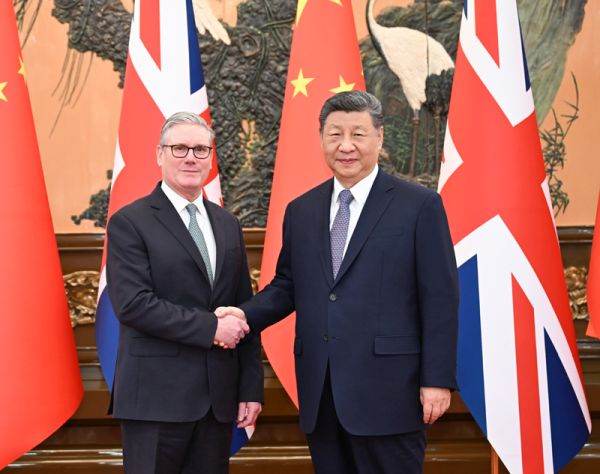
In fact, British Prime Minister Keir Starmer's visit to Beijing these days, officially presented as a "reset” of economic relations between the United Kingdom and China, does not signal a return to globalization.
Rather, it indicates how a middle power tries to operate in a fragmented international system, in which economic cooperation is selective, carefully politically calibrated, and permanently reversible.
The specific agreements obtained - tariff reductions for whisky, visa facilities, and investments in sectors such as healthcare and energy - address immediate economic needs, but they do not alter the underlying structure of the bilateral relationship.
They are the expression of defensive pragmatism, not a strategic relaunch.
• Nothing more than economic pragmatism
For London, the context is constraining. The British economy is still feeling the effects of Brexit, and access to large markets and foreign investment has become a political priority.
At the same time, the geopolitical environment has hardened, and trade relations are increasingly subordinated to security considerations.
Within this framework, China remains a major market, but one associated with high political and regulatory risks.
Therefore, the British approach avoids broad commitments and relies on sectoral cooperation, in areas considered manageable.
This is not about integration, but about controlled interdependence.
For Beijing, openness toward London also serves a tactical purpose: sending a signal to Europe that it remains willing to engage in economic cooperation while tensions with the United States deepen.
The result is a limited relationship, built on specific gains rather than structural trust.
• Why China treats the EU and the United Kingdom differently
The difference in China's approach toward the European Union and toward the United Kingdom is essential for understanding Starmer's visit.
The EU is perceived by Beijing as a systemic actor: a large bloc with normative power, capable of imposing trade, climate, and industrial standards and, ultimately, of strategically aligning with the United States.
The China-EU relationship is structurally tense and treated as part of a long-term competition.
By contrast, the United Kingdom is approached as a tactical actor.
Having left the EU, with an increased need for investment and limited normative weight, London is seen as more flexible and easier to engage bilaterally.
For this reason, China is willing to offer specific concessions to the United Kingdom, concessions that are not replicable at the level of its relationship with Brussels.
This difference explains why the "reset” with London cannot be extrapolated to the China-EU relationship.
• American pressure and the politicization of economic relations
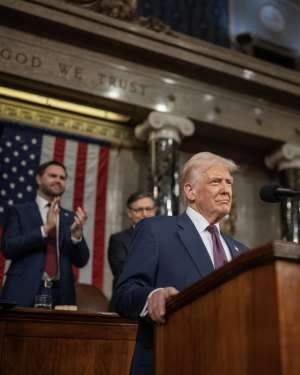
A central element of the current context is the position of the United States. Statements by U.S. President Donald Trump, who warned that deepening economic relations with China is "dangerous” and suggested possible punitive tariffs for allies, show how politicized trade decisions have become.
For the United Kingdom, this means that any rapprochement with Beijing is closely monitored in Washington. Trade and investment are no longer neutral; they are interpreted through the lens of geopolitical alignments.
Deepening one economic relationship can generate tensions in another, and this risk inevitably limits the scope of cooperation with China.
• The hidden costs of fragmentation
The fragmentation of the global system manifests not only through political statements, but also through concrete economic costs.
Divergent standards, additional controls, the risks of sanctions, and regulatory uncertainty increase operating costs for companies.
Western investments in China are carried out within a framework marked by caution: complex legal assessments, enhanced security measures, and contingency plans for potential political tensions.
Even when projects are approved, they involve a risk premium that reflects the instability of the geopolitical environment.
• The "reset” with London - merely a tactical maneuver
Keir Starmer's visit to Beijing does not represent a return to the "golden age” of globalization, but a pragmatic adaptation to a fragmented economic world. The UK-China relationship is built on limited, reversible, and carefully politically controlled commitments, precisely because the international environment no longer allows broad cooperation without strategic costs.
The difference in treatment between the EU and the United Kingdom clearly shows that Beijing operates in a differentiated manner, depending on the partner's weight and vulnerabilities.
The "reset” with London is a tactical maneuver in a system where fragmentation has become normalized and geopolitical risk has become an integral part of economic decisions.
Bibliographic sources
- Official communications of the Government of the United Kingdom regarding the Prime Minister's visit to Beijing, January 2026.
- Public statements by the U.S. President regarding trade relations with China and Western allies, reported by Reuters and Bloomberg, January 2026.
- Analyses and reports on AstraZeneca's investments and Octopus Energy's expansion in China, international business press.
- Documents and communications of the European Commission regarding EU-China trade relations and trade agreements with third countries.





















 Euro
Euro Dolar SUA
 Franc elveţian
 Liră sterlină
 Gram de aur





























