English

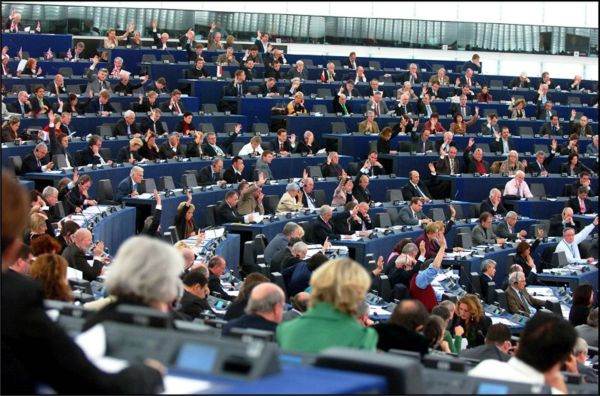
The European Parliament is currently having one of the most tense and charged sessions in recent years, with a new motion of censure against the European Commission, the controversial EU-Mercosur agreement, the increasingly complicated relationship with the United States, former President Donald Trump's claims regarding Greenland, massive financial support for Ukraine and the strategic repositioning of the Union in an increasingly unstable geopolitical context. In fact, the first plenary session of this year, held in Strasbourg, brings to the fore decisions with a major impact on the political, economic and security direction of the European Union.
A central point is the EU-Mercosur agreement, which is once again under fire from political and legal critics. The plenary of the European Parliament is due to rule on two proposals formulated by MEPs on Wednesday requesting the Court of Justice of the European Union to issue opinions on the compatibility of this agreement with the EU treaties. If one of the proposals is approved, the procedure will trigger legal reviews at the CJEU level before MEPs and member states can move forward with ratification of the agreement, according to a statement from the European Parliament. Under the EU treaties, a member state, the European Parliament, the Council or the Commission can ask the Court of Justice for an opinion on the compatibility of a planned agreement with the treaties, and a negative opinion would block the entry into force of the agreement, unless it is amended.
Against this backdrop of legal and political tension, a new motion of censure against the European Commission is scheduled to be debated in the Strasbourg plenary today, followed by a roll-call vote scheduled for Thursday. To be adopted, the motion must meet an extremely difficult qualified majority: two-thirds of the votes cast, representing at the same time a majority of the members of the European Parliament. Even if the chances of adoption are low, the mere triggering of the procedure amplifies political pressure on the Commission and accentuates internal fractures within the European institutions.
The session's agenda is also dominated by the Greenland dossier, which is reigniting transatlantic friction. On Tuesday, 20 January, MEPs will debate in plenary the European Union's response to Donald Trump's claims on Greenland. European governments have firmly rejected US plans to acquire the territory, warning that such an initiative would undermine sovereignty, NATO cohesion and transatlantic security. Several EU governments, including Denmark, have stressed that decisions on Greenland's status are solely the responsibility of Denmark and Greenland, reaffirmed the importance of collective security in the Arctic region under NATO leadership and warned of the risks of unilateral actions that could destabilise allied relations and the regional balance. The authorities in Denmark and Greenland have made it clear that Greenland is not for sale, declaring instead that they are open to cooperation.
The financial dimension of support for Ukraine returns to the fore at noon on Tuesday, when the European Parliament plenary will vote on whether to speed up the approval of the Council decision on enhanced cooperation between 24 Member States, except the Czech Republic, Hungary and Slovakia, to provide a loan to Ukraine, financed by EU loans and guaranteed by the Union budget. If the fast-track procedure is approved, the final vote is scheduled for Thursday. Also on Tuesday, MEPs will decide whether to speed up the legislative proposals on the establishment of the support loan for Ukraine for the years 2026 and 2027 and the amendment of the Facility for Ukraine, with votes on these proposals to take place in February. Recall that last month, at the Brussels meeting, European leaders reconfirmed the EU's solidarity with Ukraine and agreed to provide a euro90 billion loan for 2026-2027, financed by EU loans, while postponing the use of frozen Russian assets for compensation.
The European Parliament will assess the state of EU-US relations on Wednesday, calling for a more resilient Union capable of acting strategically on its own. In a draft report adopted in December 2025, the Foreign Affairs Committee stressed that, at a time of changes in US foreign policy, the European Union must strengthen its strategic autonomy to ensure its own resilience. MEPs highlighted the indispensable role of the US in NATO leadership and collective security efforts, while urging the US administration to strengthen its support for Ukraine. At the same time, the text insists on a more equitable distribution of security tasks and on the need for Europe to assume a greater commitment to the continent's defence.
Also on Wednesday, the plenary will debate with the President of the European Commission, Ursula von der Leyen, and the President of the European Council, Antonio Costa, the results of the December EU summit, in the context of the declared ambition to build a stronger and more sovereign Union, amid intensifying geopolitical tensions.
In addition to these major files, the agenda of the January session also includes the assessment of the situations in Venezuela and Iran, the marking of the 40th anniversary of the accession of Spain and Portugal to the European Union, as well as the presentation of the priorities of the new Cypriot Presidency of the Council of the EU by President Nikos Christodoulides. All these topics outline a dense and tense parliamentary session, in which the European Parliament is called upon to respond simultaneously to internal challenges, external pressures and the increasingly acute need for strategic coherence in a world undergoing an accelerated geopolitical reconfiguration.
In this context, in order for the tension to reach its maximum levels in Strasbourg, the French press announces that on Tuesday a large protest rally of farmers against the EU-Mercosur trade agreement is scheduled in front of the European Parliament, an event that will paralyze public transport in the town and which will increase the number of law enforcement officers present in the streets and in front of the headquarters of the European institution.

















 Euro
Euro Dolar SUA
 Franc elveţian
 Liră sterlină
 Gram de aur