English


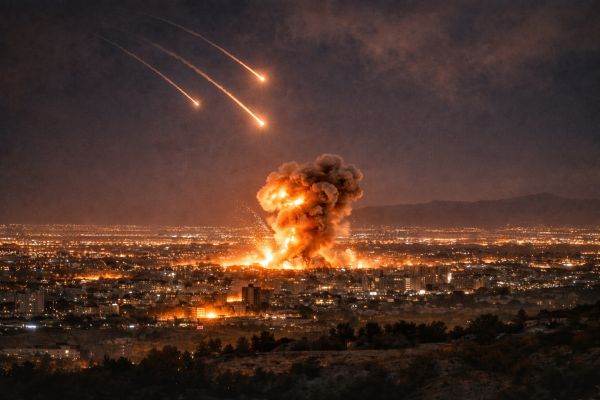
The conflict that broke out in the early hours of Saturday, February 28, 2026, turned, in less than 48 hours, into a regional war with global effects: the United States and Israel struck Iran, Tehran retaliated with ballistic missiles and drones on Israel and on targets related to the American military presence in the Arab states of the Persian Gulf, and the Iranian authorities confirmed on Sunday, March 1, 2026, the death of Supreme Leader Ali Khamenei, with the decree of a 40-day period of national mourning.
The initial announcement by the US president regarding the military action was followed by details about the targets attacked: Donald Trump said that America had begun "major combat operations" under the codename "Epic Fury", targeting infrastructure associated with the Iranian nuclear program, reiterating the message that Iran "can never have a nuclear weapon", but also the dismantling of the authorities of the regime in Tehran. In parallel, the Israeli Minister of Defense, Israel Katz, described the action as "a preventive operation", citing threats to Israel's security.
For Tehran, the decisive blow was the symbolic beheading of the regime: the death of Ayatollah Ali Khamenei and other top figures in the security apparatus and military leadership, in a list that includes names such as Ali Shamkhani (senior advisor), Abdolrahim Mousavi (military chief), Aziz Nasirzadeh (defense minister) and other cadres associated with the command structures.
On an institutional level, the succession was immediately wrapped up in a formula of "constitutional continuity”. According to information presented by the news agencies in Tehran - IRNA, Mehr, Tasnim -, Alireza Arafi was designated as interim supreme leader (ayatollah), part of a provisional arrangement to ensure leadership during the transition period, "together with the interim president and the head of the judiciary”. The sources cited indicate that the president, the head of the judiciary and a representative of the Guardian Council will be responsible for the entire process until the election of the future spiritual leader.
• Red line crossed by Trump, reason for retaliation for Tehran
Regarding the attack launched on Saturday by the US and Israel and the killing of Khamenei, Ali Larijani, head of the Supreme National Security Council, said on the X platform that "Iran will hit the US and Israel with a force they have never seen before." In turn, the Iranian Deputy Foreign Minister, Saeed Khatibzadeh, stated in an interview with CNN that Donald Trump crossed "a very dangerous red line" by killing Khamenei and that Iran "has no other choice but to respond." In response to the threats coming from Tehran, the US president stated that a continuation of the retaliation from Iran would involve a strong, unprecedented military action by American forces in the Middle East. Trump called on Tehran's leaders to lay down their arms, or face the consequences, and urged opponents of the Iranian regime to take to the streets and seize power, as they now have a unique opportunity that they may not see again for decades.
Nevertheless, the Iranian retaliation took place and was given an operational name - "True Promise 4”, presented by the international media as a wave of missiles and drones launched at Israel and at targets at US military bases in the Middle East. In Israel, the immediate effect was the reactivation of air defenses and a new cycle of alerts, with reports of explosions and interceptions. The Times of Israel, Calcalist and the Jerusalem Post initially reported "approximately 35 ballistic missiles” launched from Iran yesterday morning, some of them hitting near Tel Aviv and Jerusalem, resulting in the deaths of more than a dozen people and injuries to many others. However, Israel Katz, the Israeli Defense Minister, said yesterday, according to CNN, that "the Israeli air force has the upper hand in Iran,” a formula that suggests repeated strikes and operational freedom, but which, in the absence of full independent confirmation, remains part of psychological warfare.
• The first effects of the outbreak of the conflict
The effects of the bombing were also felt on a civilian level. The most tragic example of the brutal escalation was the bombing of a girls' gymnasium in the southern Iranian city of Minab, where an airstrike hit a girls' primary school during class, when about 170 students were in their classrooms. Iranian state authorities reported that at least 51 girls were killed and dozens were injured in the devastating strike, and images of the building reduced to rubble circulated on social media and in the international press. In addition, there were unconfirmed reports of a high death toll, including up to 100 in some reports, which amplified global outrage and calls for the protection of civilians.
Economically and logistically, the effects immediately hit the nerve of global trade. Major shipping companies have begun to withdraw from key areas: according to The Guardian, CMA CGM has ordered ships in the Gulf to withdraw to "safe areas” and has decided to temporarily stop transit through the Suez Canal, and Hapag-Lloyd has suspended crossings through the Strait of Hormuz "until further notice,” while Maersk has warned of delays caused by rerouting routes. The escalation of the conflict has led to the temporary closure of airspace in Iran, Iraq, and Israel and the cancellation of dozens of commercial flights operated by European and Asian companies, affecting connections to Dubai, Doha, and Tel Aviv. According to press releases issued by major air carriers, some flights will resume from March 4, if security conditions in the Middle East allow, while other flights are expected to resume from March 7.
• European leaders call for de-escalation
In the face of the escalating conflict, Western leaders have tried to balance support for Israel's security with avoiding an all-out war. Ursula von der Leyen, President of the European Commission, and Antonio Costa, President of the European Council, said in a joint statement that the situation was "deeply concerning", recalled that the EU had imposed extensive sanctions against the regime in Tehran and the Revolutionary Guards, and called for "restraint, protection of the civilian population and full respect for international law". Roberta Metsola, President of the European Parliament, urged opponents of the regime in Tehran to take over political power, arguing that the time has come for Iran to be free.
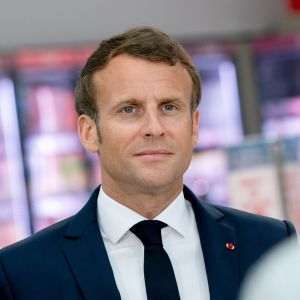
French President Emmanuel Macron said, according to the Hexagon press, that he was not informed by US President Donald Trump about the attack on Iran and called on the parties involved in the conflict to make efforts to de-escalate the current situation in the Middle East. Macron went further and requested, according to Reuters, an urgent meeting of the UN Security Council, a meeting that was underway at the time of closing the edition.
From London, Prime Minister Keir Starmer specified that British military forces in the Middle East participated only in defensive missions and stated that the United Kingdom had raised the protection of bases and personnel to the highest level and that it supports the protection of interests and allies, "in line with international law". John Healey, the British Defense Minister, claimed that Tehran sent two missiles towards British bases in Cyprus, but the government in Nicosia denied any information regarding such an attack.
From Moscow, the reaction was direct. President Vladimir Putin called Khamenei's killing "a cynical assassination” that violated "all norms of human morality and international law,” according to the TASS news agency, while Russian Foreign Minister Sergei Lavrov condemned the attacks as "an unprovoked act of armed aggression.”
In the Middle East, reactions have been dominated by the theme of sovereignty and the danger of the territories of the Gulf states becoming a battlefield. In the Gulf states, Iranian missiles and drones have targeted areas close to bases used by US forces in Qatar and Bahrain, as well as maritime areas off the coast of the United Arab Emirates. The UAE's Defense Ministry said its military had detected 165 ballistic missiles, destroyed 152, and intercepted two cruise missiles. In total, "541 Iranian drones were detected, of which 506 were intercepted and destroyed,” the ministry added in a press release.
Qatari authorities said their defense systems had intercepted the missiles and drones without causing any casualties, and Bahrain condemned "any attack that endangers regional stability.” Saudi Arabia called for "immediate restraint” and warned that an escalation of the conflict would have major economic consequences for the global energy market. At the same time , from inside Tehran, Deputy Foreign Minister Saeed Khatibzadeh said, according to CNN, that Iran has communicated with the Arab states in the Gulf, demanding the closure of American bases that it considers a threat, signaling the risk that Iranian pressure on its neighbors could turn into ultimatums.
• 28 Romanian students stranded in Dubai by flight cancellations
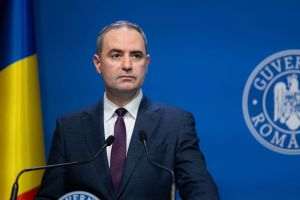
In Romania, official reactions came through the Ministry of Foreign Affairs and political leaders. The Ministry of Foreign Affairs announced that it is permanently monitoring the situation and that diplomatic personnel in the region are safe. According to official communications, approximately 1,000 Romanian citizens are in the states directly or indirectly affected by the conflict. Foreign Minister Oana Ţoiu said that "the absolute priority is the safety of Romanian citizens", recommending avoiding travel and using the consular application to transmit contact details. Prime Minister Ilie Bolojan said that "Our priority is the safety of every Romanian citizen", stating that he is in constant contact with the Ministry of Foreign Affairs and the missions in the area and asking for caution, avoiding unnecessary travel and contacting diplomatic missions for support.
The steps taken by the Head of Government and the Minister of Foreign Affairs will also target the repatriation of 28 students from Vrancea, who, according to local media, were stranded in Dubai after the closure of airspace in the United Arab Emirates, an episode that shows how a military crisis turns, in a few hours, into a consular and transport crisis. In this context, the MAE recommendations to avoid travel and permanent monitoring of the situation are no longer standard formulas, but minimum protection infrastructure in a region where "normal" changes from one hour to the next.
At this moment, the situation in the Middle East is one marked by strategic uncertainty: Iran is trying to demonstrate that it can simultaneously strike Israel and American bases in the Gulf, the US and Israel are trying to convey that they can control the escalation through "air superiority” and strikes on sensitive infrastructure, and European actors are trying to push the conflict towards "containment”.
Behind the statements of world leaders, the parties involved in the conflict and the press releases, there remains a question with an impact on the markets and citizens: if a regional power has been hit in the symbolic center of the regime, and the response comes in salvos on its neighbors and Western bases, who can stop the spiral before it closes the Strait of Hormuz, fragments air and sea routes and transforms the Middle East into a theater of war with global consequences?















 Euro
Euro Dolar SUA
 Franc elveţian
 Liră sterlină
 Gram de aur