English

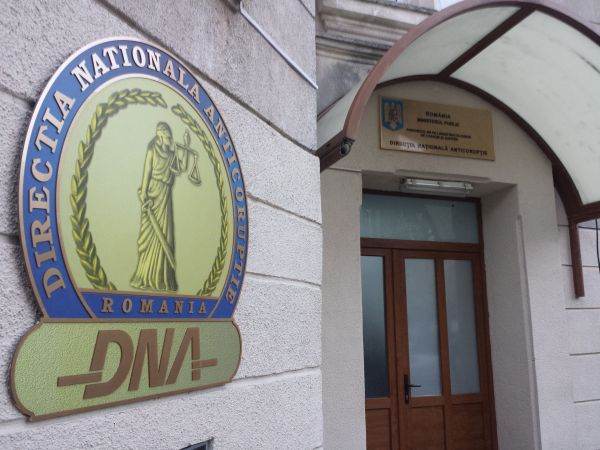
The National Anticorruption Directorate is facing a series of problems that have caused the decrease in activity in recent years, when a decrease in corruption cases involving politicians and high-ranking civil servants was observed, this is the main idea that emerged from the interviews given yesterday, at the Ministry of Justice, in front of the evaluation committee, by the three candidates for the position of Chief Prosecutor of the respective institution.
Both Ioan-Viorel Cerbu - prosecutor within the DNA, delegated to the position of Deputy Chief Prosecutor, Vlad Grigorescu - prosecutor within the Directorate for the Investigation of Organized Crime and Terrorism Offences, and Tatiana Toader, Deputy Chief Prosecutor of the DNA, highlighted the causes that have blocked in recent years the activity that this specialized structure of the Prosecutor's Office had accustomed us to when it was led by the current Chief Prosecutor of the European Public Prosecutor's Office, Laura Codruţa Kovesi.
"We are a kind of Fundeni Hospital; when there is nothing left to do, we have to intervene. But prevention is much more effective in preventing criminal conduct. (...) In our times, prosecutors are less motivated by work and more interested in rights. (...) I would like to obtain an AI-based technology that would transform voice into text, because transcribing conversations takes a lot of time. We need to define criminal typologies. We can also use AI for the basic level in some documents, but with red lines, so that it is not used in procedural documents", said prosecutor Ioan-Viorel Cerbu.
He also mentioned that there are DNA territorial services that are not attractive to new prosecutors and argued that the requirement of administrative control regarding the fulfillment of the formal and substantive conditions of the notification documents must be increased, with a greater emphasis on the ability of chief prosecutors to provide advice to colleagues in the files under investigation.
Prosecutor Viorel Cerbu also said that the number of DNA files at the central level decreased by 23% and the number of referrals to court decreased by 12%, showing that these decreases should not be attributed to a certain inactivity on the part of prosecutors.
Viorel Cerbu specified: "In one's own criminal prosecution activity, it can happen that, for a period of 6-10 months, you work mainly on one case and see the fruits in the future. Attention was channeled on important, priority cases, with major social impact, which required a large volume of work. And in many of them, we will see the finality in the future. Yes, statistical data can also reveal more inefficient work or a smaller volume performed by certain prosecutors. That is precisely why I spoke of a mechanism for measuring work efficiency."
• DNA digitalization, an unresolved issue
The second candidate interviewed by the evaluation committee, prosecutor Vlad Grigorescu, stated that, following the CCR decisions on the definition of abuse of office, DNA prosecutors have somewhat given up on investigating criminal cases involving the commission of this offense by public officials, although, in his opinion, this offense leads to the greatest damage to the budgets of public institutions, as evidenced by the DNA's case history.
Moreover, according to prosecutor Grigorescu, many prosecutors are content with a plea agreement and no longer investigate the criminal case to the end.
Vlad Grigorescu stated: "The number of cases that end with a plea agreement is higher than the number of files that end with an indictment. (...) The massive use of the plea agreement denotes an orientation towards cases of lower complexity and this may pose problems including in terms of the institutional mission, because the DNA was conceived as a prosecution unit specialized in complex cases, high-level criminality and not medium-level corruption". Candidate for the head of the DNA, Vlad Grigorescu also wants to acquire AI-based tools that can analyze banking situations, regarding flows, in the case of money laundering crimes, because, in his opinion, too much time is wasted with paper analysis, with a pen or pencil, by DNA prosecutors. Asked about the costs of purchasing the AI programs he wants at the DNA, the candidate for head of the institution says that he does not know how much more he needs to invest in the hardware component at DNA or in the software component. However, he acknowledges that these are very large amounts and that the financing can come from his own funds or from other funds.
He also said that the electronic criminal file is in scanned format, like a picture, and that it is impossible to search for data in such a format at the moment. Therefore, he claims that a platform is needed that can transform all these electronic files from scanned format into Word format, to allow for the subsequent search for data or facts.
Vlad Grigorescu also wants the digitalization process at DNA to lead to a drastic reduction in the dissemination to anyone, even to the media, of information from the files under work. Indirectly, he implied that, through digitalization, it will be very easy to see which prosecutor accessed a certain file before the information appeared in the press from that file.
When asked what sets him apart from the other two candidates for the DNA leadership, prosecutor Vlad Grigorescu replied that his vision, unlike his opponents, is what sets him apart. He argued that he comes with a new vision, while the other two will only continue the current vision, the current system in which DNA operates.
• Out of 5,500 files investigated by DNA, in only 8 cases were there indications of corruption of magistrates
The lack of attractiveness for prosecutors of some territorial services of DNA was also highlighted by Tatiana Toader, deputy chief prosecutor of this structure of the Prosecutor's Office, but who is now aiming for the full leadership of the institution in question.
Tatiana Toader stated: "We have faced specific situations that justified certain managerial measures. In Ploieşti there is a reluctance of prosecutors to come, although the recruitment pool is quite large, but there were recurring problems, a lot of files, which prevented new prosecutors from entering the Territorial Service. We managed the situation by taking over the files at the central structure and by redirecting some to the Piteşti Territorial Service. We are still facing problems in Mureş, where there is not a high degree of attractiveness".
Regarding the leakage of information from criminal files processed in the press, Ms. Prosecutor Toader said: "These leaks have brought disservice to the DNA and to our relations with lawyers. Therefore, I propose a preventive detection mechanism, through the press office, to conduct investigations with the persons designated at the internal managerial level, in order to exclude this information from leaking from within the DNA".
Regarding tax evasion and money laundering, the current Deputy Chief Prosecutor of the DNA said that the Prosecutor's Office structure has taken over the competence regarding these crimes, that several files have been initiated that have ended with the formulation of charges and the taking of precautionary measures, but he specified that there is a need to emphasize the receipt of information in this area and to supplement the notifications formulated on these crimes by the tax control institutions and other authorized institutions.
Regarding the increase in criminal cases that are resolved based on the plea agreement, Tatiana Toader said that this is a very useful tool, which reflects the orientation towards speed of prosecutors and the recovery of the criminal proceeds.
He had a moment when, practically, he offered, without wanting to, the explanation for why, in recent years, we have not had many files of highly corrupt people at the DNA. Tatiana Toader said: "Prosecutors handle all cases brought to their attention, following the legal criteria for prioritizing them. From my point of view, the quality of the person is not a legal criterion." Her statement contradicts the vision of her colleague from DIICOT, prosecutor Vlad Grigorescu, who wants to become chief prosecutor of the DNA and who would like to prioritize cases regarding grand corruption.
Remaining in this sphere, Ms. Toader also stated that she wants the investigation of magistrates suspected of corruption to be carried out by the DNA, arguing that equal treatment before the law is needed for all citizens. However, Tatiana Toader stated: "The judiciary is not a corrupt system; I am not saying this as a slogan, but based on statistical data. Thus, in 2025, out of 5,500 files investigated by the DNA, in only 8 cases there were indications of corruption crimes committed by magistrates, which is why we declined them to the competent prosecutor's office." As can be seen, the differences in vision between the candidates, from the emphasis on efficiency and administrative control, to digitalization and the redefinition of case selection criteria, indicate distinct directions for the future of the DNA. It remains for the Minister of Justice to decide whether the next chief prosecutor will rely on continuity or a paradigm shift at a time when public expectations regarding the fight against corruption remain high.






















 Euro
Euro Dolar SUA
 Franc elveţian
 Liră sterlină
 Gram de aur