English

In Romanian politics, sometimes the facts are so clear that they no longer need explanations. Other times, the explanations are so abundant that they begin to question the very facts they are supposed to clarify. The case of the Russian drone that crashed in Galaţi and the measure to close the Russian Consulate in Constanţa, taken on Friday, May 29, by members of the Supreme Council for National Defense, seems to be part of this second category, one in which, the more the state leaders talk, the harder it becomes to understand why they did what they did.
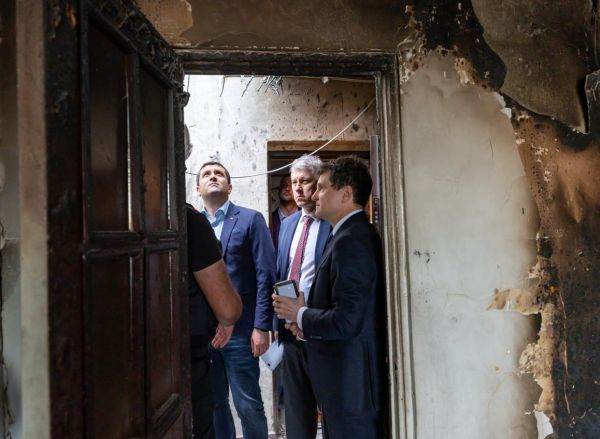
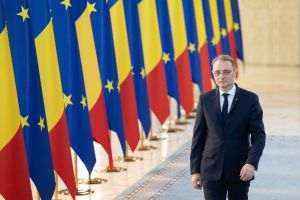
It all started with a serious incident. A Russian drone fell, in the early hours of Friday, May 29, on a block of flats in Galaţi, and a woman and her child were injured. The state's reaction was prompt. The CSAT, led by President Nicuşor Dan, decided to close the Russian Consulate in Constanta. The message sent to public opinion was clear: Romania is sanctioning Russia for an incident that directly affected Romanian citizens.
However, a day later, the President gave the BBC an explanation that seems to have complicated the situation more than it clarified it.
"First of all, it's certain that it was a Russian Geran-2 drone. It's certain because we had another one four or five weeks ago, which didn't explode, and we compared them - the remains of the one that exploded yesterday with the one from a month ago - and they are completely identical. We can definitely say that it is a Russian drone. Secondly, we know the route. In fact, there was a swarm of drones - 43 drones - that targeted the port of Reni in the Odessa region, which came from east to west, and one of them, hit by the Ukrainian army, changed its trajectory and crossed into Romanian territory. We know the trajectory of all 43 drones," Nicuşor Dan told the BBC on Saturday, May 30.
At that moment, the story took an unexpected turn. If the drone was hit by Ukrainian air defenses and changed its trajectory after being intercepted, then Romania was not the target of the attack. Neither Galaţi, nor the block of flats hit, nor the injured woman and child were objectives of the operation described by the president. The target was the port of Reni, located on Ukrainian territory. Of course, the initial responsibility for launching the attack belongs to Russia. No one disputes this. But the question inevitably arises: if the official explanation is that the drone arrived in Romania after being diverted by Ukrainian defenses, then how is this situation related to the decision to close a Russian consulate?
Simply put, what exactly is Romania sanctioning? The fact that Russia attacked Ukraine? It would be a legitimate political position, but then the public argument had to be formulated like this. The fact that a drone arrived on Romanian territory? In this case, the president's own explanations seriously complicate the demonstration. The fact that Russia did not ensure that the effects of its war do not cross the Danube? Here we are already entering a rather sophisticated diplomatic area, in which responsibilities are mixed between intention, effect and collateral consequences.
The president also added an observation that sparked reactions beyond Romania's borders.
"It has become dangerous for Romanian citizens. And when the Russians target localities on the other side of the Danube, they must ensure that they do not cause injuries among Romanian citizens," President Nicuşor Dan pointed out, also on the BBC.
This statement was interpreted in Ukraine as an involuntary separation between Romanian and Ukrainian victims. Beyond the controversy it sparked, however, the statement raises another question. If Russia must ensure that it does not injure Romanian citizens when it attacks Ukrainian localities, it means that the central problem is the geographical proximity of the war, not a direct attack against Romania.
And then, again, why is a consulate closed?
Perhaps the answer lies elsewhere. It is possible that the Romanian authorities have additional information that they cannot disclose, or that the decision to close the consulate is based on intelligence assessments that have identified certain risks that cannot be discussed publicly. If this is the case, then the measure can be interpreted as a broad political message sent to the Kremlin by decision-makers in Bucharest, using the Galaţi incident as the main reason.
The problem is that, following President Nicuşor Dan's statements to the BBC, we find that the public has not been presented with valid arguments for closing the Russian consulate in Constanţa. Instead, citizens have been offered a succession of arguments that seem to cancel each other out. First, the incident is serious enough to justify closing a consulate. Then, we learn that the drone that caused the incident was diverted following an interception by the Ukrainian defense.
It is as if someone solemnly announced that they had identified the cause of a fire, and the next day explained at length that the fire had reached there after a series of circumstances that fundamentally changed the interpretation of the event.
The most interesting part, however, came when the BBC journalist asked the president what other measures Romania could take. "Expelling the ambassador, for example. Yes, there is this hierarchy of measures that can be taken at the diplomatic level,” declared Nicuşor Dan.
So, closing the consulate is not the end of the road. It is only the first step. However, each step in this diplomatic ladder should be based on a solid and coherent justification. The more severe the sanction, the clearer the argumentation must be. However, after the interview with the BBC, the situation seems exactly the opposite. The measure remains firm, but the explanation becomes increasingly fragile.
Ultimately, the real enigma is not the trajectory of the drone. The president says that this is known in detail. The identity of the device is not a mystery either. The authorities claim that they have confirmed without a doubt that it was a Geran-2 drone. The unknown is elsewhere.
What was really the basis for the decision to close the Russian Consulate in Constanta? If the incident in Galaţi is the complete explanation, then the president's statements raise problems of logic and coherence. If the explanation is incomplete, then an important part of the picture is being hidden from citizens.
And of the two options, neither is comfortable for an administration that has built its image on the promise of transparency and rationality. It is possible that the Russian drone fell on the apartment building in Galaţi following a deviation from its route. It is also possible that the consulate in question was closed for perfectly valid reasons. But until the authorities explain the connection between the two events in a way that resists their own logic, suspicion will continue to hover over the whole story like a drone without a flight plan: visible to everyone, but impossible to fit into a credible trajectory. And that means unlimited fuel for those spreading conspiracy theories and fake news on social media.









 Euro
Euro Dolar SUA
 Franc elveţian
 Liră sterlină
 Gram de aur