 English


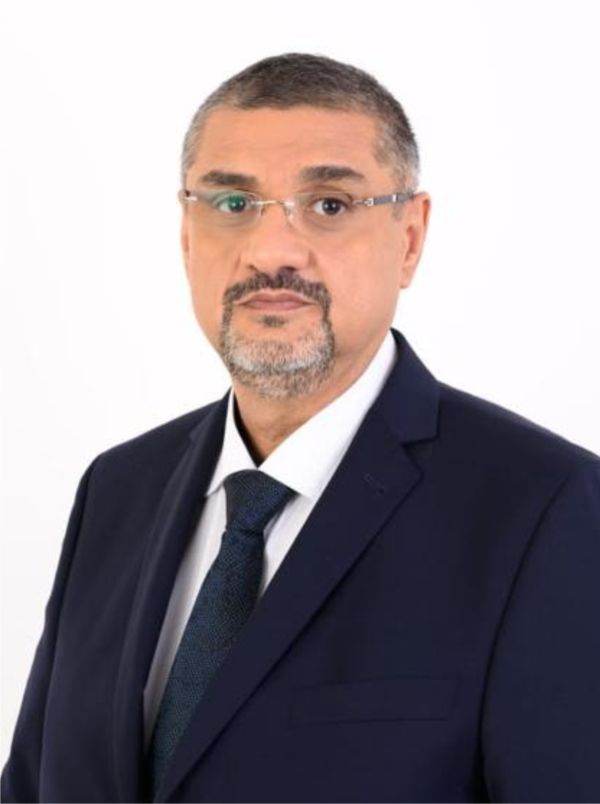
Reporter: Representatives of several road transport companies have announced since the beginning of 2026 that they are preparing a massive protest in the Capital, in Victoriei Square. What is the situation? Are the protests justified? What do you hope will happen?
Vasile Ştefănescu: I know that the protests are justified at the moment, because everything has become more expensive. Just like that, overnight, without anyone asking us anything. I think that everyone, and I'm not just referring to transporters, has paid taxes and duties over the years. The investments they made have been paid. The money was taxed once, so absolutely everything was taxed: you paid taxes and now, suddenly, you wake up that they are taxing 80% of the property you have, per individual... It is an aberration, at the moment, because we do not see why. I mean, you change the coefficients overnight, because it is the old building. You know very well that in the past, if you had an older building, there were other coefficients, you paid less. If it was a newer building, you paid more, because it was a different value. You, as the state, suddenly increase the value of my building. So how do you increase the value of my building? On what basis do you increase it for me? How? Why do you put it at these prices and re-tax me? I mean, you ask once again, you take the money on dividends once again, on absolutely everything; the money I took, the taxes I paid. I mean, you don't take anything into account today. Fuel has become more expensive, right? The RCA is getting more expensive month by month, like that, slowly. Nobody sees: the bonus-malus is not respected, absolutely nothing is respected at the RCA. We see, in the end, that this sector within the ASF, I mean the insurance sector, is poorly managed, because you can't put a vice president there, put in by Parliament, whom you can't change, if he doesn't do what's right, for the payers of a mandatory policy by law. I mean, sir, we're talking about a mandatory tax. You, as an insurer, don't do anything for it. You don't advertise, you don't do anything. On the contrary, you take some money, increase all the taxes and all these amounts, right? Without any kind of justification. Moreover, you say that you don't respect the bonus-malus. Then you say: "Sir, the combined damage has increased", but no one says what combined damage is. For "combined damage" you should say: "Look, this is how much X costs me; this is how much I pay in reinsurance fees and this is how much I pay in "trickery fees or I don't know how to call it'". I mean, after all, they show off their cars, their offices, all with whose money? What did they do with that money? Driving around in Mercedes, paying hundreds of thousands of euros for an office and having I don't know how many offices in this country. What did they do?
• "90% of the subsidy for metropolitan transport is provided from the budget of the Capital City Hall"
Reporter: And, to all that you said, I would also add the fact that, starting this year, the vehicle tax has also increased.
Vasile Ştefănescu: I'm not talking about the vehicle tax anymore, because this, you see, is another aberration. Well, you, the state, let me buy a car from abroad. You first tell me that if it's 10, 11 years old, I go to the ITP every year. Yes, that's right. I go to the ITP every year. If it corresponds from the ITP point of view, you now come up with other taxes and tell me: "Wait a minute, sir, we need newer cars." Well, where can I buy other cars, man? Because a car is no longer a luxury today. It's a necessity. Then the state comes and says: "Sir, your car is more than 12, 13, 14 years old, I'll charge you an environmental tax." Well, what environmental tax? But are you looking at these buses? Let's talk about the other side. These don't pay environmental tax or what?
Look: we, the people of Bucharest, elected Ciucu as mayor of the capital, and he comes and says: "Sir, we are installing the STB in insolvency”. Why are you putting it in insolvency? Because, you see, we don't have the money to pay. I don't know how much we need, 200 million in debts to the state, to ANAF, to health insurance, to unemployment and pensions. But Mayor Ciucu doesn't inform the people of Bucharest that they pay 1.6 billion lei annually from the capital's budget as a subsidy for metropolitan transport between Bucharest and Ilfov. 90% of the total amounts paid as a subsidy are paid from the capital's budget, that is, by the people of Bucharest. An anomaly: I, as a Bucharester, pay for transport between Bucharest and Ilfov, but the STB, on the other hand, is bankrupt or insolvent. The Ilfov County Council participates with 10% and I, a Bucharester, give 90%. This means that over 300 million euros are spent annually from the capital's budget to subsidize metropolitan transport. Why is the money paid? these? Until a few years ago, private transporters charged 5 lei, and the subsidy was only paid for students and pensioners. Now a trick has been found: the Voluntari transport company was established, which bought 15-20-year-old buses, for 10,000 euros each. And I, as a Romanian transporter, am obliged, remember, to get a new one, no older than seven years, and I can drive it up to 10 years. That's how much I can drive it to do transport. Let's be serious! There are two counties between Bucharest and Ilfov. Let's leave the metropolis thing aside, because if we want to make a metropolis, then let's have a single administration, Bucharest, without creating any more ticks: the Ilfov County Council, the city halls, I don't know which ones, etc. This is money spent in vain, but I see that Prime Minister Bolojan doesn't see the point this. Then Mr. Ciucu should say: "Hey, stop, that's it, Bucharest-Ilfov is a different transport. Why am I paying for it?" And STB doesn't even do it.
Reporter: So, basically, STB shouldn't go into insolvency, because the City Hall of the Capital has money.
Vasile Ştefănescu: Sir, it has money. Remember: this is a fabrication with "okay, sir, we're going into insolvency". Well, why should it go into insolvency? Because STB still has some depots around Bucharest and you want to sell them to build blocks of flats? Because otherwise I don't understand what you want to do with those lands in the end. You know very well that STB has garages all over Bucharest. Do you want to dismantle everything and what? Build another block next to the block? Why put STB into insolvency if the City Hall of the Capital has money? Make a staff reduction if you consider it necessary there. I can't say now - and I think neither can you - who is doing their job, who is not doing their job at STB. It's not my problem or yours. I think the problem is for the STB management to say: "Reduce salaries by 20% too".
• Transporters, dissatisfied with the RCA system
Reporter: I return to the initial question: basically, are the protests announced by the transporters justified? Will it reach the precedent of January 2024, during the Ciolacu government, when the transporters blocked the entrances and exits of the Capital?
Vasile Ştefănescu: Honestly, I wouldn't want to get there. We, the transporters in COTAR, who have the most companies in the country, both trucks, and passenger transport, and taxis, etc., did not want to participate in that protest, because it was such a sham. In the end, those who made that protest went through Parliament and some parties took them and put them on lists at the Senate or the Chamber of Deputies. But we need to do something, a legal, authorized protest. You know very well that we, the members of COTAR, have never made a spontaneous protest to block traffic; we have always announced it. I understand that those who wanted to protest on Monday, January 5, did not protest because they did not have authorization from the City Hall of the Capital. We have always received authorization. The political color of the government did not matter to us. Regardless of the political color of the government, we went and demanded our rights, but we did not demand "down with the government"; we are not interested in this policy of overthrowing governments or anything. We must demand our rights. And our rights are very simple today: taxes, RCA, gasoline, which I see are getting more expensive, and what is given back to us is nothing, it does not cover anything. These are our current problems. The problem with RCA is old. Mr. Sorin Mititelu, the vice president of ASF responsible for the insurance market, boasted at the end of last year that it was solved. Nothing was solved. I want to tell you something: Mr. Mititelu is a pro-insurers man. He wants to make some changes to the RCA law in favor of insurers. If you saw the projects he went to the end of last year to pass through Parliament in the last few sessions... It was a donkey, a fabrication. Luckily we still have people in the Romanian Parliament who think and read. We made some very well-documented memoranda, they read them and saw that we were right. How can you tell me, after I pay a RCA, should I come to an agreement with the insurer to see what he pays me? Does he want to put second-hand parts on me? Wait a minute. You, as an insurer, have two types of policies: a normal policy and a second-hand policy. Let's pay for the second-hand policy too then. And another anomaly that Mr. Mititelu made together with the insurers: to pay depending on whether we are from Bucharest or if we are from outside, a cheaper or more expensive policy. I'll give you an example: if you are passing through Bucharest and hit a car from Bucharest and you are at fault, from Târgu Jiu, where you are from, and you pay the policy 100 lei, and I pay 1,000 lei in Bucharest, and I have to fix my car on your policy, because you are at fault and you paid 100 lei. Well, tell me: is that headlight or that wing or the paint job, which I do at a car service, 10 times cheaper because you paid a cheaper policy in Târgu Jiu? Sir, it is an anomaly, I tell you honestly. It is a fabrication made by Mr. Sorin Mititelu, the vice president for this insurance sector within the ASF, together with the insurers, because he also comes from the field.
• The value of labor in car services, the apple of discord in the RCA market
Reporter: And yet, both the ASF and the insurers are right. There is a report by the Competition Council that observed certain anomalies at some services and also applied some fairly large sanctions.
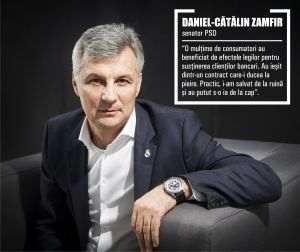
Vasile Ştefănescu: I want to tell you something. There are, in Romania, 15,000 authorized service stations and there are another 15,000 - I don't call them service stations - unauthorized, unlicensed and uncontrolled repair units. Keep in mind why: because the officials from the Romanian Automobile Registry and other public institutions say "Sir, I can't go to Mr. George in the yard, who repairs cars, because he's not authorized". But is what they do right? It's like unauthorized, unlicensed transport, piracy: you say you can't stop your car, because it doesn't have any markings, but you do transport, let's say Bucharest-Giurgiu; you go and do races, but "I can't stop you". It's not right. But let's get back to what you said about the service stations checked and sanctioned by the Competition Council. I have nothing against the Competition Council. Very good: he went and discovered one service station, two, three. But it also went to the insurers' complaints. As for our complaints, if you remember, when we made them in 2016, the first time they came out with a report that it was not true. After we went out on the streets six times, the Competition Council came out with another report that it was so and fined I don't know how many insurers. And on ride-sharing... we've been screaming like this for nine years; everyone accused us of being crazy and the Competition Council, and now ANAF and everyone come along and prove us right. Well, we die with justice, in the end, because for nine years they bankrupted us through unfair competition. And now ANAF and the Competition Council come and say: "You were right." And what do you do? You do checks at 2, 3, 4, 5... you catch them, you discover hundreds of millions. There is no forest without dry leaves. A complaint was made, but I want to tell you something: as long as there are certain insurers, two, three, who go to parliamentarians, with about 50-60 claims: "Look, sir, what's here, look how much it cost me, and I don't know what". It's not true. Even these, who they say are dry people who inflated the policy, did not pay the repair bill. I also said in Parliament, to Senator Daniel Zamfir, at the committee: sir, as long as you did not pay those two, three, four, five, ten bills, how did it affect you? You went to court. And I want to tell you something: 99% of the services work correctly. And they say: "Sir, this is the repair, I installed the parts, I installed absolutely everything. Give me the money, insurer. Look at the bill! How much is it? 10 lei". So why do you give me, out of 10 lei, 3 lei or 5 and a half lei, do I have to go to court with it? Does that seem fair to you? Why don't you give me the 10 lei and then prove to me that I was a thief?
Reporter: I know that many insurance companies have contested the value of the labor performed by car repair shops.
Vasile Ştefănescu: Well, how can they contest the value of the labor? And keep in mind that they are repair units, because you know that they make agreements with insurers. These agreements with unauthorized repair shops or with the insured for their own repairs are illegal in Germany, but they are legal here.
• "Car repair shops are currently subsidizing repairs in the RCA system"
Reporter: Are these agreements legal according to competition law? Doesn't it basically mean imposing a repair cost?
Vasile Ştefănescu: That's exactly right. There is practically a maximum limit imposed on the cost of repairs, on the amount paid by the insurer in the event of an accident. And I want to tell you that they are being done, but our members go to the insurers and say: the insurers want to terminate me, service, for 120 lei, 130 lei, which he doesn't give me either. Remember: for RCA. And for CASCO 100 lei. And do you know how much it costs? 100 lei per hour of labor. I go and tell him: "You can't give me 100 lei, 120 lei, look how much the other prices have increased. Let's make a convention for 250 lei per hour". Does that seem like a lot to you? I want to tell you that insurers don't want to conclude a convention for 250 lei. Moreover, when the president of ASF was Nicu Marcu, insurance companies said that they pay the policy based on the earnings that the insured obtains. What do you mean you pay my policy based on the earnings that I obtain? Are you crazy? When you took my RCA fee, did you take it based on my salary? No: you took as much as you wanted. I paid for your opulence and luxury. And, as a citizen, I'm not just talking as a transporter: we are also citizens. We have families, we have our cars. So we pay two taxes: both as a transporter and as a citizen. If we pay you this money, I ask you: then why don't you give me the money for repairs? Do you know why people don't go out into the streets when cars crash? Because service stations subsidize this repair. There are service stations in Romania, and please check, that make loans to pay for their parts, salaries and everything.
Reporter: Well, how much longer will they make loans? How much longer will they last?
Vasile Ştefănescu: I don't know how long they will last, because many have come close to bankruptcy, because the cases of past years, the bankruptcies of City Insurance and Euroins, have put them in a hole. Look: only this year, let's say in February, March, all the arrears on the bankruptcies of City and Euroins are being paid. And then we also say: why? What is our problem? Why are we to blame? Why don't you, the state, take action? We were very clear and said: "Sir, let's pay optional RCA, like in America. If I want to be insured, I'm insured; if not, I'll be more careful". And if I'm not careful, then I take the money out of my pocket or put my house in danger. I go to the bank, get money and pay for your car repair. But if you come up with this law, like the European Union, and you want me to have a mandatory tax by law, Law 132, this RCA policy, then let's pay it correctly. In 2017, the RCA law was passed, which states very clearly that in a year a Romanian financial institution will be established that will issue RCA policies. We don't have it even today, in 2026. Several prime ministers promised us: "Yes, sir, we are creating a financial institution." He spoke to the CEC, he spoke to I don't know who... "We will." How many years have passed? I'm telling you that there are people in the Ministry of Finance, not ministers, who don't want it. They are lobbying so that this institution is not established.
Reporter: Maybe there are European norms that require that such an institution not exist.
Vasile Ştefănescu: Then it means that we have modern slavery in this country. Why? Because, if this Romanian financial institution hasn't emerged since 2017 to issue RCA policies, it means that we have a problem in Romania. And you come and impose taxes on me, and you do them overnight. I mean, you can issue government ordinances on this topic, but you can't issue a government ordinance that says: financial institution X will issue RCA policies. Because I want to tell you something: these Romanian financial institutions have headquarters in all cities. Those costs that are paid on buildings, on absolutely everything, would be eliminated. Tens of thousands of euros are paid to a single board of directors and there are I don't know how many on each board. We pay for luxury and opulence, instead of getting a fair price with the policy.
• "We don't have industry anymore"
Reporter: Returning to the other capacity, as president of the General Union of Industrialists of Romania: are there still industrialists in our country and how are they doing?
Vasile Ştefănescu: Very few. What industry do we still have in Romania? Almost all industry has been destroyed. We still have the Galaţi plant, the one in Reşiţa. Otherwise, we still have the textile industry, but I can't say it's still "industry", because we're talking about small factories: 100 people, 200 workers. Small workshops. That's our industry today. We no longer have industry. What do we have left? The car industry.
Reporter: What are the problems that industrialists are currently facing?
Vasile Ştefănescu: Just like with transporters. The same problems are everywhere. As long as the state does not help us with anything, absolutely nothing, but it comes and asks me for taxes and duties. For what? If the minimum wage is still increasing, why doesn't the prime minister come and say: "On the minimum wage in the economy, we reduce the tax by X% and give this money to employees". I'll give you an example: even if I give you 5,000 lei per month and pay taxes and duties on 5,000 lei, I pay about 2,600-2,700, let the state say: "I only take 50% of the taxes, leave the rest to the salaries". Why don't we do it that way? Wouldn't it be more fair?
Reporter: Furthermore, from July 1st the non-taxable amount of 300 lei decreases to 200 lei.
Vasile Ştefănescu: And in these conditions we ask ourselves where the money is. Where is this money, which, over the years, has been collected? We paid it: taxes, fees, everything. Where is the money? The loans that the governments made, where did they go? Because half of this country has no sewage system, it has dirt and dusty roads. In Italy, for example, you say that the peasants are Bucharesters: they have houses, paved roads, water, sewer, gas, absolutely everything. Tell me too: what has been happening here for 30-35 years? Absolutely nothing. And no one is held accountable. The transporters are angry, the citizens are angry. But we have never shouted "down with the government". Regardless of the political color. We are with the government, but the government must also be with us.
Reporter: It must be a dialogue partner.
Vasile Ştefănescu: Exactly. Dialogue partner, but not a formal dialogue, not a dialogue that is just checked off, because the decision is made in advance anyway. This is not a dialogue now, even if we are sitting at the same table. Practically in recent years we have signed the presence at the so-called dialogues, but the political decision-makers have not taken up any ideas from those presented by the employers' associations.
Reporter: What are your expectations for the current year?
Vasile Ştefănescu: We expect the current government, or whatever government comes next, because we don't know in the end, to be pro-citizen, to be pro-entrepreneurial. That is, Romanian entrepreneurs, with Romanian capital, from the smallest merchant to the largest. Many borrow from banks to start a small business, a small business. The largest ones take out loans to keep the business going, hoping that better times are coming. You know, we went back to the crisis of 2008-2009, when everyone struggled to keep their companies afloat, thinking that it would be better, and we took out loans to stay afloat. We stayed afloat, but we see that we are starting to take on water and that is not fair. And now what do we do? We take out loans again, we take pumps, we take the water out of the boats to get back afloat and that is not fair. After struggling for so many years, you come now and tell me that you have to continue to torment me, to take more taxes and duties from me. Why?
Reporter: So your expectation is that the government will reduce the current taxes and duties.
Vasile Ştefănescu: Yes, to take some measures and issue some ordinances, because we see that it is the year of ordinances again, to issue ordinances by pro-entrepreneur Romanians. If we fall, collapse and stop producing, the country goes into total bankruptcy.
Reporter: Thank you!














 Euro
Euro Dolar SUA
 Franc elveţian
 Liră sterlină
 Gram de aur





























