English


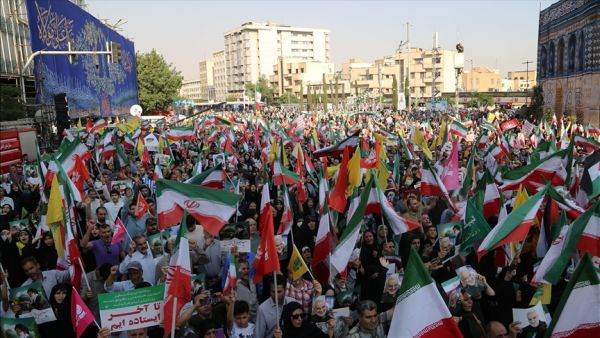
What we have been seeing for a week in Iran represents a crisis, in which a very visible economic shock - caused by the exchange rate of the rial, the increase in prices and inflation - triggered protests in commercial and urban areas (bazaars and merchants), which then absorbed older political and social frustrations (repression, corruption, lack of perspective), and the state responded simultaneously with palliative measures and a security line that is strengthened as the protest expands geographically.
The harshest economic indicator, mentioned by the international media (Euronews, Reuters, Associated Press, Al Jazeera and Arab News), is the exchange rate on the unofficial market: one US dollar was worth 1.46 million Iranian rials in the first days of this year (some sources cited even indicate 1.47 million rials), which was described as a "record low" and the direct catalyst for the wave of discontent.
In relation to that value, the cited sources claim that, before the 1979 Revolution, one US dollar could be purchased for 70 Iranian rials, and at the time of the 2015 nuclear deal for 32,000 rials; the comparison is used to show how accelerated the erosion of purchasing power and confidence in the Iranian currency was by the beginning of 2026, according to Arab News.
From the street, the initial pattern recorded by Reuters is important: the protests started in the Grand Bazaar, a location in the capital Tehran, that is, from a traditionally sensitive space for the regime, because the commercial base has the capacity to mobilize and acts as a "thermometer" of society; they then spread to universities and to cities or provinces, especially in the west (including Ilam, Lorestan, Kermanshah), where the cited sources describe violent confrontations between demonstrators and the security forces who used ammunition to disperse the crowds.
• Protests in 21 Iranian provinces, controversy over the number of victims
If we take into account a numerical indicator of magnitude, such as the monitoring carried out by the Institute for the Study of War (ISW) through the Critical Threats Project, we note in an update presented on Wednesday that "89 protests in 21 provinces” were recorded in Iran, which suggests a wide dispersion and high pace of events.
Regarding the number of people who lost their lives in these protests, as well as the number of citizens arrested by the Iranian authorities, the data provided by the cited sources are, however, disputed by those published by the Tehran press. Reuters, citing human rights organizations, reported increasing thresholds one after another: at least 16 deaths after about a week of protests (January 4), then at least 25 deaths after the first nine days (January 6), and on January 7 the range "between 27 and 36 deaths” and "over 2,000 arrested” appears, with the mention that the authorities do not provide a complete balance sheet for the protesters.
Euronews reported on "36 killed” in the clashes and again set the threshold of 1.46 million rials/USD as an element of context, and The Guardian spoke of "at least 36 deaths” and "over 2,100 arrests”, attributing the figures to "rights groups” and testimonies from the field (including the use of live ammunition and live fire in Kurdish-controlled areas). The above figures do not radically contradict each other, but show an increase over time, and the differences are within the natural margin of an ongoing crisis (delayed reporting, difficult verification, different criteria). Instead, what can be said more solidly is the direction: the balance sheet is rising as the protests move from "closures and marches” to direct confrontations, especially in the Iranian provinces.
• Ayatollah Khamenei calls for the suppression of protests, President Pezeshkian calls for the protection of peaceful protesters
At the level of Tehran, the official line is very clear from the statements of decision-makers. According to Reuters, IRNA, Mehr News, Tasnim, Fars News, the supreme leader, Ayatollah Ali Khamenei, insisted that the regime "will not yield to the enemy" and that "rioters must be put in their place" (ed. - "rioters must be put in their place"), and a repeated distinction is "protest is legitimate, but it is different from incitement", with the idea that the authorities can "talk to the protesters", not the "instigators", who must be "treated harshly".
The head of the Iranian judiciary, Gholamhossein Mohseni Ejei, issued a warning that sets the institutional tone: "no leniency" for those the state defines as supporting the unrest or "helping the enemies" (ed. - USA and Israel), according to the sources cited. Iran's police chief, Ahmadreza Radan, has vowed to deal with the instigators behind the country's protests, down to the last one, according to Arab News, in a message of repressive perseverance.
Within the government, however, there are also nuanced signals that are important for understanding of the moment. President Masoud Pezeshkian has asked security forces to distinguish between peaceful protesters and armed "instigators" and to exercise restraint, especially after the extremely sensitive episode of the alleged raid on a hospital in Ilam to arrest the wounded, according to the cited sources.
Also as a "crisis management" reaction, the government in Tehran announced the extension of very small monthly payments or subsidies (the aforementioned sources claim that it would be an amount equivalent to $7 per month for each person) to tens of millions of people, a measure intended to reduce the immediate pressure, without solving the causes of the protests: devaluation, credibility, sanctions, investments.
The Iranian opposition does not have a single command on the ground, but its messages are relevant through two effects: it provides a "framework" of interpretation and it tries to synchronize strikes or boycotts. Reza Pahlavi, in exile, explicitly used the bazaar protests as a sign of an "overthrow” of fear and claimed that the crowds had in some cases forced the withdrawal of law enforcement and fueled their "pacts” with the protesters; according to The Jerusalem Post, Pahlavi said that he had closely followed the demonstrations in Tehran's bazaars and urged Iranian citizens to resist, because the regime's forces were beginning to give way.
In parallel, in the west of the country, seven Kurdish opposition groups were mentioned as supporting calls for a general strike, which adds a regional and identity dimension to an economically driven uprising, according to the British daily The Guardian.
• External reactions to the Iranian crisis
Externally, the tension is being fueled by an exchange of public messages that goes back to Iranian domestic politics. US President Donald Trump has announced that US forces are ready to intervene if the authorities in Tehran continue to execute protesters, a statement that has two simultaneous and opposite effects: it may encourage one side of the street, but it gives the regime an argument in describing the protests as "foreign-engineered”.
The European Union, through the European External Action Service (EEAS), has adopted a more standardized position for such crises, using formulas such as "we are following closely”, "we are concerned about the number of deaths and injuries”, but the central call is that security forces exercise "maximum restraint” towards peaceful protests and that socio-economic problems be addressed through "inclusive dialogue, not violence”.
From Israel, the clearest message, public and official, comes from Prime Minister Benjamin Netanyahu, who expressed his support for Iranian citizens in the streets, protesting, and stated that "we may be at a moment when the Iranian people take their destiny into their own hands," according to Arab News.
TASS reports that the Kremlin authorities, in particular the Ministry of Foreign Affairs, state that the events in are "an internal matter" of that country and that any "external interference is inadmissible."
According to the Turkish news agency Anadolu, the Beijing authorities have stated that they hope that Iran will "overcome difficulties" and maintain "national stability," with the Chinese authorities also stating that they firmly oppose any external interference.
• The Ilam Hospital Incident, proof of how iranian authorities want to suppress any protest
The Ilam hospital episode deserves to be treated separately as a "threshold indicator", because it focuses the narrative conflict: for activists and some rights organizations, the entry of security forces into a medical facility to arrest the wounded is equivalent to a violation of fundamental norms; for the state, if there are "gunmen" or "instigators" being treated there, the action can be justified as a public order operation. From Tehran's side, the reaction was to order an investigation and return to the distinction "peaceful protester" versus "instigator" (Pezeshkian), precisely in order to limit the political damage, according to IRNA. The same action was condemned in extremely harsh terms in the public sphere by the US, and Amnesty International criticized the violence exercised by the security forces against patients and medical personnel, which increased diplomatic and media pressure on the regime in Tehran.
In this context, from an economic point of view, the regime in Tehran has very little room for rapid maneuver, because the devaluation of the national currency (1.46-1.47 million rials for one US dollar) represents a clear and serious lack of confidence and an increase in inflation that will be reflected in a new increase in prices. From a political point of view, the protests seem to have left the phase of punctual dissatisfaction and entered the phase of contesting the system in some areas (especially where funerals become political events and where there is a tradition of mobilization), in the conditions in which the central authorities claim that they will show no leniency towards the protesters and that they will pursue the instigators.
Externally, the fact that the US and Israel are sending potentially escalating messages, while the EU is calling for restraint, while Russia and China are calling for non-interference from other states, provides each domestic Iranian actor with material for their own story (the street sees "support”, the regime sees "plot”), increasing the likelihood of mutual radicalization.
What remains, realistically, as a fundamental question for the "current situation” is not only whether the protests continue, but in what form: if they move towards economic strikes (bazaars, transport, industry) they may become more difficult to manage without concessions; if they move towards violent confrontation, the state has the advantage of coercive capacity, but pays with loss of legitimacy and external isolation. Early indicators suggest both directions in parallel: calls for strikes and boycotts, but also an increasingly harsh security response and a rising death toll, which shows that the action-reaction spiral is already underway.












 Euro
Euro Dolar SUA
 Franc elveţian
 Liră sterlină
 Gram de aur