 English


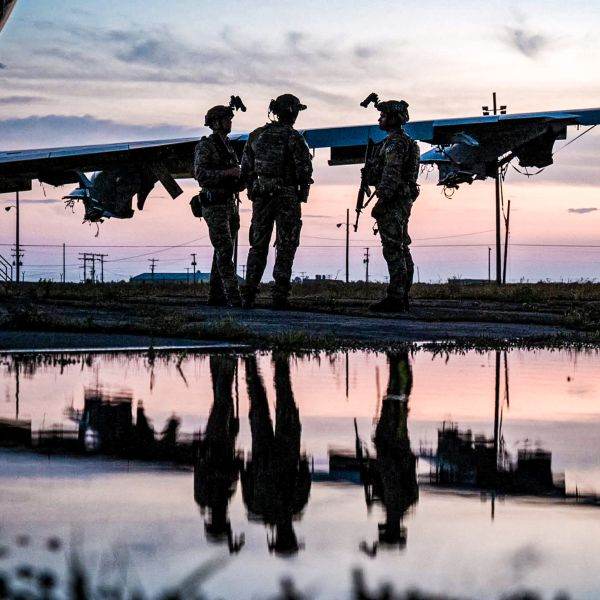
In the early days of 2026, US foreign policy under President Donald Trump has generated some of the most controversial and tense geopolitical developments in recent memory - from a military intervention in Venezuela to rhetoric about NATO ally Greenland. These events, viewed in the context of international reactions, allow an argument to be made that Trump is forcing tensions (possibly even a breakup) within NATO, exposing major transatlantic divergences.
• Military Intervention in Venezuela - An Unprecedented Operation
On January 3, 2026, US forces conducted a military operation in Venezuela and captured President Nicolas Maduro, bringing him to the United States to stand trial on drug trafficking and terrorism charges. The US administration has characterized the operation as a "law enforcement" mission, but the scale of the intervention - including air strikes and elite troops - has raised international questions, according to Al Jazeera.
This action has generated strong criticism from some Latin American states and beyond. According to Reuters, leaders from Brazil, Chile, Colombia and Mexico have issued strong statements condemning the intervention and calling for respect for the sovereignty of states. International critics, including China and other global actors, have highlighted this operation as dangerous for the norms of international law, which could undermine global partnerships, according to The Times. Diplomatic opinions and legal analyses warn that such an intervention, carried out without a clear international mandate, may weaken trust in the US as a predictable partner in multilateral alliances.
• Greenland Rhetoric, Jokes, and Diplomatic Tensions
Shortly after Venezuela became the scene of a US operation, Donald Trump revived a topic that seemed more symbolic: the possible acquisition or even annexation of Greenland, an autonomous Danish territory and member of the NATO alliance through Denmark. In an interview with The Atlantic, Trump stated that "we absolutely need Greenland” for security reasons, citing the territory's proximity to Russia and China. This rhetoric was immediately criticized by Danish officials. Danish Prime Minister Mette Frederiksen declared that "the United States has no right to annex any of the countries in the Kingdom of Denmark” and called on the United States to stop the threats, emphasizing respect for the sovereignty and territorial integrity of a close ally. Greenland's Prime Minister Jens-Frederik Nielsen said that the repeated statements regarding Greenland were "disrespectful” and called for an end to the pressure. These reactions suggest an imbalance in diplomatic relations between the US and a traditional NATO ally, which does not happen often in the recent history of the alliance.
• Reactions of the allies and the risk of NATO fragmentation
Denmark and Greenland have stressed that, despite the discussions about this territory, it is already part of NATO and the current cooperation on security matters should be respected. Several EU member states have issued statements calling for an end to the conflicts and respect for the principles of international law, insisting that the will of the peoples and national sovereignty must be maintained, TIME reports. Specifically, these tensions may contribute to: the erosion of trust between alliance members, especially between the US and European states; a climate in which allies may begin to question the US commitment to consultation and collaboration on security issues; the proliferation of voices within NATO calling for Europe to strengthen its autonomy in defense matters - which may change the strategic balance of the alliance.
NATO operates on the principles of mutual consultation and solidarity, in particular under Article 5, which provides for the collective defense of its members. If a member publicly raises ideas about the forced annexation of another member's territory, even as a political pressure, this can affect the cohesion of the alliance. The militaristic and unilateral rhetoric used by Trump during this period - whether it is about Venezuela or Greenland - questions the predictability of US decisions and may suggest a prioritization of American national interests to the detriment of multilateral solutions that NATO has promoted for decades. In practice, a breakup of the alliance would relieve the US from intervening if a European partner were attacked.
• Financial contribution, a pressure point
Another element that fuels tensions within NATO is Donald Trump's harsh rhetoric regarding the financial contributions of member states to the common defense. Under his leadership, the American president has firmly demanded that allies "pay their fair share", while by requiring them to significantly increase their defense spending above previously agreed levels. At the 2025 NATO summit in The Hague, alliance leaders accepted, under US pressure, a goal for member states to allocate 5% of GDP to defense, well above the traditional 2% target set in 2014, and Trump loudly welcomed this increase, according to wsaw.com. However, his approach was not just diplomatic. Trump openly criticized countries like Spain for not committing to increasing military spending and suggested that they would face "greater costs” through taxes or tariffs if they did not comply, which raised concerns about the use of economic leverage as a tool of pressure within the alliance. Critics of this strategy argue that while raising spending is a widely shared goal within NATO, the way Trump is promoting it - through implicit threats and conditionality - could erode traditional cooperation and alliance solidarity, transforming a common goal into an instrument of unilateral influence.
Recent events do not necessarily mean a breakup of NATO. But these developments highlight tensions between the US and its European allies in terms of leadership and decision-making on sensitive international issues. They highlight concerns about the predictability and stability of American commitments to multilateral norms, a key element of NATO. As the alliance faces multiple challenges (for example on its eastern flank and in the Arctic), internal divergences may weaken the collective response. Thus, recent actions and speeches can be interpreted as gradually pushing NATO towards a crisis of confidence, without, however, a formal break-up. Diplomatic discussions and consultations will be crucial in the coming period to restore the cohesion of the alliance.
























 Euro
Euro Dolar SUA
 Franc elveţian
 Liră sterlină
 Gram de aur





























