English

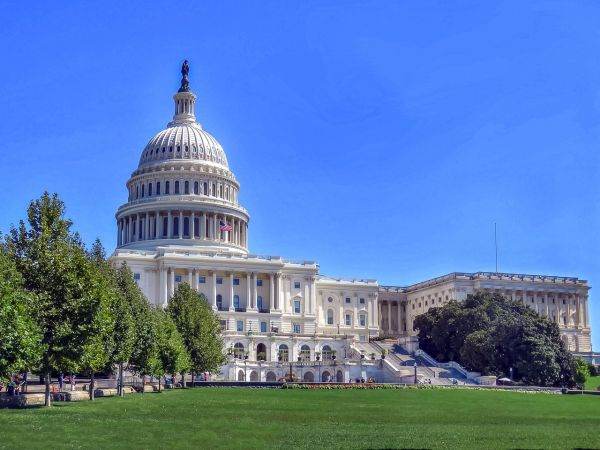
Three official documents published between March 6 and 12, 2026-a joint statement by 14 Democratic senators, a formal letter addressed to Treasury Secretary Scott Bessent, and a Roll Call investigative article-outline a picture of exceptional gravity: the Trump administration launched a war without prior planning, violated current U.S. legislation, and made decisions that objectively favor Russia, precisely at the moment when Moscow was providing Tehran with the military coordinates of American troops.
• War Launched Without Strategy and Without an Exit Plan
The tone of the documents is unusually harsh for U.S. legislative standards. The President launched a reckless and ill-conceived war against Iran, which has endangered American military personnel, diplomats, and citizens, according to the March 6 joint statement by Democratic senators, signed among others by the leaders of the Banking, Foreign Relations, Armed Services, and Finance committees. This is the inevitable consequence of Trump pushing America into a conflict without any apparent strategy and without any exit scenario, the document adds.
The letter from Representative Sam Liccardo and Senator Ruben Gallego, addressed to Secretary Bessent on March 9, details the planning failure with disarming technical precision. President Trump's decision to throw the U.S. into an unauthorized war led to a predictable result: the blockade of the Strait of Hormuz and a drop in oil production throughout the Middle East, the letter states. Instead of carrying out the necessary contingency planning to keep India and other allies supplied with alternative sources, the administration's haphazard approach allowed Russia and other adversaries to profit from oil reserves previously constrained by sanctions, the two lawmakers contend.
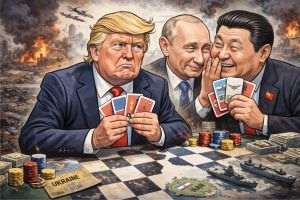
The letter explicitly formulates, in the form of questions addressed to Bessent with a response deadline of March 13, what press articles only suggested: did the Treasury conduct an analysis of the consequences of closing the Strait of Hormuz before the start of the military operation? What energy price stabilization mechanisms were prepared before the war? Did the Treasury participate in any interagency process before the decision to strike Iran? The fact that these questions are formulated as formal requests for a response is in itself an implicit confirmation that the answers are negative.
• Breaking the Law: CAATSA Ignored
Beyond political criticism, the Democratic senators' statement formulates an explicit accusation of illegality, absent from the current public debate. The administration issued a comprehensive general license that relaxes sanctions against Russian oil companies and the shadow fleet, violating a requirement of the Countering America's Adversaries Through Sanctions Act (CAATSA)-overwhelmingly adopted by the Senate-which mandates notifying Congress 30 days before any such action, the joint statement says. The administration nonetheless allows these entities-including vessels sanctioned for links to the Iranian Islamic Revolutionary Guard Corps-to sell and transport the oil upon which Russia most depends to finance its aggression, the document adds.
In other words, the license issued to manage the economic consequences of the war with Iran explicitly allows ships linked to the Iranian Revolutionary Guards-the declared adversary of the U.S. in the same war-to transport Russian oil. The contradiction is blatant and has not been publicly challenged by the administration.
• Self-Demolition of American Diplomacy: India Deal Destroyed in Days
The Liccardo-Gallego letter signals a second internal strategic contradiction, equally serious. This waiver undermines the very U.S.-India Bilateral Trade Agreement, through which India had committed to stopping Russian oil purchases in exchange for access to American and Venezuelan supplies, the document states, referring to a The Hill article from February 2, 2026, which confirmed the conclusion of the agreement. By granting this waiver, the U.S. signaled that it will violate its commitments under economic pressure-and that its partners should not take these commitments seriously, the letter's authors conclude.
The agreement with India had been presented by the Trump administration as one of the diplomatic achievements of the new term. The license issued a few weeks later demolished it unilaterally.
• Rewarding Attacks on Their Own Troops
The most serious paragraph in the Liccardo-Gallego letter targets not the economy, but direct military security. By granting this waiver, you have signaled that the United States will reward attacks on our troops, not discourage them, the two lawmakers write to Bessent, with direct reference to a Washington Post article from March 6 documenting that Russia provides Iran with information to target and kill American soldiers.
The joint statement from Democratic senators formulates the same argument: the president's decision is particularly outrageous in light of public reports that Russia assists Iran in targeting Americans in the Middle East, the document says. Now is not the time to clear the way for sales for major Russian oil producers and Russian-owned or shadow fleet vessels, the senators add.
• Republican Criticism: "We Should Help Them Lose"
The Roll Call article from March 12 adds a dimension that transforms this criticism from a partisan dispute into a broader political crisis: key Republicans have also publicly opposed the decision. Senator Roger Wicker, a Republican from Mississippi and chairman of the Armed Services Committee, stated he categorically opposes the decision to relax sanctions. "Russia is one of our significant threats and part of the axis of aggressors against which we are trying to build our defenses. I don't think we should do anything to help them. We should help them lose,” Wicker said, according to Roll Call.
Republican Representative Don Bacon of Nebraska was equally direct, writing on the X platform that reducing sanctions against Putin's Russia, "just when we learned that the Russians are providing Iran with targeting information, is clearly the WRONG STRATEGY,” adding that "the Russians are helping Iran kill our military personnel” and that "we want more sanctions on Russia, not fewer,” Roll Call quotes.
• The Danger of Permanent Removal of Sanctions
Roll Call adds information with major strategic implications, absent from the current debate: Trump and Bessent have publicly suggested that the relaxation of sanctions could go far beyond the temporary 30-day license. Bessent stated on Fox Business that "maybe we will de-sanction other Russian oil as well, beyond that directed toward India under the 30-day waiver,” Roll Call notes. Three days later, Trump himself said at a Republican conference in Miami that "we will eliminate sanctions on some countries until the situation clears up-and, who knows, maybe we won't have to reimplement them,” the same source quotes.
President Zelensky reacted immediately, expressing concern about any American initiative that would enrich the country bombing Ukraine. "It would be a serious blow for us-in terms of weapons and, globally, a very strong, very serious reputational blow. How can you lift sanctions on Russia when it is the aggressor?” Zelensky said, quoted by Roll Call.
• From Tactical Error to Strategic Shift
Taken together, the three documents draw a clear line from tactical error to potential strategic shift. The Trump administration launched a war without prior planning, managed the economic consequences through measures that violate U.S. law, demolished its own diplomatic agreement, and opened, through the statements of Bessent and Trump, the prospect of permanently eliminating sanctions against Russia-precisely at the moment when Moscow was providing Tehran with the military operating coordinates of American troops. Trump's war with Iran has not only enriched Russia, senators and analysts alike observe. It has potentially signaled that the United States is willing to abandon the instrument of sanctions under economic pressure-a signal whose strategic consequences far outweigh the immediate oil price crisis.

















 Euro
Euro Dolar SUA
 Franc elveţian
 Liră sterlină
 Gram de aur